







Budgie Care in Qatar: Cage, Food, Heat & Lifespan

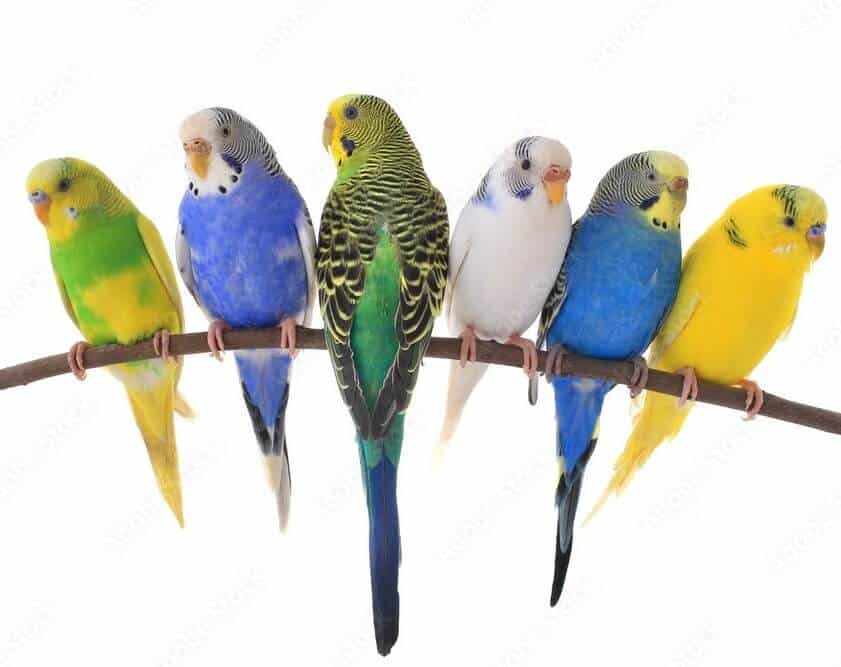
Budgie care in Qatar comes down to four things: a cage at least 60cm long, a pellet-based diet instead of seed alone, indoor temperature held between 18°C and 30°C, and daily company. Get those four right and most budgies live 7 to 15 years, compared to 4 to 6 years in the wild.
This guide is for anyone in Doha keeping a budgerigar at home, whether it is your first bird or your fifth. You will get exact cage measurements, a daily feeding plan, the local mistakes we see most often, and the early illness signs that owners usually miss.
At World of Birds, we have sold and advised on pet birds from our Souq Al Ali shop since 1985. Forty years of budgie customers has taught us that almost every avoidable problem in Qatar traces back to two things: where the cage sits, and what is in the food bowl.
Key Takeaways
- A single budgie needs a cage at least 60cm long, with bar spacing of 10 to 12mm.
- Seed-only diets shorten budgie lives. Pellets should make up 60 to 75 percent of daily food.
- Keep indoor temperature between 18°C and 30°C. Above 32°C, budgies begin showing heat stress.
- Never place a cage on a balcony, in a kitchen, or directly under an AC vent.
- Most pet budgies live 7 to 15 years. Wild budgies average only 4 to 6 years.
Why Budgie Care in Qatar Is Different
Budgies handle dry heat better than most pet birds. The budgerigar, Melopsittacus undulatus, comes from the arid interior of Australia, so low humidity does not bother them. Qatar’s problem is not the climate outside. It is what we do indoors to escape it.
Three local factors cause most of the budgie problems we see in store.
Sealed, air-conditioned rooms. Windows stay shut for eight months a year. Cooking fumes, aerosol sprays and cleaning chemicals have nowhere to go, and a budgie’s respiratory system is far more sensitive than ours.
Direct AC airflow. A cold draft blowing straight onto a cage causes respiratory illness within days. Budgies tolerate warmth far better than they tolerate a constant cold draft.
Sandstorm season. During dusty conditions, fine particles settle on food, water and feathers. Cages near windows or entrance doors need covering and extra cleaning on those days.
What Temperature Is Too Hot for a Budgie?
Budgies are comfortable between 18°C and 30°C. Above roughly 32°C they start showing heat stress, and prolonged exposure above 38°C can be fatal within hours.
Watch for open-beak breathing, panting, wings held away from the body, and a bird pressing itself against the cage bars. These signs mean the bird is trying to shed heat and cannot.
Never keep a budgie on a balcony, in a car, or in an unconditioned room during summer. Every year we hear from an owner who moved the cage outside “just for an hour.” An hour is enough.
Where to Place the Cage in a Doha Apartment
Use this five-point placement rule. It solves most Qatar-specific problems before they start.
- Against a wall or in a corner, so two sides feel enclosed and secure.
- At roughly chest height, not on the floor and not above head level.
- Two metres or more from any AC vent, with no airflow hitting the cage directly.
- Never in the kitchen, and never in an adjoining open-plan space.
- In a room the family uses daily, but away from constant loud noise.
The kitchen rule is not optional. Overheated non-stick cookware releases polytetrafluoroethylene (PTFE) fumes, and the Merck Veterinary Manual records that this happens at around 280°C, a temperature an empty pan reaches in minutes. The gas is colourless and odourless. As VCA Animal Hospitals notes, sudden death often occurs before any treatment is possible.
Budgie Cage Size and Setup
A single budgie needs a cage measuring at least 60cm long, 40cm deep and 45cm high. Wider always beats taller, because budgies fly horizontally rather than hovering.
Bar spacing matters as much as size. Use 10 to 12mm spacing. Anything wider lets a budgie push its head through and become trapped.
| Number of budgies | Minimum cage size (L x D x H) | Bar spacing | Perches |
| 1 budgie | 60 x 40 x 45cm | 10 to 12mm | 3, varied diameter |
| 2 budgies | 80 x 45 x 50cm | 10 to 12mm | 4 to 5 |
| 3 to 4 budgies | 100 x 50 x 60cm | 10 to 12mm | 6 or more |
| Breeding pair | 80 x 45 x 50cm plus nest box | 10 to 12mm | 4, plus landing perch |
The RSPCA’s pet bird guidance recommends enough length for at least two wing beats between perches. That single rule rules out most decorative round cages sold in the region.
Perches, Toys and Bar Spacing
Replace the plastic dowel perches that come with most cages. They are all one diameter, which causes pressure sores on the same spot of the foot every day.
Use three perches of different thicknesses, ideally natural wood. Place them at different heights, and never directly above a food or water bowl.
For enrichment, rotate two or three toys weekly rather than filling the cage permanently. Swings, ladders, shreddable toys and foraging toys all work. Our bird cage accessories range covers perches, swings and cage-mounted toys, and our guide to choosing a bird cage in Qatar compares the styles we stock in more detail.
One warning on mirrors. A single budgie often bonds with its reflection, then regurgitates food for it and stops interacting with people. If you keep one bird, skip the mirror and give it your attention instead.
Budgie Food in Qatar: What to Feed Every Day
A healthy budgie diet is 60 to 75 percent formulated pellets, 20 to 30 percent fresh vegetables, and a small amount of seed as a treat. Seed-only feeding is the single most common cause of early death in pet budgies.
Plain seed mixes are high in fat and low in calcium, vitamin A & iodine. Budgies also pick out only their favourite seeds, so the bowl looks full while the bird eats an increasingly narrow diet.
Daily feeding plan
- Pellets: 1.5 to 2 teaspoons per bird, refreshed each morning.
- Fresh vegetables: a small portion of spinach, carrot, broccoli, capsicum or cucumber.
- Seed: no more than half a teaspoon, given as a treat or training reward.
- Cuttlebone and a mineral block: available in the cage at all times.
- Fresh water: changed daily, or twice daily in summer.
Switching a seed-addicted budgie to pellets takes patience. Mix pellets into the seed and increase the ratio over two to three weeks. Never remove seed entirely overnight, because a budgie will starve rather than eat food it does not recognise.
Budgies hull their seeds before swallowing, so they do not need insoluble grit. Grit is a common shop recommendation in this region and it can cause crop impaction.
Our bird food and treats range stocks pellets, seed mixes, cuttlebone and mineral blocks. For a broader look at species-by-species nutrition, read our guide on what pet birds should eat, and our breakdown of bird treats in Qatar explains which treats suit small parrots and which do not.
Foods That Are Toxic to Budgies
Never feed avocado, chocolate, caffeine, alcohol, onion, garlic, or salty and fried human food. Apple and pear seeds also contain cyanogenic compounds and should be removed before offering the fruit.
Fruit itself is fine in small amounts. Keep it to a few times a week, because the sugar content is high for a bird weighing 30 to 40 grams.
Water, Cleaning and the Daily Routine
Doha’s desalinated tap water is safe for budgies once it is fresh. The problem is temperature, not chemistry. Water sitting in a warm room grows bacteria quickly, so change it every morning and again in the evening from May through September.
| Task | Frequency |
| Fresh water and food | Daily, twice daily in summer |
| Remove seed husks and droppings from perches | Daily |
| Change cage liner or paper | Every 2 days |
| Wash food and water bowls | Every 2 days |
| Full cage clean, including bars and tray | Weekly |
| Rotate toys, check perches for wear | Weekly |
Budgies also need 10 to 12 hours of uninterrupted darkness. In a household with late TV or bright lights, cover the cage with a breathable cloth at a consistent time each night. Sleep deprivation makes budgies irritable, and in females it can trigger repeated egg laying.
Offer a shallow dish of water for bathing two or three times a week. It supports feather condition and helps in dry, air-conditioned rooms.
Budgie Lifespan and What Shortens It
Most pet budgies live 7 to 15 years with good care. Wild budgerigars average only 4 to 6 years, so captivity genuinely extends their lives when the basics are right.
Four things shorten that lifespan most often, and all four are within your control:
- Seed-only diets, which lead to obesity and fatty liver disease.
- Cages that are too small, causing muscle loss and behavioural problems.
- Fume exposure from kitchens, cleaning sprays, incense and air fresheners.
- Delayed treatment, because budgies hide illness until they are seriously unwell.
Signs Your Budgie Is Sick
Budgies are prey animals, so they instinctively mask weakness. By the time symptoms are obvious, the bird has usually been unwell for days.
Contact an avian vet if you see any of the following:
- Sitting fluffed up for long periods, especially during the day
- Tail bobbing with each breath, or open-beak breathing
- Sleeping on the cage floor instead of the perch
- Discharge around the nostrils or crusting on the beak
- Watery, discoloured or unusually scarce droppings
- Sudden silence from a bird that normally chatters
- Refusing food for more than a few hours
A budgie that stops eating is an emergency. Their metabolism is fast enough that a day without food can be fatal. Our bird healthcare range covers supplements and tonics, but these support a healthy bird rather than replace veterinary treatment for a sick one.
Do Budgies Need a Companion
Budgies are flock birds and do best in pairs. A single budgie can be perfectly happy, but only if you provide one to two hours of direct interaction every day.
Two budgies keep each other company and are usually calmer and healthier. They may bond with each other more than with you, which slows down taming but improves welfare.
If you keep a pair and want chicks, cage requirements, nest box setup and timing all change. Our guide to budgie breeding in Qatar covers that separately. If you are still deciding which species suits your home, our overview of pet birds in Qatar compares budgies with cockatiels, lovebirds & finches.
Frequently Asked Questions
Question: How long do budgies live?
Pet budgies typically live 7 to 15 years, while wild budgerigars average 4 to 6 years. Diet is the biggest single factor. Birds fed formulated pellets and fresh vegetables consistently outlive birds kept on seed-only diets.
Question: What temperature is too hot for a budgie?
Budgies are comfortable between 18°C and 30°C. Above 32°C they begin showing heat stress, and sustained exposure above 38°C can be fatal. Panting, open-beak breathing and wings held away from the body are the warning signs.
Question: How big should a budgie cage be?
A single budgie needs a cage at least 60cm long, 40cm deep and 45cm high, with bar spacing of 10 to 12mm. Length matters more than height because budgies fly horizontally rather than climbing vertically.
Question: Is Doha tap water safe for budgies?
Yes, Doha’s desalinated tap water is safe for budgies when it is fresh. Change the water every morning, and twice daily during summer, because warm standing water grows bacteria quickly in an air-conditioned room.
Question: Can I keep just one budgie?
Yes, but a single budgie needs one to two hours of daily interaction to stay mentally healthy. Without that, keep two birds. A lone budgie left alone all day often develops feather plucking or obsessive behaviour.
Question: Why is my budgie sitting fluffed up all day?
Persistent fluffing during daytime usually signals illness, not cold. Combined with tail bobbing, floor sitting or reduced droppings, it warrants an avian vet visit the same day. Budgies hide symptoms until a condition is advanced.
Question: Do budgies need grit?
No. Budgies hull seeds before swallowing them, so they do not need insoluble grit and it can cause crop impaction. A cuttlebone and mineral block supply the calcium and minerals they actually require.
Final Thoughts
Budgie care in Qatar is straightforward once the environment is right. A cage of at least 60cm with 10 to 12mm bar spacing, a diet built on pellets rather than seed, indoor temperatures between 18°C and 30°C, and daily company will carry most budgies through 7 to 15 healthy years.
The two failures we see most often in Doha are entirely preventable: a cage placed near a kitchen or AC vent, and a food bowl containing nothing but seed. Fix those two and you have solved the majority of budgie problems before they happen.
World of Birds has been Qatar’s pet and aquatic store since 1985. Come and see our budgie cages, pellets and cage accessories at Souq Al Ali, Doha, or find us on Google Maps. Our team can size a cage for your space and set up your first bird properly.
Browse our bird food and treats and live birds collections, or message us on WhatsApp at 33311542 to check stock before you visit.
