






Bird Treats Qatar: Bird Seed vs Dried Mealworms for Pet Birds

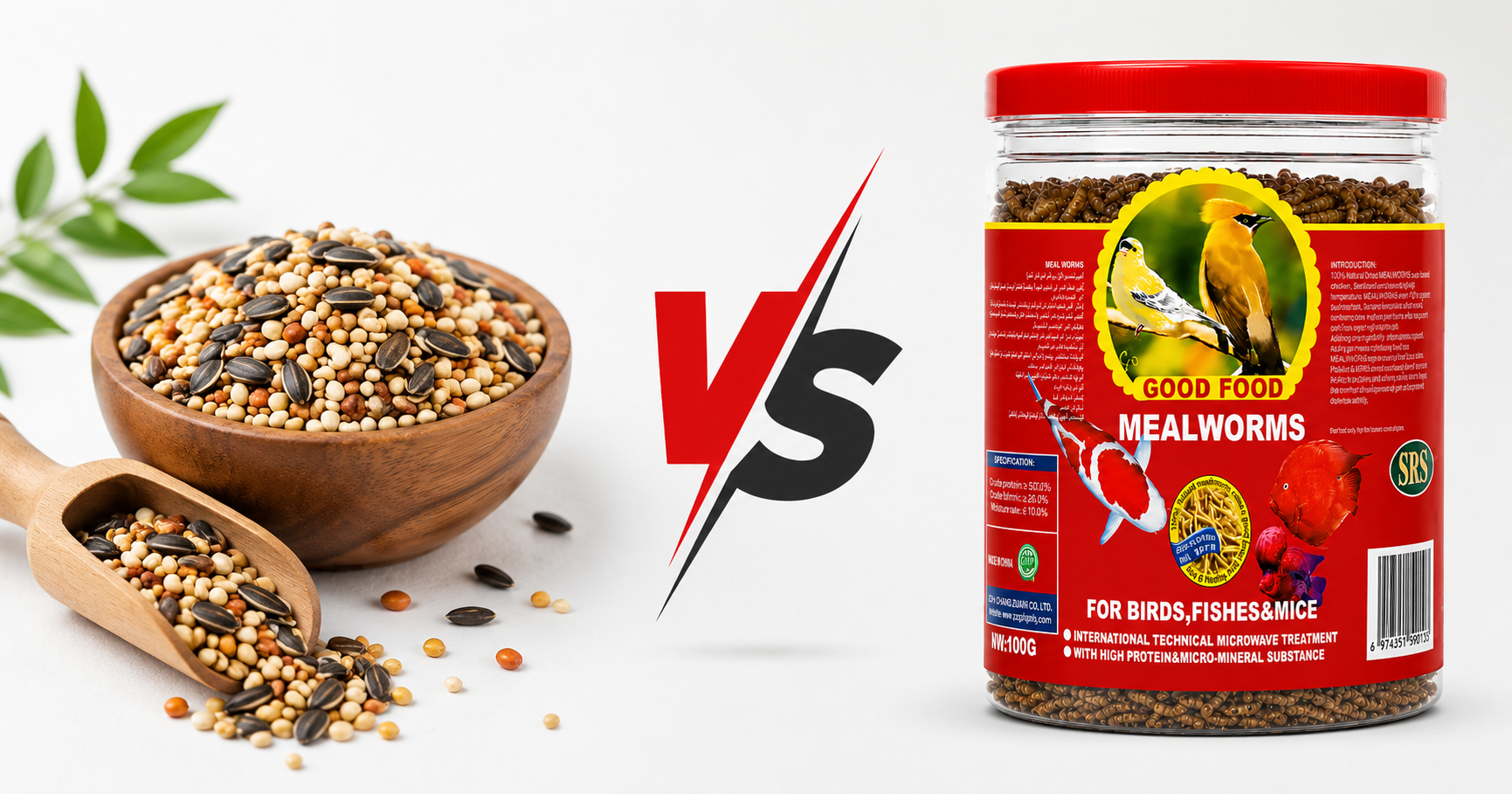
If you are comparing bird treats in Qatar, bird seed and dried mealworms serve different feeding roles. For many seed-eating pet birds, species-appropriate seed can appear more regularly, while dried mealworms are better used as a supplementary protein-rich treat for compatible species. Neither should replace a balanced main diet.
For small companion parrots, diet balance matters more than one preferred treat. The Merck Veterinary Manual’s 2025 guidance suggests about 40–50% formulated pellets and 30–40% seed mix for many budgies, cockatiels and lovebirds, with vegetables and fruit making up the remaining portion. Larger parrots generally require a more pellet-focused diet.
At World of Birds , we stock bird food and treats for pet owners across Doha and Qatar from our Souq Al Ali store. This guide compares bird seed and dried mealworms by species, feeding role and treat frequency.
Key Takeaways
- Seed and dried mealworms serve different nutritional roles.
- Seed-only diets can be incomplete for many companion birds.
- Dried mealworms are supplementary treats, not complete food.
- Mealworm frequency should depend on species and the total diet.
- Treats work best when they support training, foraging or variety without replacing balanced food.
Bird Seed vs Dried Mealworms
Bird seed can be part of regular feeding for some seed-eating birds, while dried mealworms are better treated as supplementary food. The correct balance depends on the bird species and the rest of its diet.
| Factor | Bird Seed | Dried Mealworms |
| Main role | Species-dependent food or treat | Supplementary treat |
| Nutrient emphasis | Energy, fats and carbohydrates vary by seed | Concentrated protein and fat |
| Regular use | Depends on species and total diet | Not a universal daily food |
| Best fit | Seed-eating companion birds | Compatible omnivorous or insect-eating birds |
| Main concern | Seed-only diets may be incomplete | Overuse can unbalance the diet |
| Enrichment use | Foraging and training | High-value reward or novel food |
| Storage | Cool, dry and sealed | Cool, dry and tightly sealed |
What Is the Main Difference?
Seed is a plant-based food with a nutritional profile that varies by seed type. Mealworms are insects and provide a concentrated animal-based food source.
That difference matters because pet birds do not all eat the same natural diet. Merck notes that psittacine diets vary between fruit, nectar, seeds and combinations of plant foods. Some species also consume small quantities of insects.
Which Should Pet Birds Eat More Often?
For many budgies, cockatiels and lovebirds, species-appropriate seed can appear more regularly than dried mealworms. Mealworms are optional supplementary treats rather than a universal daily requirement.
The important question is not which food is better. It is whether the food fits the species and supports the main diet.
Is Bird Seed a Treat or Daily Food?
Bird seed may be part of regular feeding for some small companion birds, but seed should not automatically form the entire diet. Its role changes with species and the formulated food already being offered.
Merck currently recommends roughly 40–50% pellets and 30–40% seed mix for most budgies, cockatiels and lovebirds. For larger parrots, Merck recommends about 80% pellets, with seeds and nuts used occasionally for treats or training.
For the wider feeding picture, our What Should Pet Birds Eat? guide covers pellets, vegetables, fruit, seed and overall feeding balance.
Why Seed-Only Diets Can Be a Problem
A bird enjoying seed does not mean seed alone meets every nutritional requirement.
Merck’s 2025 psittacine nutrition review states that strict seed diets can be deficient in vitamin A, calcium and important amino acids such as lysine and methionine. Seed-heavy feeding can also allow birds to select favourite foods while ignoring more balanced options.The issue is dietary imbalance, not the existence of seed itself.
Which Birds May Eat More Seed?
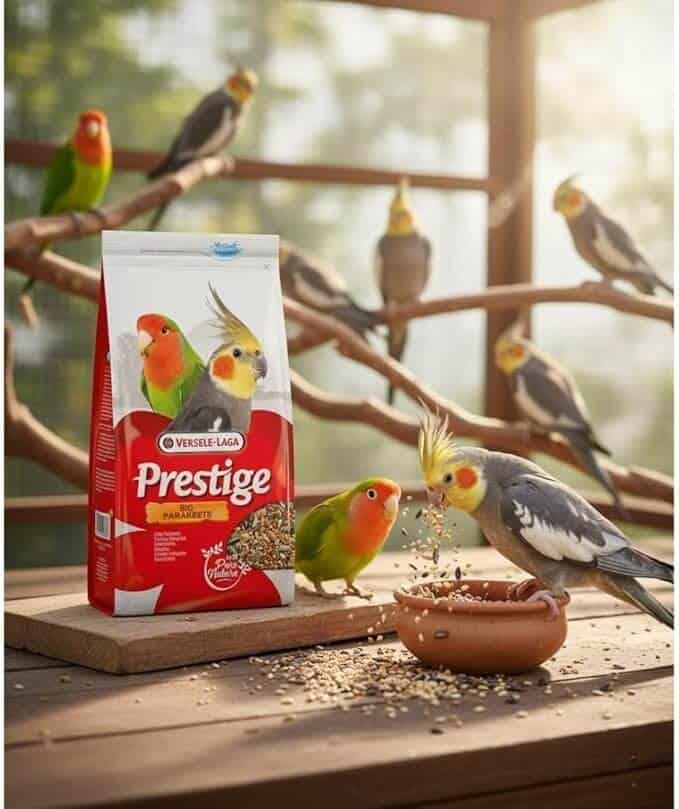
Small parrots such as budgies, cockatiels and lovebirds may have a meaningful seed component within balanced feeding.
Finches and canaries also commonly receive seed-based foods, although their exact requirements depend on species.
Larger parrots generally need a more formulated-food-focused feeding pattern. The same seed ratio should not be applied to every bird.
World of Birds currently lists species-specific products such as Versele-Laga Prestige Big Parakeets 1kg – Premium Seed Mix for Large Parakeets & Conures. This product is aimed at birds such as cockatiels and similar parakeets, although current stock can change
Are Dried Mealworms Good Bird Treats?
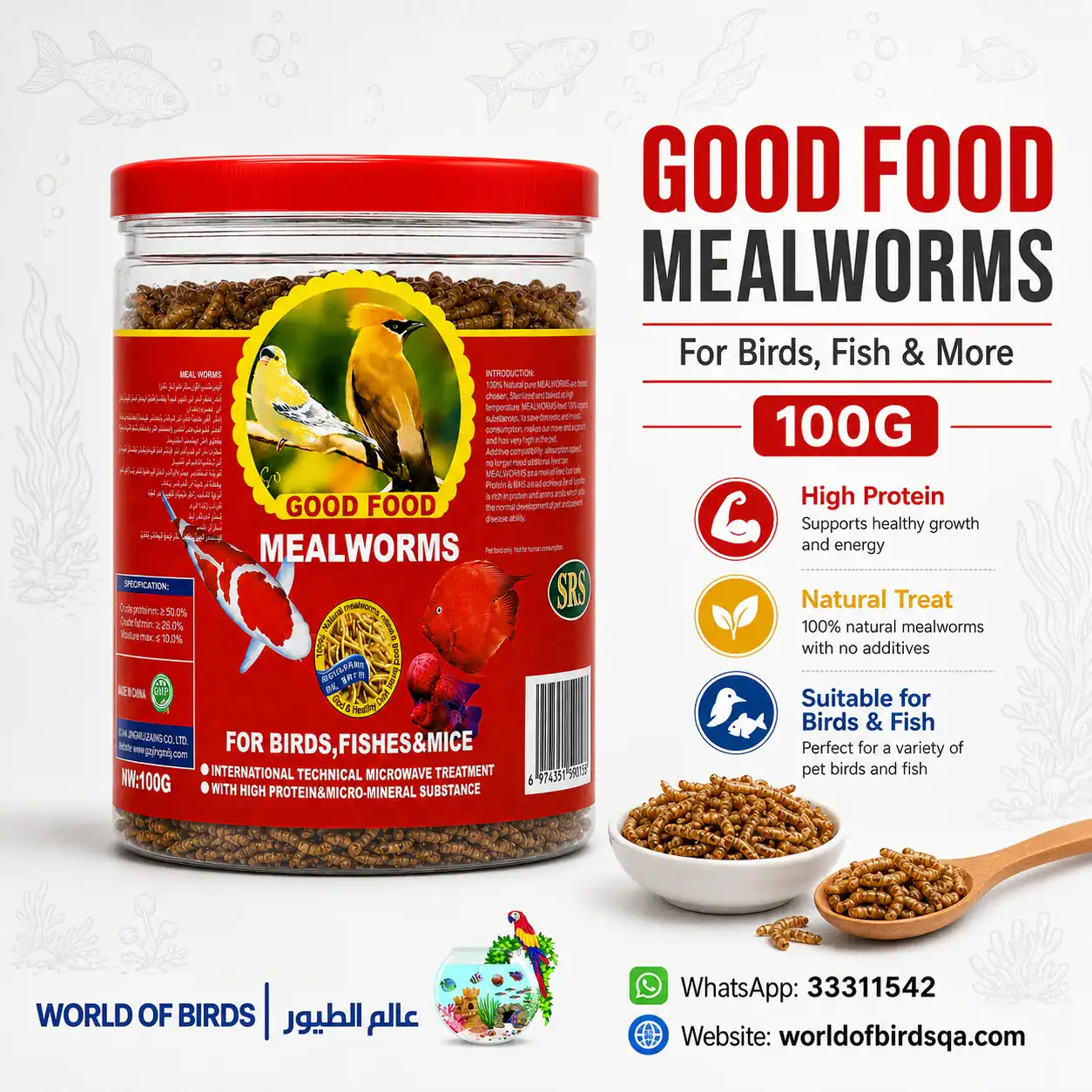
Dried mealworms can be useful supplementary bird treats for compatible species, but they are not complete food. Their main role is to add concentrated protein, fat and feeding variety within an already balanced diet.
Our SISO Good Food Dried Mealworms 100g – High Protein Natural Treat for Birds, Fish & Small Pets is sold as a supplementary treat. The product instructions clearly state that mealworms should not replace a complete balanced diet.
What Do Dried Mealworms Provide?
Mealworms provide an animal-based food source that differs from seeds and pellets. Their concentrated nutrition can make them useful as a small reward, enrichment food or supplementary item for compatible birds.
However, high protein does not mean more is always better. Protein requirements differ between bird species and life stages.
Do All Parrots Need Mealworms?
No. Parrots do not universally need dried mealworms.
Merck describes psittacines as mainly plant-based feeders, although some species consume insects in small quantities. A budgie, cockatiel or lovebird can have an appropriate balanced diet without dried mealworms.
If mealworms are offered, they should complement the regular diet rather than push pellets, vegetables or other important foods aside.
Why Supplementary Matters
The word supplementary matters because the product adds variety without becoming the foundation of the diet.
For owners who want a larger container, SISO Good Food Dried Mealworms 200g – High Protein Natural Treat for Birds, Fish & Small Pets provides the same type of dried supplementary food in a larger jar.
Seed vs Mealworms by Bird Species
The role of bird seed and dried mealworms changes by species. A feeding pattern that fits a finch should not automatically be applied to a cockatiel or lovebird.
Our current Live Birds in Qatar range includes budgies, cockatiels, Fischer lovebirds, Rosy-Faced lovebirds, Java Sparrows and Zebra Finches. Current individual availability may change.
| Bird | Seed Role | Dried Mealworm Role |
| Budgie | Controlled part of balanced feeding | Optional supplementary treat |
| Cockatiel | Controlled part of balanced feeding | Optional treat |
| Lovebird | Should not dominate the diet | Optional supplementary treat |
| Finch | Seed or formulated food may have a larger role | Some species may accept insect food |
| Canary | Seed is commonly used, but balance matters | Optional for compatible birds |
| Larger parrot | Usually limited beside formulated food | Not a routine requirement |
Budgies
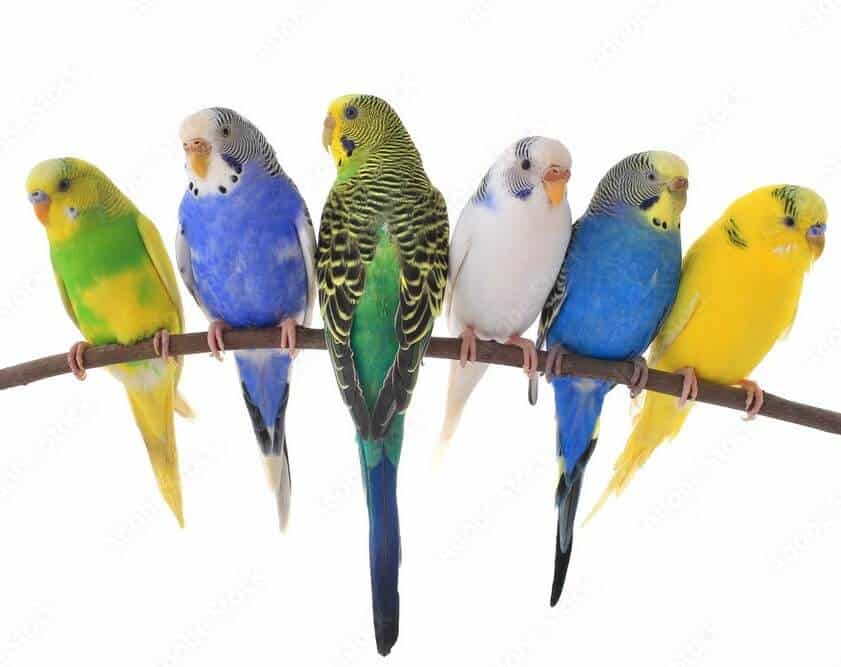
Budgies (Budgerigars) – Adult, Assorted Colours & Size need balanced daily feeding rather than seed alone. Our current budgie care information includes quality budgie seed mix or pellets, fresh vegetables, small amounts of bird-safe fruit and clean water.
Dried mealworms remain optional. They should not replace the main balanced feeding pattern.
Cockatiels
Cockatiels – Adult, Assorted Colours can show a strong preference for seed, but preference does not make an all-seed diet complete.
Our current cockatiel care information includes quality cockatiel seed mix or pellets, fresh leafy vegetables and small amounts of bird-safe fruit. Occasional treats can then sit around that main diet.
Lovebirds
Lovebirds also need varied feeding. Our Green Fischer Lovebird – Adult care information recommends balanced food with seed mix or pellets, vegetables, small fruit portions and clean water. Treats remain occasional additions.
Mealworms can therefore remain an optional supplementary food rather than replacing the bird’s usual diet.
Finches
Finches are particularly relevant when discussing insect-based supplementary foods because species feeding behaviour varies.
Our Zebra Finch – Adult, Assorted Colours is a small social cage bird. Our current care guidance includes quality finch seed mix, fresh greens, vegetables and clean water.
Some finch species may accept insect foods more readily than typical companion parrots. The exact bird species should guide whether dried mealworms have a useful role.
Larger Parrots
For larger parrots, formulated food generally takes a bigger role, while seed is more controlled.
World of Birds also lists Versele-Laga Prestige Parrots Food 1kg – Premium Seed Mix for Parrots & Large Birds for birds such as African greys, amazons, cockatoos and macaws. Current availability should be checked before purchase.
Mealworms are not automatically necessary simply because they contain protein.
Which Bird Treat Should Be Offered More Often?
Species-appropriate seed can appear more often than dried mealworms for many small seed-eating pet birds, but treats should never drive the whole diet. The main feeding pattern comes first.
At World of Birds, a simple way to assess a treat is to use three questions:
- Species: Does this bird naturally consume mainly seeds, plant foods, insects or a mixture?
- Base diet: Is the bird already receiving balanced formulated food and suitable fresh foods?
- Purpose: Is the treat being used for variety, training, foraging or a specific nutrition plan?
If those three points are unclear, adding more treats is rarely the best first action.
This simple framework also prevents a common mistake: treating a high-value food as though it must be nutritionally essential.
Mealworms During Moulting or Breeding
Protein requirements can rise during heavy moulting, growth and egg production, but that does not mean every bird should receive dried mealworms daily.
Merck’s 2025 nutrition review states that growing birds and egg-laying hens have higher protein requirements than adult birds at maintenance. Heavy moulting can also increase protein requirements because feathers contain substantial protein.
The right response still depends on the complete diet.
Birds that are breeding, losing weight, moulting abnormally or showing appetite changes should have their feeding plan reviewed by an avian veterinarian.
Bird Treats for Training and Enrichment
Bird treats can provide value beyond nutrition. Small amounts of a preferred food can support positive training and encourage natural foraging behaviour.
Use Small Training Rewards
A preferred seed or suitable mealworm can work as a small reward. Keep each reward small so repeated training sessions do not replace the bird’s normal food.
Merck also notes that seeds and nuts can be useful as occasional training treats for larger parrots.
Add Treats to Foraging
Small treats can be placed in suitable foraging toys or hidden inside bird-safe enrichment materials.
This encourages searching, movement and problem-solving rather than constant passive bowl feeding. Our Bird Feeding Accessories Qatar guide covers feeders and related bird-feeding products separately.
How Often Should Pet Birds Have Treats?
There is no single treat schedule that is correct for every pet bird. Frequency depends on species, body size, base diet, health, activity and treat type.
Instead of following a universal “times per week” rule, focus on portion size and the bird’s total intake. If treats cause the bird to ignore balanced formulated food or other required foods, the feeding pattern needs adjustment.
Regular weight monitoring can also help detect unwanted changes.
How to Store Bird Treats in Qatar
Bird seed and dried mealworms should be stored sealed, dry and away from direct heat or sunlight. Qatar’s warm climate makes sensible indoor storage especially useful.
Store Bird Seed Dry and Sealed
Keep bird seed in a clean, airtight container in a cool indoor place.
Protect it from:
- Moisture
- Pest access
- Direct sunlight
- Contamination
Merck warns that improperly stored seeds can develop mould, including contamination associated with aflatoxins. Food with visible mould, moisture damage, pests or an unusual smell should be discarded.
Store Dried Mealworms Closed
The SISO mealworm instructions recommend keeping the container closed in a cool, dry place after use.
For households with several birds or aviary-style feeding, World of Birds also stocks SISO Good Food Dried Mealworms 4kg – High Protein Treat for Birds, Fish & Small Pets. It remains supplementary food and should not replace a balanced diet.
What to Check Before Buying Bird Treats
Before buying bird treats in Qatar, check the bird species, current diet, product role and ingredient information. A product marketed for birds can still suit some species better than others.
Check four points:
- Is the food complete or supplementary?
- Does it fit the bird species?
- Does it add something useful to the current diet?
- Can it be stored correctly after opening?
Our current dried mealworm products are clearly presented as supplementary treats. Seed-mix stock changes, so current availability should be checked before visiting. At the latest check, our mealworm products were available while several Versele-Laga seed mixes were out of stock.
Where to Buy Bird Treats in Qatar
At World of Birds in Souq Al Ali, Doha, we stock bird food and treats for pet owners across Qatar.
Our current range includes dried mealworms and other bird-feeding products. Seed availability can change depending on current inventory.
If you are comparing bird treats Qatar options, tell us your bird species and current feeding routine. That information helps us discuss the role of the treat without treating every bird species the same way.
Frequently Asked Questions
Are Dried Mealworms Good for Pet Birds?
Dried mealworms can be useful supplementary treats for compatible pet birds, but they are not complete food. They provide concentrated animal-based nutrition and can add feeding variety. Their role should depend on species, current diet and health rather than a universal feeding schedule.
Can Budgies and Cockatiels Eat Mealworms?
Mealworms can be offered as an optional supplementary treat when they suit the individual bird, but budgies and cockatiels do not require them daily. Their main feeding pattern should remain nutritionally balanced and appropriate for the species.
Are Seeds Healthy for Pet Birds?
Species-appropriate seeds can form part of balanced feeding, but seed-only diets can create nutritional gaps in many companion birds. Merck specifically identifies vitamin A, calcium and important amino acids as concerns in strict seed diets for psittacines.
Are Mealworms Better Than Bird Seed?
No. Mealworms and bird seed serve different nutritional roles. Seed may form part of regular feeding for some birds, while mealworms are supplementary protein-rich treats. Species, life stage and the total diet determine which food has the more useful role.
Where Can I Buy Bird Treats in Qatar?
World of Birds stocks bird food and treats from our Souq Al Ali store in Doha. Our current range includes SISO dried mealworms and other bird-feeding products for pet owners across Qatar, subject to current availability.
Use Bird Treats as Part of a Balanced Diet
Bird seed and dried mealworms are not direct substitutes. Seed can have a regular but controlled role for some small seed-eating birds. Dried mealworms work better as supplementary treats for compatible species.
The best feeding plan starts with the bird species and the complete diet. Treats should add variety, enrichment or a useful reward without pushing balanced food out of the bowl.
At World of Birds, we stock bird food and treats for pet owners across Doha and Qatar from our Souq Al Ali store. Browse our Bird Food & Treats range and contact us with your bird species and current feeding routine before adding a new treat.
Planning to visit us in Doha? Get directions to World of Birds in Souq Al Ali.

One thought on “Bird Treats Qatar: Bird Seed vs Dried Mealworms for Pet Birds”