







How Long Does Dry Cat Food Last After Opening? Storage Guide

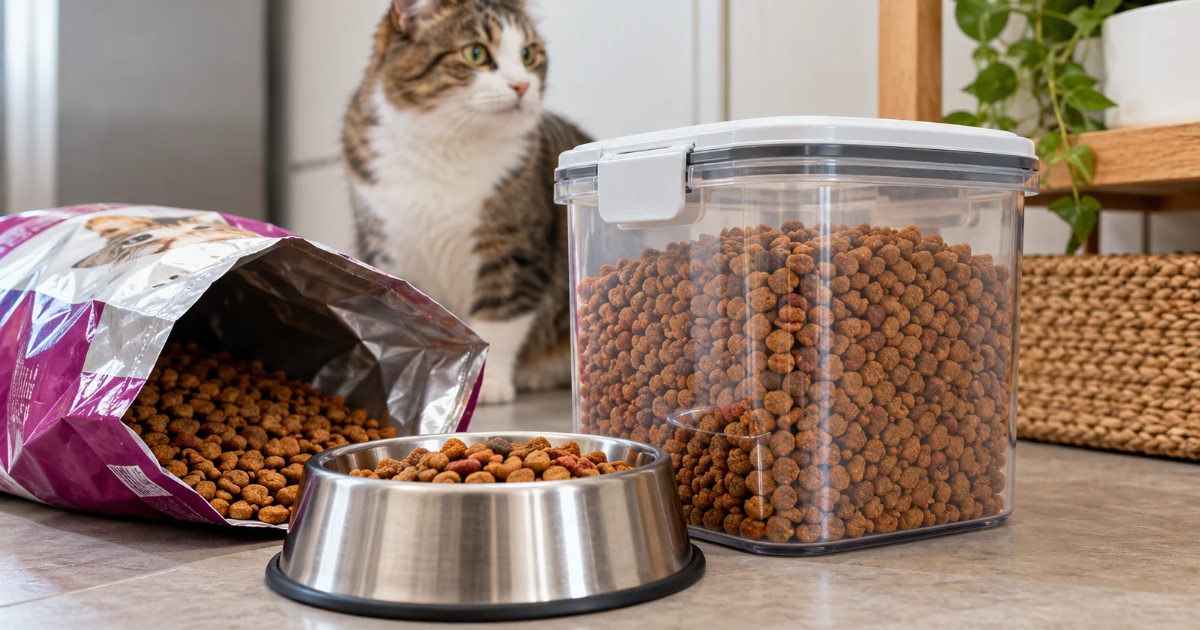
How long does dry cat food last after opening? For best freshness, aim to use opened kibble within 4–6 weeks when stored properly. Some manufacturers allow two to three months under suitable storage conditions, but their instructions should take priority.
At World of Birds in Souq Al Ali, Doha, proper dry-food storage is important for Qatar cat owners. Heat, moisture, air and poor sealing can reduce freshness and affect food quality over time.
This guide explains how long opened kibble lasts, how to store it, when to discard it, and which bag size makes sense. It also covers practical storage considerations for Qatar homes.
How Long Does Dry Cat Food Last After Opening?
Opened dry cat food is best used within 4–6 weeks for optimal freshness when stored correctly. Purina gives a broader two-to-three-month guideline for properly stored opened dry food, while World of Birds recommends finishing opened kibble within 4–6 weeks, especially during summer.
These timeframes are not identical because manufacturers and storage conditions differ. The goal should be maintaining freshness rather than simply reaching the maximum possible storage period. Heat, moisture and oxygen can gradually affect dry food quality.
Why Does Opened Kibble Lose Freshness?
Opening the bag exposes kibble to air and environmental conditions. Fat can oxidize over time, while moisture can soften the food and encourage mould.
Purina explains that leaving an opened bag exposed for months can cause food to become stale or rancid. Therefore, sealing the bag after every serving is important.
Does the Best-By Date Still Matter?
The best-by date remains important, but it should not be treated as a guarantee of freshness after opening. Purina explains that the best-by date applies to unopened packaging, while storage after opening becomes an important factor.
Once the bag is opened, record the opening date. This simple habit helps you track how long the food has been exposed to air. Keep the original packaging even if you use a storage container.
The FDA recommends retaining product information because the package contains useful details such as the lot number and best-by date.
Should You Use Old Food Before the Expiry Date?
Not automatically. A bag can still be within its printed date but have poor freshness because of bad storage. If the food smells rancid, looks mouldy or has absorbed moisture, discard it. The printed date cannot compensate for prolonged exposure to unsuitable conditions.
What Is the Best Way to Store Dry Cat Food?
The best method is keeping dry cat food in its original bag, tightly sealed, inside a cool and dry storage area. The FDA recommends storing dry pet food in its original packaging and folding the top tightly after opening.
Follow this routine after every feeding:
- Remove the required portion with a clean scoop.
- Push excess air from the opened bag.
- Fold or seal the bag tightly.
- Place the bag in a clean storage container.
- Keep the container away from heat and sunlight.
- Return the food to storage immediately.
The storage area should remain dry. Avoid placing cat food beside ovens, windows, dishwashers or other heat sources.
Should Dry Cat Food Stay in Its Original Bag?
Yes, keeping the original bag is generally recommended because it preserves important product information. The FDA advises keeping the original packaging whenever possible, even when using an additional storage container.
The original bag also provides a barrier against air and moisture. If you use another container, place the complete bag inside whenever practical. This method also keeps the product name and batch information available.
Is an Airtight Container Good for Cat Food?
Yes, an airtight container can help protect opened kibble from air, moisture, pests and household odours. The FDA recommends using a clean, dry container with a secure lid when transferring dry pet food.
However, do not simply keep adding new food to old food. Clean and dry the container between bags. Old crumbs and oils can remain inside the container. Those residues can affect the freshness of the next bag.
Should You Pour Kibble Directly Into a Container?
You can, but keep the original packaging information and clean the container between bags. The FDA recommends keeping the original bag inside the container when possible. x
If you transfer the kibble directly, record:
- Product name
- Lot number
- Best-by date
- Opening date
- Manufacturer
This information can become useful if a product recall occurs.
How Should You Store Cat Food in Qatar?
In Qatar, store dry cat food in the coolest suitable indoor area, away from direct sunlight, moisture and heat. The FDA recommends keeping dry pet food below 80°F, which is about 27°C.
A kitchen cabinet can work if it stays cool and dry. Avoid balconies, garages and areas beside hot appliances. Air-conditioned rooms can provide a more stable environment. World of Birds also advises Qatar owners to keep dry food sealed and away from heat and humidity.
For broader local storage advice, see Where to Buy Premium Pet Food in Doha.
Why Does Humidity Matter?
Moisture is one of the biggest enemies of dry kibble. It can soften the food and encourage mould growth. Wet scoops can also introduce moisture into the bag. Always use a completely dry measuring scoop.
How Does Bag Size Affect Freshness?
Bag size matters because a large bag can take much longer to finish after opening. A smaller bag may provide better freshness for a single-cat household, while larger bags can make sense for multi-cat homes.
Consider this simple example:
| Bag size | At 50g per day | Approximate feeding period |
| 1kg | 50g/day | 20 days |
| 2.75kg | 50g/day | 55 days |
| 5kg | 50g/day | 100 days |
| 15kg | 50g/day | 300 days |
These are mathematical examples, not recommended feeding amounts. Actual portions depend on the cat, food and feeding instructions. For one cat, a smaller bag can be easier to finish within the preferred freshness window.
For several cats, a larger bag may be practical when storage conditions are suitable.
Example From World of Birds
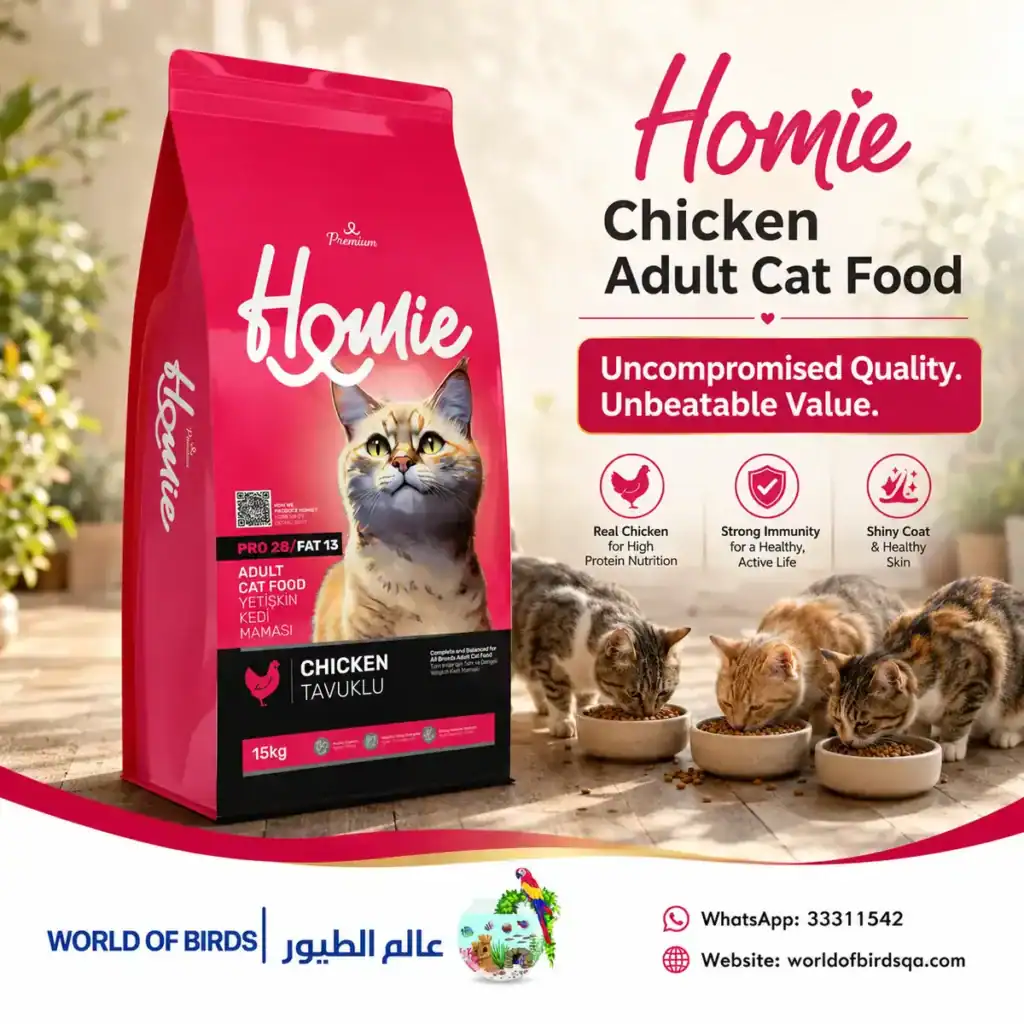
Homie Premium Chicken Adult Cat Food 1kg is a smaller pack option for owners who want less food open at one time. The product is listed as an adult dry cat food and includes storage instructions to keep it cool, dry and tightly sealed.
For households using more food, Homie Premium Chicken Adult Cat Food 2.75kg provides a larger quantity. Its product instructions also recommend a cool, dry storage area with the packaging tightly closed after use. For more information about Homie dry food options in Qatar, see Homie Dry Cat Food Qatar.
How Do You Know If Dry Cat Food Has Gone Bad?
Discard dry cat food if it develops mould, unusual odours, unexpected moisture, major texture changes or other clear signs of spoilage. A rancid smell, oily appearance or sudden refusal can also indicate that the food has lost freshness.
Check the food before filling the bowl.
Look for:
- Mould
- Damp or wet kibble
- Unusual colour changes
- Strong rancid odour
- Excessive oiliness
- Pest contamination
- Damaged packaging
Do not feed questionable food simply because it remains before the printed date. When in doubt, replacing the food is the safer choice.
Can Dry Cat Food Grow Mould?
Yes, dry cat food can develop mould when moisture enters the package or storage container. The FDA recommends keeping dry pet food in a cool, dry location because excess moisture can compromise food quality.
Never add wet food to dry kibble for storage. Keep water bowls away from open food bags. A damp scoop should also never enter the food container.
Can You Leave Dry Cat Food Out All Day?
Dry cat food can generally remain available longer than wet food, but prolonged exposure can reduce freshness. PetMD notes that dry food can stay fresh for two to three months in the bag when properly stored, while exposed food can become stale.
Leaving a measured daily portion out can be convenient. However, the bowl should remain clean and protected from moisture and pests. Avoid repeatedly topping up old kibble. Empty the bowl before adding fresh food when possible.
For more guidance on dry-food feeding, read World of Birds’ Is Dry Food Bad for Cats? guide. It explains the benefits, limitations and feeding considerations of dry cat food.
Should You Mix Old and New Cat Food?
Do not mix a fresh bag directly with leftover food from an older bag. Old kibble can leave oils and crumbs inside the container, while the new food may then inherit those residues.
Instead:
- Finish the old food.
- Empty the storage container.
- Wash it with suitable soap.
- Rinse it thoroughly.
- Dry it completely.
- Add the new bag.
This routine keeps old food residue from accumulating. It also makes freshness tracking easier.
Which Dry Cat Food Pack Size Is Practical?
Choose a bag size that your household can reasonably finish while the food remains fresh. A single indoor cat may benefit from a smaller pack, while multi-cat households can often use larger bags faster.
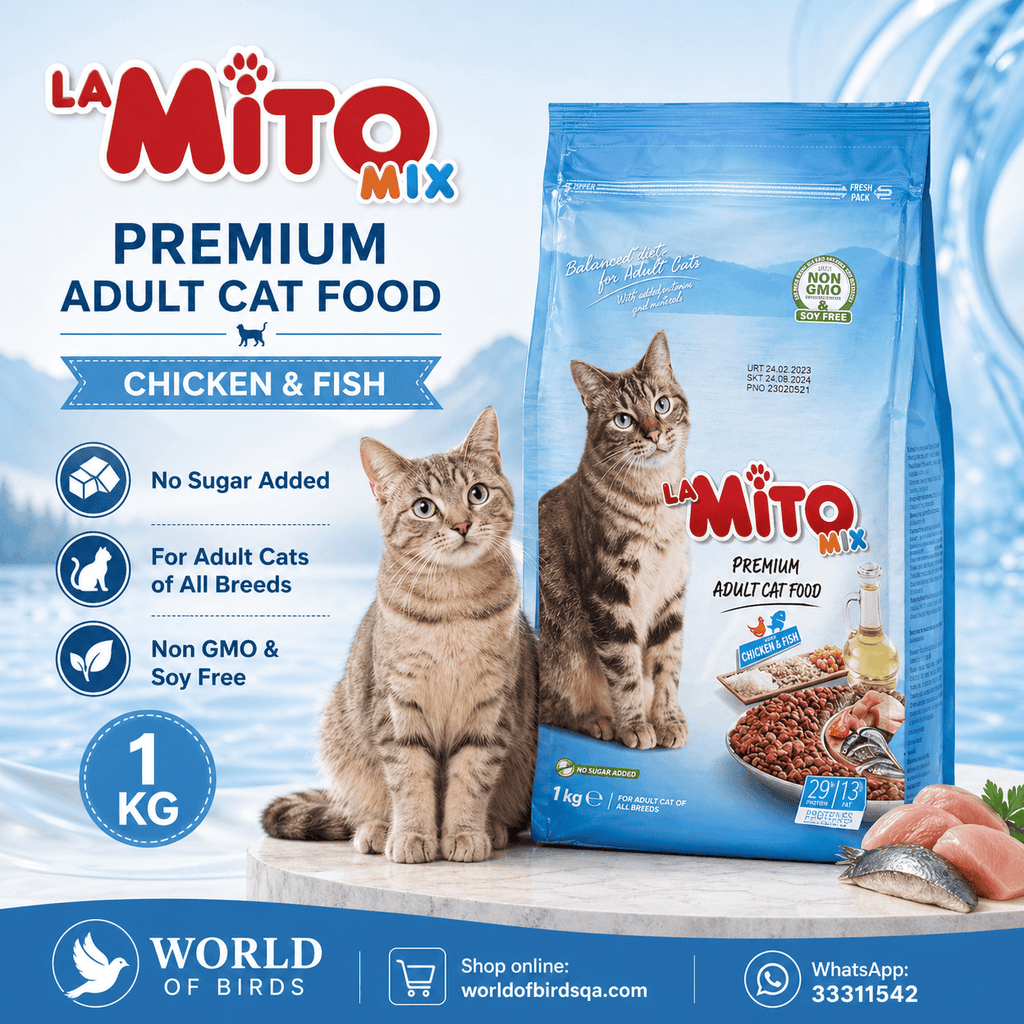
World of Birds currently lists several dry-food sizes. For example, Mito Chicken & Fish Mix Cat Food 1kg is a compact option for adult cats. Its product page recommends resealing the package and storing it away from heat and moisture.
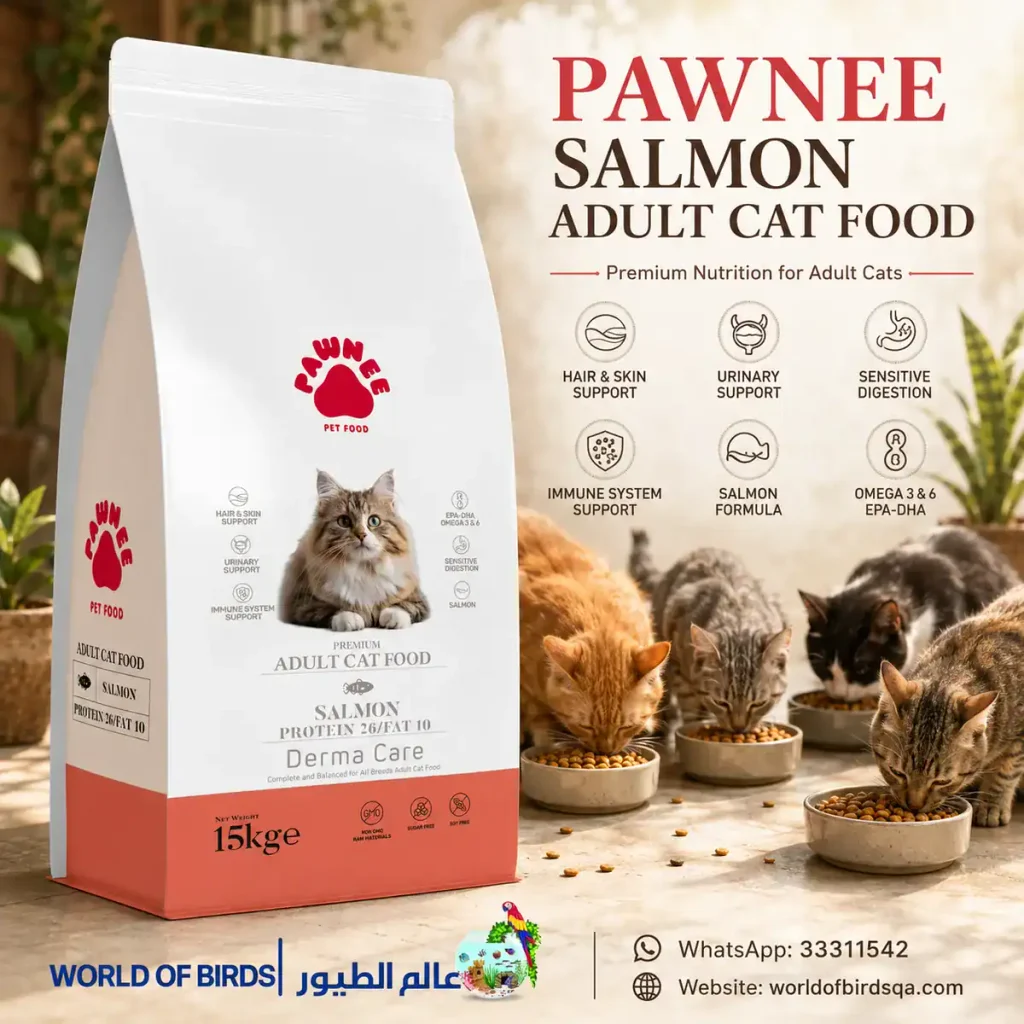
For larger households, Pawnee Premium Adult Cat Food with Salmon 15kg provides a bulk option. Its storage instructions also recommend keeping the package sealed in a cool, dry place.
For more dry cat food options and pack-size comparisons, see 8 Most Popular Dry Cat Foods in Qatar. The right size depends on consumption rather than price per kilogram alone.
How Should You Handle the Cat Food Scoop?
Use a clean, dry scoop specifically for pet food and never use the food bowl as the scoop. The AVMA recommends using a dedicated spoon or scoop and washing feeding equipment regularly.
A wet scoop can introduce moisture. Food residue can also accumulate on dirty utensils. Keep the scoop outside the food container between uses. Wash and dry it regularly. The same principle applies to food bowls.
What Is the Difference Between Dry and Wet Food Storage?
Dry and wet cat food require different storage routines because wet food contains much more moisture. Opened wet food requires prompt refrigeration or disposal, while dry food mainly needs protection from air, heat and moisture.
| Storage factor | Dry cat food | Wet cat food |
| After opening | Seal tightly | Refrigerate promptly |
| Main concern | Air, heat and moisture | Bacterial spoilage |
| Storage location | Cool, dry area | Refrigerator after opening |
| Typical opened-food period | Several weeks | Much shorter |
| Container | Original bag plus airtight container | Sealed container |
| Qatar heat concern | High | Very high |
For more information about wet cat food choices and safe handling in Qatar, read Top 7 Wet Cat Foods in Qatar. That article also covers wet-food storage, feeding and leftover handling for Qatar’s climate.
Does Dry Cat Food Need Refrigeration?
Usually, dry cat food does not need refrigeration when it is stored correctly in a cool, dry place. The FDA recommends storing dry pet food below 80°F rather than refrigerating it. A refrigerator can introduce condensation when food moves between temperatures.
Moisture is not helpful for dry kibble. A sealed container in a suitable cupboard is usually more practical. Always follow the individual product’s instructions if they differ.
Frequently Asked Questions
Q1. How long does dry cat food last after opening?
Answer: Opened dry cat food is best used within 4–6 weeks for freshness when stored properly. Some manufacturers recommend using opened kibble within two to three months. Always follow the product’s storage instructions and discard food showing spoilage signs.
Q2.Can dry cat food last 2 months after opening?
Answer: Yes, some manufacturers state that properly stored dry cat food can remain suitable for two to three months after opening. However, freshness can decline before that point. A 4–6 week target is more conservative for maintaining good quality.
Q3.Does dry cat food go bad after opening?
Yes, dry cat food can become stale or rancid after opening. Exposure to air, moisture and heat can reduce freshness and affect food quality. Mould or pest contamination can also make the food unsuitable.
Q4.Should I keep dry cat food in an airtight container?
Answer: Yes, an airtight container can help protect opened kibble from air, moisture, pests and odours. The FDA recommends keeping the original bag whenever possible or using a clean, dry container with a secure lid.
Q5.Can I use dry cat food after the best-by date?
Answer: Do not use dry cat food beyond the manufacturer’s stated date unless the manufacturer specifically provides different guidance. The best-by date applies primarily to unopened packaging, while opened food also depends heavily on storage conditions.
Q6.How should I store cat food in Qatar?
Answer: Store dry cat food indoors in a cool, dry place away from sunlight, heat and moisture. Keep the original bag tightly sealed or place it inside an airtight container. The FDA recommends storage below 80°F, around 27°C.
Q7.Is a 15kg cat-food bag suitable for one cat?
Answer: A 15kg bag may be inconvenient for one cat because it can take many weeks or months to finish. Smaller bags can make freshness easier to manage. Larger bags make more sense when several cats consume the food quickly.
Q8.Should I throw away kibble if it smells strange?
Answer: Yes, unusual or rancid smells are a reason to stop feeding the food. Other warning signs include mould, moisture, pests and unexpected texture changes. When food appears spoiled, discard it rather than testing it with your cat.
Conclusion
Opened dry cat food stays freshest when sealed tightly and stored in a cool, dry place. Aim to use opened kibble within 4–6 weeks for best freshness, especially during Qatar’s warmer months.
Check for mould, moisture, rancid smells, or other spoilage signs before serving. Choose a bag size your household can finish comfortably. For more guidance on choosing suitable pet food in Doha, see Premium Pet Food Doha.
You can also visit World of Birds in Souq Al Ali, Doha, for cat food options and practical help choosing a suitable product for your pet.
