







Bird Cage Qatar: Best Cages for Budgies, Cockatiels & Parrots

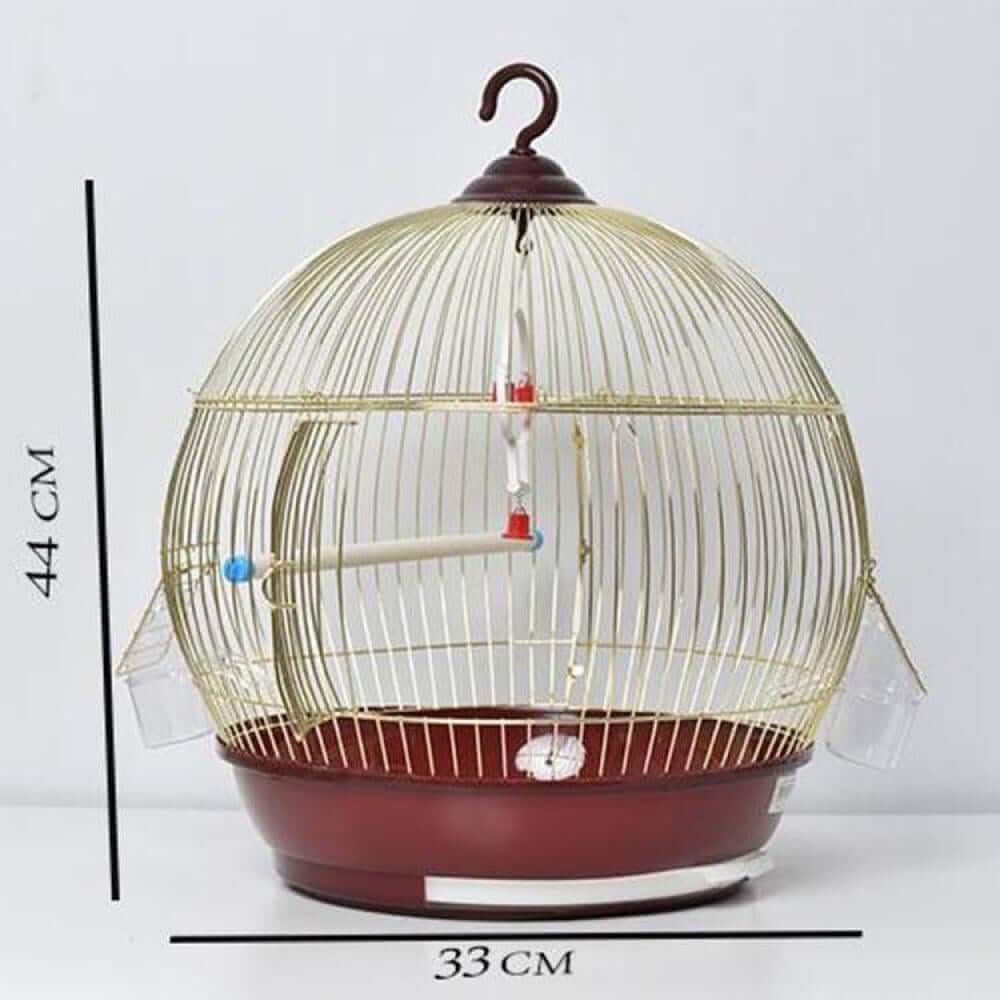
A cage can look spacious in a shop but still be unsuitable for the bird living inside it. For anyone searching for a bird cage Qatar, the main factors are usable space, safe bar spacing, cage shape, construction and the room left after perches, bowls and toys go inside.
A suitable bird cage should give the bird enough room to extend its wings, move between perches and reach food, water and enrichment without constantly touching the bars. Bar spacing must match the species because gaps suitable for a larger parrot may be unsafe for a budgie or cockatiel.
At World of Birds, we supply bird cages, birds and related accessories from our Souq Al Ali store in Doha. Our bird cages and accessories in Qatar category currently contains cage and stand options, although individual stock can change.
This guide covers cage requirements for budgies, cockatiels and parrots, along with bar spacing, cage shape, setup, cleaning and placement inside Qatar homes.
What to Check Before Buying a Bird Cage in Qatar
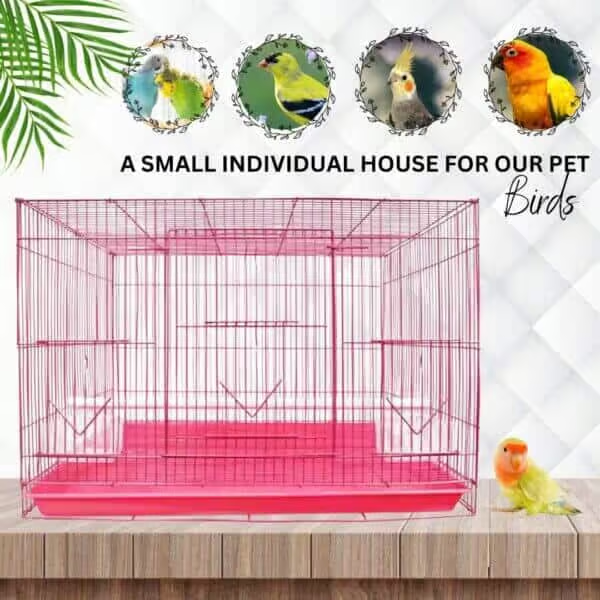
Before buying a live birds cage in Qatar, check cage dimensions, bar spacing, shape, door security and usable internal space together. A cage can be large but still unsafe when its bar gaps are too wide or accessories leave too little room for movement
Cage Size and Usable Space
Start with the space your bird can actually use after perches, bowls, swings and toys are installed.
A good setup should leave room for:
- Full wing extension
- Movement between major perches
- Food and water access
- Suitable toys and enrichment
- Open space that is not blocked by accessories
Width deserves particular attention. Many pet birds move horizontally between perches, so a very tall but narrow cage may provide less practical movement space than its height suggests.
For a single budgie, Lafeber gives around 18 × 18 inches as a minimum starting point and recommends a larger cage where practical. It also stresses correct bar spacing.
These measurements are avian-care guidance, not Qatar legal requirements.
Safe Bird Cage Bar Spacing
Bar spacing is a safety issue. A cage may have generous dimensions but still be unsuitable if a bird can push its head through the gaps.
Lafeber states that normal budgie cage spacing is around ½ inch and advises replacing a cage when the spacing allows a budgie’s face to pass too far between the bars.
For cockatiels, Lafeber recommends approximately ½ to ⅝ inch spacing and warns that ¾ inch may be too wide for a smaller cockatiel.
Parrot spacing cannot be reduced to one number. Lovebirds, conures, African greys, Amazons, cockatoos and macaws differ greatly in body size and strength.
Rectangular or Round Cage Shape
Rectangular and square cages usually provide more practical horizontal room and make perch positioning easier.
Lafeber specifically recommends square or rectangular cages for budgies and advises against tall, narrow round cages as their main housing.
Cage shape is only one factor. Dimensions, bar spacing, construction and intended use still need checking.
Door and Lock Security
Check the main door and feeder doors before bringing the bird home.
The closures should remain secure when a bird pushes, climbs or pulls at them. Larger parrots can be particularly persistent with simple latches, so stronger hardware matters as bird size and beak strength increase.
Cleaning Access
A cage becomes much easier to maintain when it includes:
- An accessible bottom tray
- Removable food and water bowls
- Doors large enough for routine cleaning
- Surfaces that can be inspected for dirt or damage
Easy cleaning is not a minor convenience. It directly affects how practical daily cage care becomes.
Space for Perches, Bowls and Toys
More accessories do not automatically create a better cage.
Perches, swings and toys should support natural activity without filling every open section. Keep a clear movement route through the cage and avoid placing every perch directly above food or water bowls.
Best Budgie Cage in Qatar
Budgies are small, active parrots that climb and move between perches throughout the cage.
Our Budgies in Qatar page recommends a spacious cage with horizontal bars, safe perches, toys and regular cleaning.
How Much Space Does a Budgie Need?
For one budgie, Lafeber gives around 18 × 18 inches as a minimum starting point and recommends larger housing when room allows. Square or rectangular designs are preferred.
For two budgies, Lafeber’s 2025 guidance suggests aiming for roughly 2 to 3 feet of usable flight length where practical, with about 2 feet of width and bar spacing of ½ inch or less.
That guidance highlights the real priority: horizontal movement.
A pair also needs enough room for multiple perches and feeding points without removing the flight path.
Budgie Cage Bar Spacing
Budgie cage spacing should generally stay at ½ inch or less.
A large cage built for a bigger parrot can therefore be unsafe for a budgie even when the overall dimensions look attractive.
Check spacing before size.
Cage Setup for One or Two Budgies
Keep the central area relatively open.
Place perches at different heights and leave enough separation for short flights or hops. Put toys around the usable areas rather than creating a solid wall across the cage.
For two budgies, provide enough resources so both birds can reach comfortable perches and feeding areas without constant competition.
Best Cockatiel Cage in Qatar

A cockatiel cage Qatar setup needs more room than a typical budgie setup because cockatiels have larger bodies, longer tails and prominent crests.
Our Cockatiels in Qatar page recommends a spacious cage with safe bar spacing, natural perches, toys and regular cleaning.
Cockatiel Cage Size
Lafeber gives 18 × 18 inches as a minimum starting point for a cockatiel. It recommends 20 × 20 or 18 × 24 inches as better options. Larger space remains beneficial when the bar spacing stays safe.
Watch the tail when assessing usable space. A cage can appear large until the cockatiel sits on a central perch and its tail repeatedly touches the bars or accessories.
The crest also needs comfortable clearance.
Cockatiel Cage Bar Spacing
Lafeber recommends approximately ½ to ⅝ inch spacing for cockatiels. It warns that ¾ inch may be too wide for a smaller bird.
That makes the generic label “parrot cage” unreliable on its own.
Species matters more than the marketing name.
Perches and Climbing Space
Cockatiels climb around the cage as well as move between perches.
Use enough separation between major perches for natural movement. Toys should remain accessible without occupying most of the wing space.
Best Parrot Cage in Qatar
The term parrot cage Qatar covers birds with very different housing requirements. A lovebird and a macaw are both parrots, but they should not share the same cage dimensions, bar spacing or bar strength.
Small Parrots
For smaller parrots, focus on:
- Species-safe bar gaps
- Horizontal movement
- Secure doors
- Climbing space
- Room for perches and enrichment
A physically larger cage is useful only when its spacing remains safe.
Medium Parrots
Medium parrots generally require more substantial construction and greater internal space.
Look for:
- Stronger bars
- Secure doors
- Robust hinges and locks
- Enough room for larger perches
- Open movement space after toys are installed
Large Parrots
African greys, Amazons, cockatoos and macaws vary too much for one universal cage recommendation.
The exact species should determine:
- Internal dimensions
- Bar spacing
- Bar thickness
- Door strength
- Perch size
- Enrichment space
If a cage listing does not provide critical measurements, confirm them before purchase.
Stronger Parrots Need Secure Doors
Larger parrots can repeatedly test cage hardware with their beaks and feet. Check the main door, feeding doors, hinges and locking system. A cage that is large enough but easy to open is not secure housing.
Round vs Rectangular Bird Cages
Rectangular bird cages usually provide more practical horizontal space and easier perch placement, while round cages need closer assessment for usable width, bar spacing and intended use.
| Feature | Rectangular cage | Round cage |
| Horizontal movement | Usually easier to provide | Can be more restricted |
| Corners | Available | No corners |
| Perch layout | Easier to arrange | Can require more planning |
| Internal layout | Easier to divide into activity areas | Space depends heavily on diameter |
| Suitability | Depends on dimensions and spacing | Needs careful species assessment |
Why Rectangular Cages Often Work Better
For budgies, Lafeber specifically recommends square or rectangular designs and states that birds do not favour tall, narrow cages, particularly round cages.
Rectangular layouts also make it easier to keep one section open for movement while placing food, water and enrichment around the edges.
Assessing a Round Bird Cage
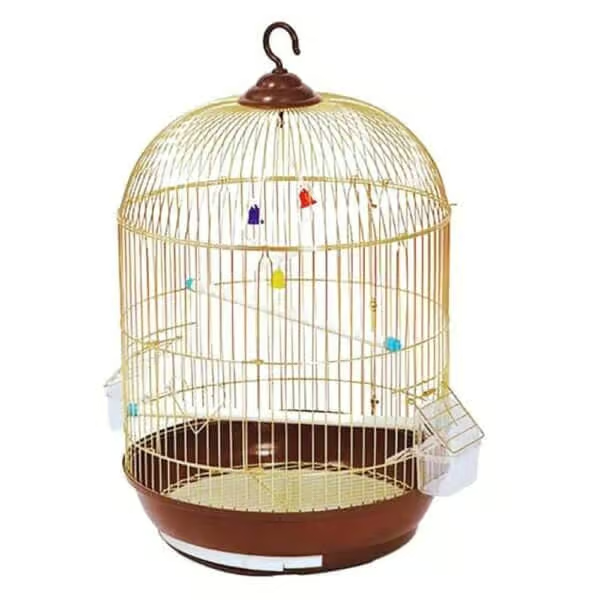
We currently list Birds Cage Round Golden and Birds Cage Round Golden. Their product pages confirm the round design and stated dimensions. The 34 × 52 cm model also has an easy-clean tray and secure lock.
Before using any round cage for regular housing, check:
- Diameter and usable width
- Bar spacing
- Bird species
- Space after perches and bowls
- Intended use
- Movement room
Our product pages describe these cages broadly for small to medium birds, but that description does not replace species-specific bar-spacing and space checks.
How to Set Up a Bird Cage Properly
A large cage can quickly become cramped after accessories go inside.
Position Perches Around Open Movement Space
Use perches at different heights while leaving clear routes between them. Avoid placing every perch directly above a food or water bowl. Also keep enough space around favourite perches for tails and wings.
Keep Food and Water Easy to Reach
Bowls should be easy for the bird to access and simple for you to remove for cleaning. Keep them away from locations where droppings regularly fall from higher perches.
Add Bird Toys Without Overcrowding
Birds need enrichment, but they also need space.
Rotate suitable toys rather than hanging every item at the same time. Inspect ropes, bells, swings and other accessories for wear before damaged parts become a hazard.
Keep the Cage Floor Accessible
A clear floor and removable tray make cleaning simpler.
They also make it easier to notice dropped food, unusual droppings or damaged accessories.
Where to Put a Bird Cage in a Qatar Home
Place a bird cage in a bright, calm area away from direct AC airflow, prolonged direct sunlight, smoke and kitchen fumes.
Our budgie and cockatiel care pages both recommend bright, calm, draft-free indoor positions and keeping cages away from direct heat, strong wind, smoke and kitchen fumes.
Avoid Direct AC Airflow
Air conditioning is common in Qatar homes, but a cage should not sit directly beneath a vent or in a continuous stream of cold air.
Move the cage away from the direct draft while keeping the room comfortably ventilated.
Limit Strong Direct Sunlight
A bright room can work well.
Strong direct sunlight is different. Position the cage so the bird can move away from intense sun and does not remain exposed to strong heat through a window for long periods.
Check how sunlight moves across the room during the day.
Keep the Cage Away From Kitchen Fumes
Our own budgie and cockatiel guidance advises keeping birds away from smoke and kitchen fumes.
Keep cages away from active cooking areas, smoke and strong aerosols.
Give Social Birds a Calm Household Position
Budgies and cockatiels are social companion birds. Our care pages recommend regular interaction and a calm indoor environment.
A useful cage position lets the bird experience normal household activity without constant disturbance.
Using a Bird Cage Stand
Our Stand For Hanging Cage is designed for lightweight hanging bird cages. The current product specifications state a height of 166 cm and a maximum supported weight of 2 kg.
Check the complete loaded weight of the cage, including bowls, food, toys, perches and other accessories, before placing it on the stand.
How to Clean and Maintain a Bird Cage
Regular cleaning supports everyday cage hygiene and gives us a chance to spot damaged bars, locks or accessories early.
Daily Bird Cage Checks
Check the cage every day for:
- Clean drinking water
- Spoiled or leftover fresh food
- Dirty bowls
- Wet or heavily soiled areas
- Loose doors or latches
- Damaged toys and perches
Our budgie and cockatiel care guidance calls for fresh water every day and regular cleaning of bowls, trays and perches.
Clean the Tray and Cage Surfaces
Remove waste before it builds up.
Clean bowls, trays and appropriate cage surfaces with bird-safe methods, and keep birds away from strong cleaning fumes.
Inspect Bars, Locks and Accessories
Look for:
- Rust
- Loose wire
- Sharp edges
- Broken doors
- Weak latches
- Splintered perches
- Frayed toys
Replace damaged components before they become a safety problem.
Bird Cages and Accessories at World of Birds Qatar
Our current bird cages and accessories category lists three cage products and one hanging-cage stand. All four pages are active at the latest check, although availability can change.
Cage for Birds Rabbits & Other Pets 47x32x33cm
Our Cage for Birds Rabbits & Other Pets has stated dimensions of 47 × 32 × 33 cm, a removable tray and a secure locking mechanism.
The current product page does not state bar spacing.
For that reason, we do not assign this cage to a specific budgie, cockatiel or parrot from dimensions alone. Confirm the bar spacing before matching it to a bird species.
Birds Cage Round Golden 34X42CM
The Birds Cage Round Golden has a stated 34 × 42 cm size, round design and secure locking mechanism.
Its product page broadly lists small to medium birds, but buyers should still verify bar spacing, usable movement room and species suitability.
Birds Cage Round Golden 34X52CM
The Birds Cage Round Golden 34X52CM measures 34 × 52 cm and includes an easy-clean tray and secure lock. Its page lists parakeets, finches, lovebirds and similar small birds among the intended users.
Bar spacing should still be confirmed before matching the cage to an individual bird.
Where to Buy a Bird Cage in Qatar
World of Birds supplies bird cages and cage accessories from Souq Al Ali, Doha, Qatar, with current products also listed online. Our cage category currently includes three cages and one hanging stand.
Before contacting us about a bird cage Qatar setup, have these details ready:
- Exact bird species
- Number of birds
- Required bar spacing
- Available cage area at home
- Preferred cage dimensions
- Space needed for perches and toys
- Whether a cage stand is required
For parrots, give us the exact species rather than only saying “parrot”. That information can change the required dimensions, bar spacing and hardware strength.
Frequently Asked Questions About Bird Cages in Qatar
What Size Cage Does a Budgie Need?
A budgie needs enough horizontal room to extend its wings and move between perches without crowding. Lafeber gives around 18 × 18 inches as a minimum starting point for one budgie and recommends larger space where practical. Bar spacing is equally important, with ½ inch or less recommended for budgies.
What Size Cage Does a Cockatiel Need?
Lafeber gives 18 × 18 inches as a minimum starting point for a cockatiel, with 20 × 20 or 18 × 24 inches described as better options. It also recommends approximately ½ to ⅝ inch bar spacing to reduce head-entrapment risk.
How Big Should a Parrot Cage Be?
There is no single cage size for every parrot. A small lovebird, medium parrot and large macaw have very different requirements. Match cage dimensions, bar spacing, bar strength, locks and internal space to the exact species rather than relying on a generic parrot-cage label.
Are Round Bird Cages Suitable for Pet Birds?
Square or rectangular cages generally provide more practical horizontal space for species such as budgies. Lafeber specifically recommends square or rectangular housing for budgies over tall, narrow round cages. Any round cage should be assessed for diameter, bar spacing, movement space and intended use.
Where Can I Buy a Bird Cage in Qatar?
World of Birds supplies bird cages and accessories from our Souq Al Ali store in Doha and through our online cage category. Check the current cage dimensions and confirm bar spacing for your bird species before purchase because product availability and suitability can vary.
Get the Right Bird Cage for Your Bird in Qatar
A bird cage Qatar setup should start with the bird species, not colour or decorative style. Budgies need narrow safe bar spacing and useful horizontal room. Cockatiels require more space for their larger body, tail and crest. Parrot housing must match the exact species because body size, strength and bar-spacing requirements vary widely.
Keep enough open room after adding perches, bowls and toys. Position the cage away from direct AC airflow, strong sunlight and kitchen fumes, and inspect locks, bars and accessories as part of routine care.
At World of Birds, we help bird owners across Qatar assess cage dimensions, designs and accessories from our Souq Al Ali store in Doha. Browse our bird cages and accessories in Qatar and contact us with your bird species, number of birds and space requirements before visiting.
Planning to visit us? Get directions to World of Birds in Souq Al Ali, Doha and check our latest store details before you arrive.

3 thoughts on “Bird Cage Qatar: Best Cages for Budgies, Cockatiels & Parrots”