







Best Cat Food for Indoor Cats: What Indoor Cats Need From Their Diet

The best cat food for indoor cats is a complete and balanced diet with enough protein, controlled calories and suitable moisture for the cat’s activity level. Indoor cats often burn fewer calories than active outdoor cats, so portion size and energy density matter as much as the ingredient list.
At World of Birds in Souq Al Ali, Doha, we help Qatar cat owners compare dry and wet foods for different ages, activity levels and feeding needs. Our current range includes purpose-designed indoor food, adult maintenance formulas and wet foods that can add dietary moisture.
This guide explains what to look for when choosing the best cat food for indoor cats, how to compare dry and wet options, and which World of Birds products may fit different indoor-cat needs.
Key Takeaways
- Indoor cats still need complete, balanced feline nutrition.
- Lower activity can make calorie control especially important.
- Quality protein helps maintain lean muscle.
- Fibre can be useful for digestion and hairball management.
- Wet food provides substantially more moisture than dry food.
- Portion control matters even when the food is nutritionally complete.
- Check the food’s life-stage and nutritional adequacy information.
- A food labelled specifically for indoor cats can be useful, but the label should still be evaluated carefully.
- Weight, body condition and health status should influence food selection.
- Cats with medical conditions may need a veterinary diet instead of ordinary indoor cat food.
What Do Indoor Cats Need From Food?
Indoor cats need the same essential nutrients as other cats, but their lower activity level can make calorie management more important. A suitable diet should provide complete nutrition, adequate protein, essential amino acids, fats, vitamins and minerals while supplying an appropriate amount of energy.
Being indoors does not change a cat’s basic nutritional requirements.
The main difference is often lifestyle.
An indoor cat may spend much of the day sleeping, grooming and resting. A free-fed bowl can therefore provide more calories than the cat actually needs.
Protein Still Matters
Cats have specific protein and amino-acid requirements. Merck Veterinary Manual notes that adult cats require at least 26% protein on a dry-matter basis under AAFCO profiles, while taurine remains an essential nutrient for cats.
However, a higher protein percentage does not automatically make one food better.
The complete nutrient profile matters more than one number. For a deeper explanation, see our How Much Protein Do Cats Need? A Practical Cat Food Guide.
Calories Matter More for Less-Active Cats
Indoor cats may need fewer calories than highly active cats.
Cornell Veterinary College warns that obesity is a major nutrition-related problem in cats and recommends monitoring ideal body weight and adjusting feeding accordingly.
That makes controlled portions important. Do not assume a food is suitable simply because the packaging says “premium” or “indoor.”
How Do You Choose the Best Cat Food for Indoor Cats?
Start with the cat’s life stage, body condition, activity level and health needs. Then compare complete nutrition, calorie density, protein, moisture and feeding instructions. WSAVA recommends looking beyond marketing claims and using nutritional information and manufacturer details when assessing pet food.
Use this checklist when comparing products:
| What to check | Why it matters for indoor cats |
| Life stage | Kittens and adults have different nutritional needs |
| Complete nutrition | Helps provide essential nutrients |
| Protein | Supports lean muscle maintenance |
| Calories | Helps manage weight in less-active cats |
| Fibre | Can support digestion and hairball management |
| Moisture | Helps increase dietary water intake |
| Feeding guide | Helps prevent accidental overfeeding |
| Body condition | Shows whether the current portion is appropriate |
AAFCO explains that the nutritional adequacy statement is one of the most important parts of a pet-food label because it helps identify whether a product is complete and balanced for a particular life stage.
Don’t Judge Food Only by Ingredients
A long ingredient list does not automatically mean better nutrition.
WSAVA specifically warns that ingredient lists alone can be misleading when evaluating overall food quality.
Look at the whole formula instead. This approach is more useful when comparing the many cat-food options available in Qatar.
Is Dry Food Good for Indoor Cats?
Yes, complete and balanced dry food can be suitable for indoor cats when portions match their energy needs and fresh water is always available. Dry food is convenient and easy to measure, but it contains much less moisture than wet food. Cornell reports that dry food generally contains around 6–10% water.
Dry food can work particularly well for owners who need convenient daily feeding. However, free-feeding is not ideal for every indoor cat.
Cornell notes that keeping dry food available all day can contribute to overeating and unwanted weight gain in some cats.
A Practical Dry-Food Routine
For an indoor adult cat:
- Measure the daily portion.
- Follow the package feeding guide as a starting point.
- Divide the portion into meals if appropriate.
- Monitor body condition.
- Adjust portions if weight changes.
- Keep fresh water available.
This matters more than simply choosing the most expensive bag.
Is Wet Food Better for Indoor Cats?
Wet food is not automatically better, but it provides substantially more moisture and can help manage total water intake. Cornell notes that wet cat food is typically around 70–80% water and can be fed alongside or instead of dry food.
Wet food can be particularly useful for:
- Cats that drink little water
- Cats that prefer softer textures
- Cats needing more dietary moisture
- Owners using portion-controlled meals
- Indoor cats eating mostly dry food
World of Birds currently offers a wide selection of wet cat foods in Qatar. For a broader comparison, read Top 7 Wet Cat Foods: Healthy Choices in Qatar.
A Mixed Feeding Approach
Some indoor cats do well with both dry and wet food.
For example, you might use measured dry food as the main diet and add an appropriate wet-food portion.
The total daily calories still matter. Adding wet food on top of the normal dry-food allowance can unintentionally increase calorie intake.
What Is the Best Indoor Cat Food in Qatar?
There is no single best cat food for every indoor cat. The strongest choice is a complete food that matches the cat’s life stage, activity, body condition and individual preferences. A purpose-designed indoor formula can be useful when calorie control and indoor-specific features are priorities.
Royal Canin Indoor
ROYAL CANIN INDOOR FELINE HEALTH NUTRITION best food for Indoor Cats. This is the most directly matched option in the World of Birds range because it is specifically formulated for indoor adult cats. The product information highlights complete nutrition, digestive support and hairball-related benefits.
Best suited for: adult indoor cats where an indoor-specific formula is preferred.
Stock can change, so check the live product page before ordering.
Homie Premium Adult Chicken
Homie Premium Adult Cat Food Chicken 28% Protein, Immune Support & Shiny Coat is an adult dry-food option with 28% listed protein and 14% fat, plus Omega 3 and 6, glucosamine and chondroitin. The product page also specifically advises adjusting portions for indoor or less-active cats.
Best suited for: adult indoor cats whose owners want a regular chicken-based dry food with measured portions.
La Mito Chicken
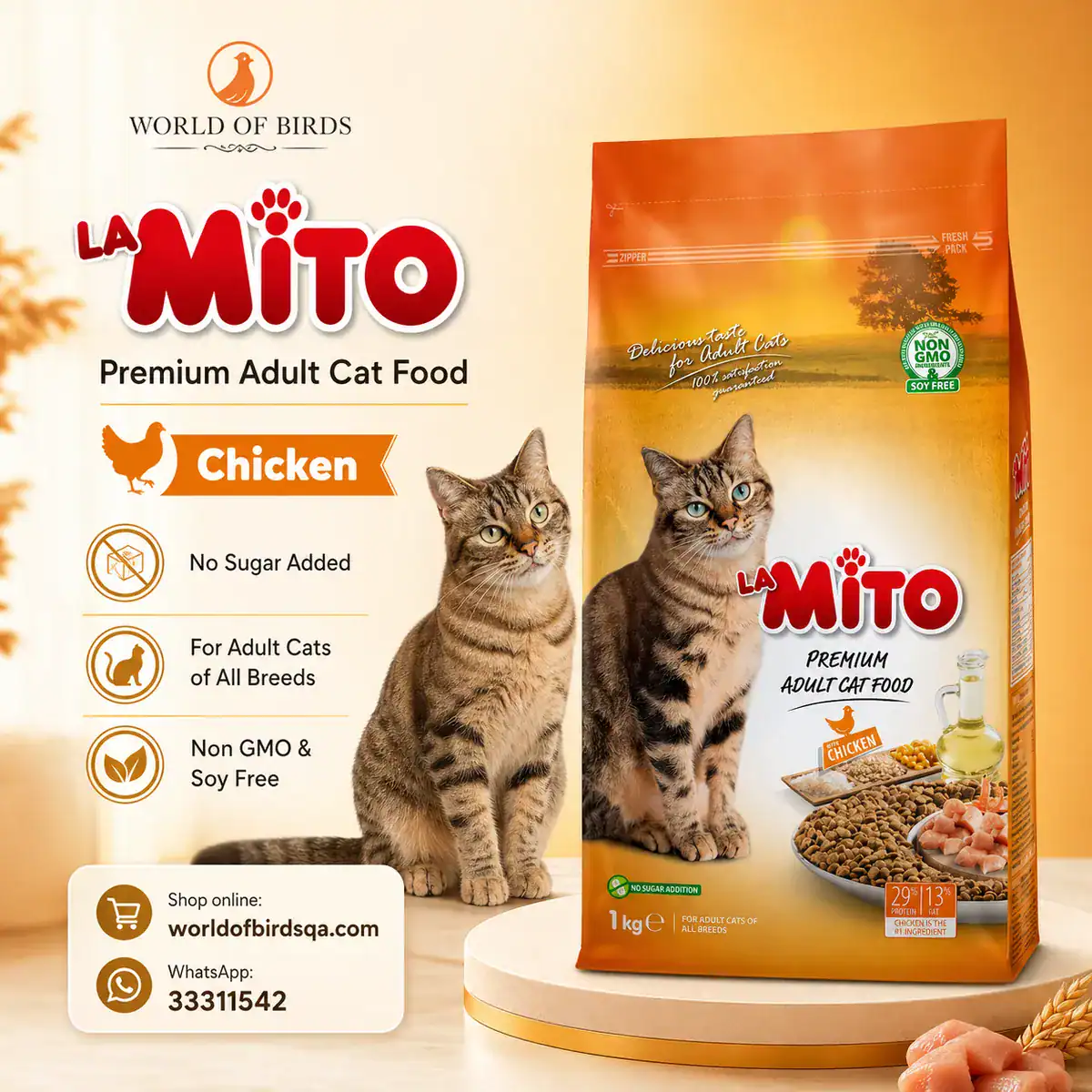
La Mito Cat Food with Chicken Adult Dry Cat Food is listed with 29% protein and 13% fat and includes taurine, omega fatty acids, vitamins, minerals and prebiotic support. Its product information lists indoor and outdoor adult cats among suitable users.
Best suited for: adult cats that prefer chicken and owners looking for a smaller 1kg pack.
The current product page shows this item as out of stock, so availability should be checked before purchase.
AlphaPet Chicken Wet Food
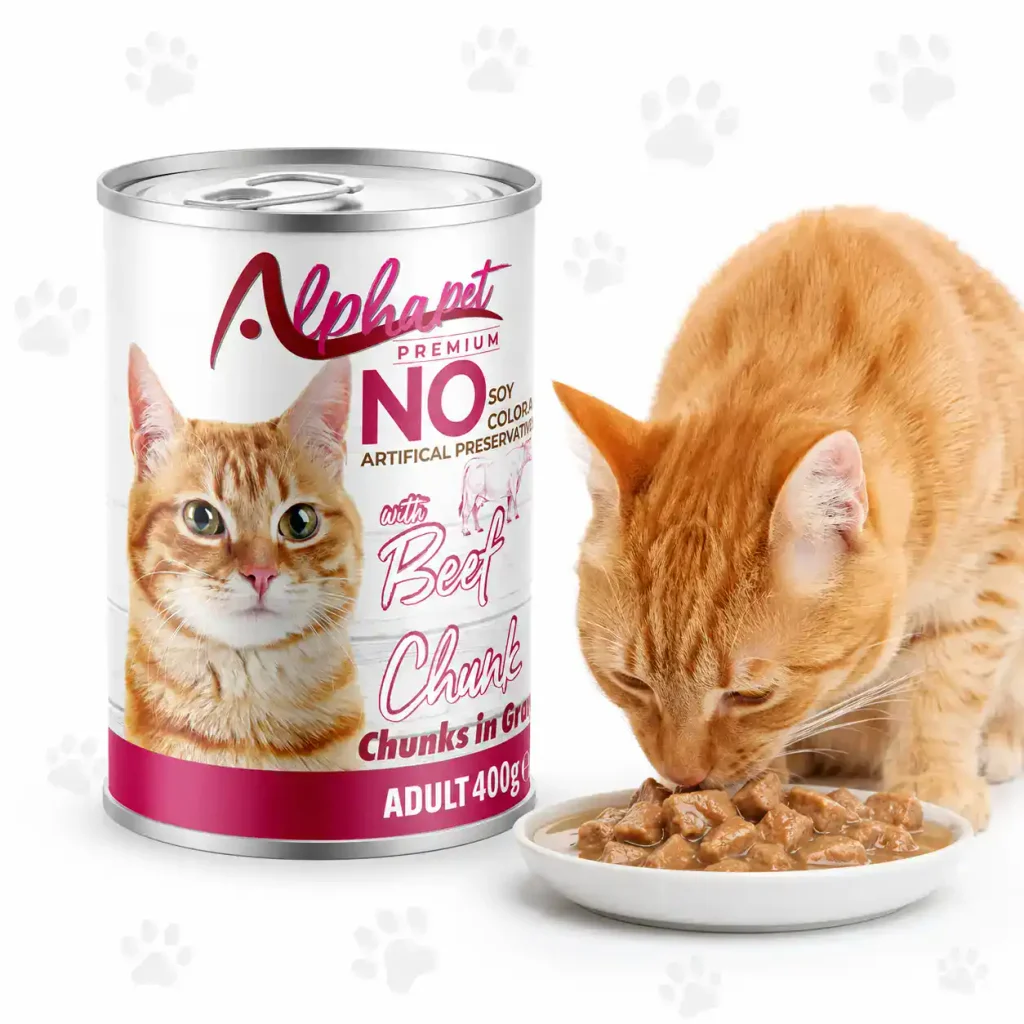
AlphaPet Premium Cat with Chicken in Gravy Canned Wet Cat Food from Turkey provides chicken in gravy and is listed as a complete adult cat meal. The product information also identifies it as suitable for indoor cats and notes that the gravy helps support hydration.
Best suited for: indoor adult cats that prefer wet food or need more dietary moisture.
How Much Should an Indoor Cat Eat?
An indoor cat should receive enough food to maintain a healthy body condition without regularly exceeding its energy needs. Package feeding guides are useful starting points, but individual calorie requirements vary with weight, activity, age and health.
A practical routine is:
- Weigh your cat regularly.
- Measure food rather than guessing.
- Count treats within the daily intake.
- Monitor the waist and rib coverage.
- Adjust portions when weight changes.
- Avoid unrestricted feeding if your cat overeats.
WSAVA’s body-condition guidance uses a 9-point scale, with 5/9 generally representing an ideal condition.
If your cat is gaining weight despite measured portions, speak with your veterinarian before making a major calorie reduction.
Do Indoor Cats Need More Fibre?
Fibre can be useful for some indoor cats, particularly those that produce hairballs or need help with digestive regularity. However, more fibre is not automatically better, and the right amount depends on the complete formulation and the individual cat.
Indoor cats spend considerable time grooming. They can therefore swallow a significant amount of hair. A suitable formula may include fibre sources designed to support normal digestive movement.
If your cat has frequent vomiting or repeated hairballs, do not assume food is the only cause.A veterinary assessment may be appropriate.
How Important Is Hydration for Indoor Cats?
Hydration is an important part of indoor-cat nutrition because dry food contains much less water than wet food. Fresh drinking water should always be available, even when your cat eats wet food.
This is especially relevant in Qatar.
Air-conditioned homes can create a different environment from outdoor conditions, while some cats naturally drink little.
You can support hydration by:
- Providing fresh water every day.
- Offering multiple water stations.
- Using a clean water fountain if your cat prefers moving water.
- Including suitable wet food.
- Keeping water bowls clean.
For the detailed daily calculation, read How Much Water Should a Cat Drink Each Day?.
Should Indoor Cats Eat Special Cat Food?
Not every indoor cat needs a food labelled “indoor.” A complete adult diet can be suitable when its calories, portion size and nutrient profile fit the individual cat. However, indoor-specific formulas can make calorie management, hairball support or feeding decisions easier.
The label is therefore more important than the marketing name. An “indoor” label is useful information.It should not be the only reason you choose the product.
For a wider comparison of available foods, see Top 10 Cat Food in Qatar.
When Should You Change Your Cat’s Food?
Change food gradually rather than replacing the current diet overnight. A sudden diet change can cause digestive upset, while a gradual transition gives your cat time to adjust to the new flavour, texture and nutrient profile.
A simple transition can look like this:
| Stage | Current food | New food |
| Days 1–2 | 75% | 25% |
| Days 3–4 | 50% | 50% |
| Days 5–6 | 25% | 75% |
| Day 7+ | 0% | 100% |
The exact pace can be slower if your cat is sensitive. If your cat refuses food, loses weight or develops persistent vomiting or diarrhoea, contact a veterinarian.
For cats that are selective about flavour or texture, our Best Cat Food for Picky Cats in Qatar guide covers practical food-selection strategies.
Frequently Asked Questions
What is the best cat food for indoor cats?
The best cat food for indoor cats is a complete and balanced diet that matches the cat’s life stage, activity level, body condition and health needs. Indoor-specific formulas can be useful for calorie control and hairball support, but no single food is best for every cat.
Do indoor cats need low-calorie food?
Some indoor cats benefit from controlled-calorie food because they may be less active than outdoor cats. However, calorie needs vary between individuals. Portion control and body-condition monitoring are just as important as choosing a lower-calorie formula.
Is wet or dry food better for indoor cats?
Both wet and dry food can be suitable for indoor cats when they provide complete nutrition. Wet food supplies much more moisture, while dry food is convenient and easy to portion. A combination can work well for some cats.
How much protein does an indoor cat need?
Indoor cats still need adequate feline protein and essential amino acids even when they are less active. Merck Veterinary Manual lists a minimum of 26% protein on a dry-matter basis for adult cats under AAFCO profiles, but protein percentage alone does not determine food quality.
How do I stop my indoor cat from gaining weight?
Measure daily food portions, limit unnecessary treats, monitor body condition and provide regular activity and enrichment. If your cat is already overweight, ask a veterinarian for a safe weight-management plan rather than sharply restricting food.
Is Royal Canin Indoor good for indoor cats?
Royal Canin Indoor is specifically formulated for indoor adult cats, making it a relevant option when you want an indoor-specific diet. World of Birds lists the formula with features including digestive and hairball support. Availability and pack sizes can change.
Best Cat Food for Indoor Cats: Final Answer
The best cat food for indoor cats is not simply the food with the highest protein or the most expensive ingredients. It is a complete, balanced formula that provides appropriate calories, quality protein and suitable nutrients for the cat’s life stage, while fitting its activity level and body condition.
For an indoor adult cat in Qatar, start by checking nutritional adequacy, protein, calorie density, fibre, moisture and feeding instructions. Then consider whether an indoor-specific formula, regular adult dry food or a wet-food option fits your cat better.
At World of Birds in Souq Al Ali, Doha, you can compare indoor-specific options such as Royal Canin Indoor, regular adult formulas such as Homie and La Mito, and wet foods such as AlphaPet Chicken in Gravy. Product availability can change, so check the current listing before ordering.
For more guidance, explore our 8 Most Popular Dry Cat Foods in Qatar and Cat Food in Qatar collection.
If you want help choosing the right food for your indoor cat, visit World of Birds in Souq Al Ali, Doha, or browse the available cat-food options online.
Visit World of Birds – Souq Al Ali, Doha: Get Directions to World of Birds on Google Maps
