






Best Cat Food for Healthy Skin and Coat: What Ingredients Matter?

The best cat food for skin and coat should provide complete nutrition with enough quality protein, essential fatty acids, vitamins and minerals to support normal skin and fur growth. Omega-3 and omega-6 fatty acids, protein, zinc, copper and vitamins A and E all play important roles in maintaining healthy skin and a normal coat
At World of Birds in Souq Al Ali, Doha, cat owners can compare dry and wet foods with different protein sources and skin-and-coat-focused nutrients. The right choice depends on more than one ingredient. Life stage, nutritional adequacy, food tolerance, hydration and your cat’s existing health also matter.
This guide explains what to look for when choosing the best cat food for skin and coat, which ingredients matter most, and which relevant options are available through World of Birds in Qatar.
Quick answer: Look for a complete and balanced cat food with adequate animal protein, omega-3 and omega-6 fatty acids, and appropriate levels of vitamins and minerals. If your cat has persistent itching, hair loss, scabs or skin problems, food may not be the only cause.
Key Takeaways
- Protein provides amino acids needed for skin and hair structure.
- Omega-3 and omega-6 fatty acids support normal skin and coat function.
- Vitamin E helps protect cells from oxidative damage.
- Zinc and copper contribute to normal skin and hair health.
- A complete and balanced formula is more important than one “superfood.”
- Fish-based foods can provide useful fatty acids, but fish is not automatically better for every cat.
- Wet food can contribute to hydration, which supports overall health.
- A shiny coat alone does not prove that a food is nutritionally superior.
- Persistent skin problems require veterinary assessment.
- World of Birds Qatar carries several formulas with omega fatty acids and skin-and-coat support.
What Makes the Best Cat Food for Skin and Coat?
The best cat food for skin and coat is a complete diet that supplies adequate protein, essential fatty acids, vitamins and minerals in appropriate amounts. A food should meet the cat’s life-stage requirements rather than relying on one ingredient or marketing claim. AAFCO identifies the nutritional adequacy statement as a key part of evaluating whether a food is complete and balanced.
A practical way to evaluate a formula is to check four areas:
| Nutrition area | Why it matters |
| Protein | Provides amino acids for skin and hair |
| Omega-3 & Omega-6 | Support normal skin barrier and coat condition |
| Vitamins & minerals | Support skin, hair and cellular function |
| Complete nutrition | Prevents gaps caused by relying on individual ingredients |
WSAVA also warns that an ingredient list alone does not tell you the overall quality of a pet food.
Therefore, do not choose a food only because salmon, chicken or another attractive ingredient appears first.
Which Ingredients Support Healthy Cat Skin?
Protein, essential fatty acids, vitamin A, vitamin E, zinc and copper are among the nutrients involved in maintaining normal skin and coat health. Deficiencies or nutritional imbalances can contribute to skin and hair changes, although many skin conditions have causes unrelated to diet.
Protein
Hair is largely made of keratin, a protein structure. Cats therefore need adequate dietary protein and the amino acids required to maintain body tissues.
This does not mean the food with the highest crude-protein number is automatically the best choice.
Protein quality and overall nutritional balance matter too. For more detail, see How Much Protein Do Cats Need? A Practical Cat Food Guide.
Omega-3 Fatty Acids
Omega-3 fatty acids are commonly associated with skin and coat nutrition.
EPA and DHA are important long-chain omega-3 fatty acids, while fish and fish oils can be dietary sources. Some World of Birds formulas list omega-3 directly in their nutritional information.
For example, La Mito Chicken Cat Food lists omega-3 at 0.715% and omega-6 at 3.96%, alongside vitamin E and other nutrients.
Omega-6 Fatty Acids
Omega-6 fatty acids also have an important role in normal skin function. A healthy diet needs an appropriate balance of essential fatty acids rather than simply adding as much fat as possible.
Several World of Birds products list both omega-3 and omega-6 in their nutritional information.
Vitamin E
Vitamin E acts as an antioxidant and is involved in normal cellular protection. Purina identifies vitamin E alongside omega-6 fatty acids and vitamin A as nutrients used in skin-and-coat-focused cat foods
However, more vitamins are not automatically better. A complete commercial diet should already provide appropriate nutrient levels.
Is Fish-Based Cat Food Better for Coat Health?
Fish-based cat food can be a useful option for skin and coat nutrition because fish ingredients may provide omega-3 fatty acids, but fish is not automatically better for every cat. The overall formula, nutritional adequacy and individual tolerance matter more than the protein source alone.
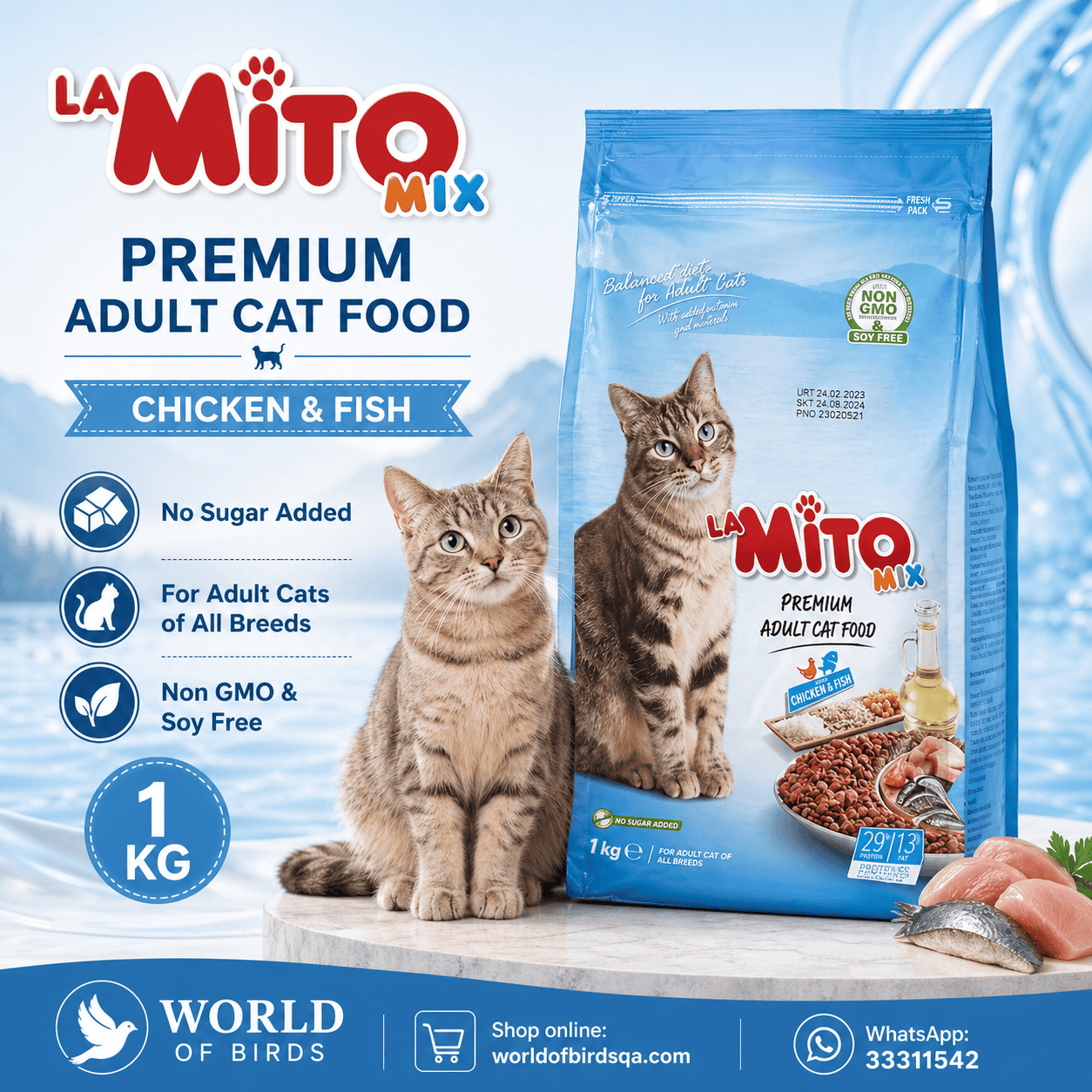
At World of Birds, one relevant option is La Mito Chicken & Fish Mix Cat Food.
Its product information lists 29% protein, 13% fat, omega-3, omega-6, vitamin E, taurine and prebiotic support. The formula is designed for adult cats and lists skin and coat support among its benefits.
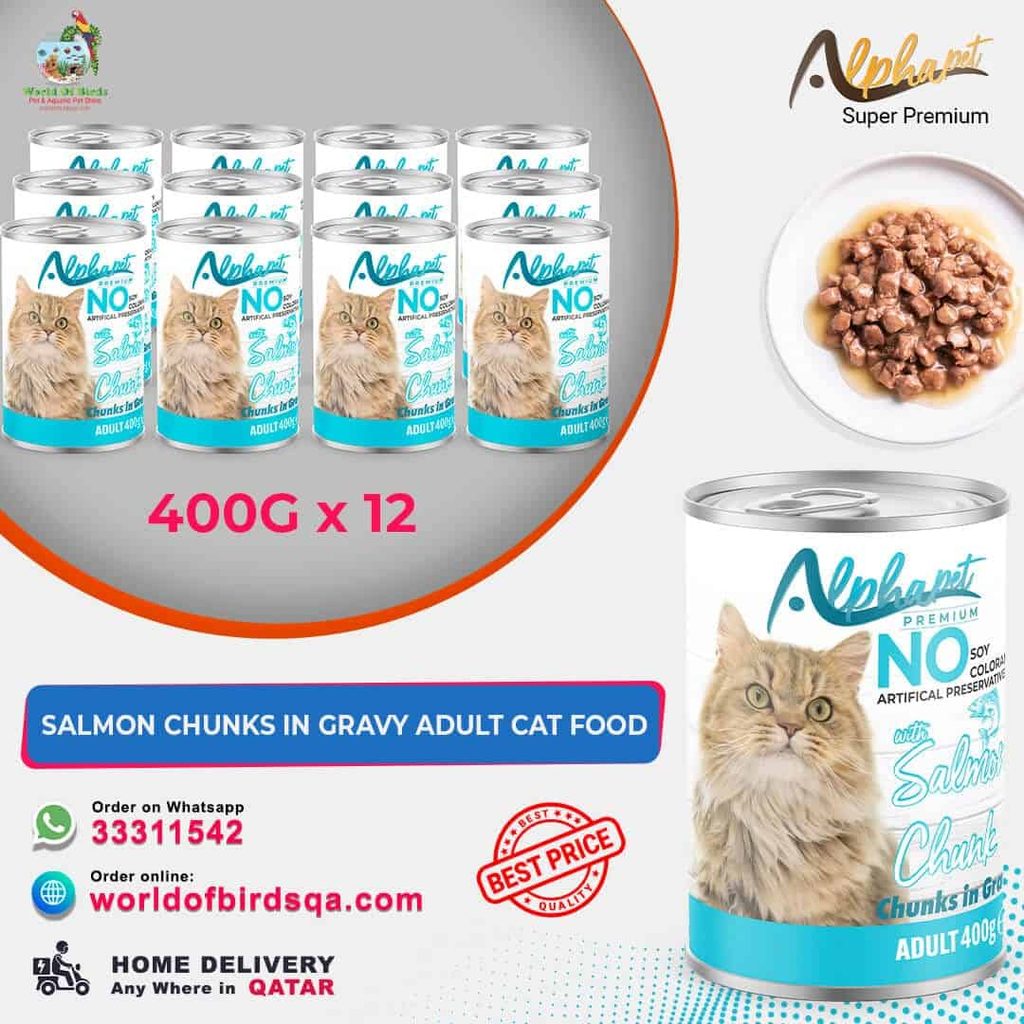
Another option is Alpha Pet Premium Cat with Salmon Chunk in Gravy, a wet-food formula listed by World of Birds as an omega-3-rich option for adult cats.
When Fish May Not Be the Right Choice
Some cats may have food allergies or intolerances.
If your cat develops persistent itching, ear problems, vomiting or digestive changes after eating a particular protein, do not assume it simply needs more omega-3.
A veterinarian can help identify whether food sensitivity is actually involved.
What About Chicken-Based Cat Food?
Chicken-based cat food can also support skin and coat health when it provides adequate protein, essential fatty acids and other required nutrients. A food does not need to contain fish to support a healthy coat.
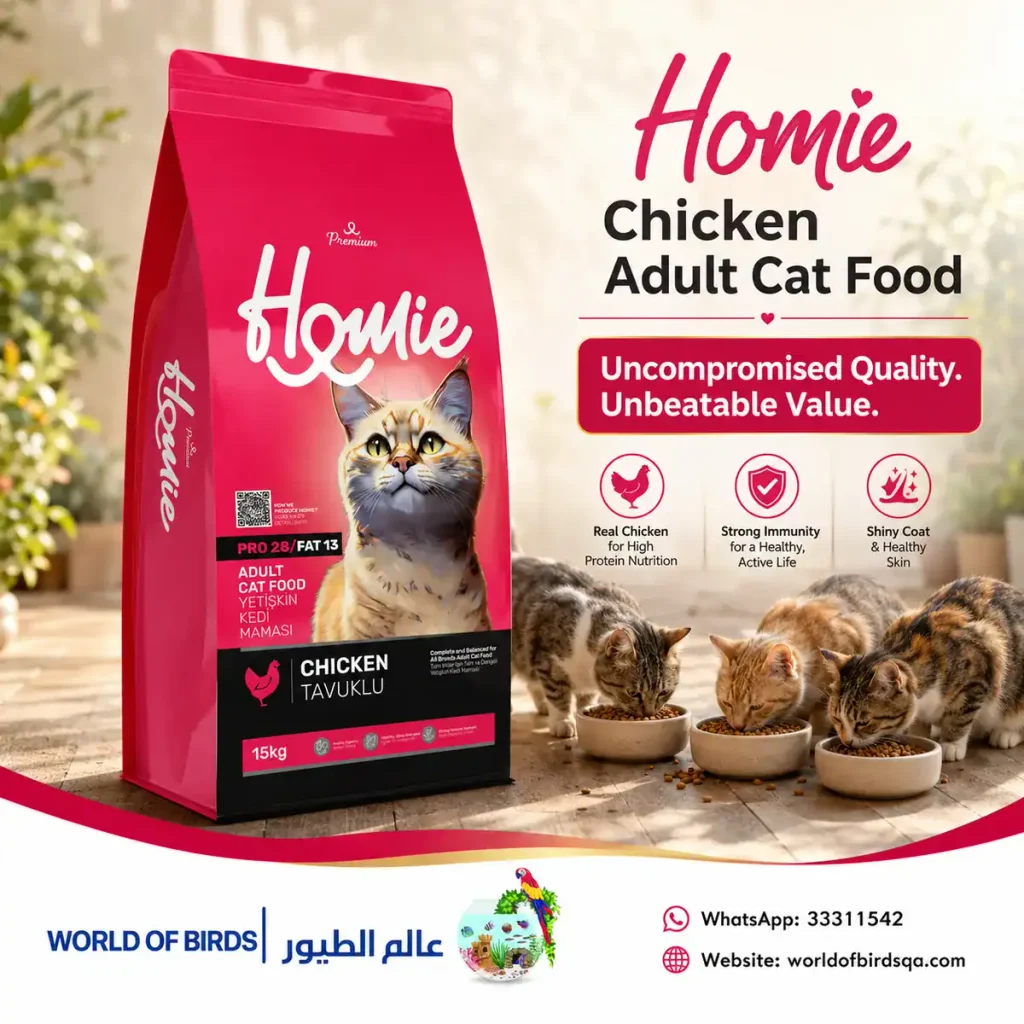
For example, Homie Premium Adult Cat Food Chicken lists 28% protein and 14% fat, with omega-3 and omega-6 fatty acids. Its product information specifically describes support for healthy skin and a shiny coat.
This makes it a practical comparison against fish-based formulas. The key question is not simply “chicken or fish?”
Instead, compare the complete nutritional profile and how your cat responds to the food.
Does Wet Food Help Skin and Coat Health?
Wet food does not directly make a cat’s coat healthy, but its high moisture content can contribute to overall hydration while providing complete nutrition when the product is properly formulated. Wet cat food commonly contains substantially more water than dry kibble.
Hydration is one part of good general nutrition. A wet-food diet can also be useful for cats that naturally drink little.
World of Birds has a broad Cat Food in Qatar selection, including wet foods with chicken, salmon, tuna, lamb and other protein options.
For a closer look at wet-food choices, read Top 7 Wet Cat Foods: Healthy Choices in Qatar. That guide focuses on wet-food formats, moisture and available options without making skin and coat health the primary topic.
Does Grain-Free Food Improve a Cat’s Coat?
Grain-free cat food does not automatically produce healthier skin or a shinier coat. A complete and balanced grain-inclusive diet can also provide the nutrients cats need for normal skin and coat function.
The important question is whether your cat needs a particular diet. If a food sensitivity is suspected, the solution should be based on proper dietary evaluation rather than choosing a grain-free label alone.
Our Is Grain-Free Cat Food Good for Cats? guide explains why grain-free status should not be treated as a guarantee of better nutrition.
Can Cat Food Fix Dry Skin or Hair Loss?
Cat food can support normal skin and coat health, but it cannot fix every cause of dry skin, itching or hair loss. Parasites, allergies, infections, hormonal conditions and other health problems can produce similar symptoms.
This distinction is important. A cat with a dull coat may simply need better overall nutrition.
Another cat may have a medical condition requiring veterinary treatment.
Signs That Need More Than a Diet Change
Contact a veterinarian if your cat has:
- Persistent itching
- Bald patches
- Open sores
- Scabs
- Severe dandruff
- Repeated skin infections
- Sudden hair loss
- Excessive grooming
- Weight loss or appetite changes
Purina and Hill’s both recommend veterinary assessment when skin or coat problems persist rather than assuming nutrition is the only cause.
How Do You Choose Cat Food for a Shiny Coat?
Choose a complete and balanced formula first, then compare protein quality, fatty acids, vitamins, minerals, moisture and your cat’s individual needs. Do not select food based on a single ingredient or front-of-pack claim.
Use this simple checklist:
- Check that the food is formulated for cats.
- Confirm the appropriate life stage.
- Look for a complete and balanced nutritional statement.
- Check the protein and fat profile.
- Look for omega-3 and omega-6 sources.
- Check for relevant vitamins and minerals.
- Consider wet food if additional dietary moisture is useful.
- Monitor your cat’s weight and body condition.
- Introduce new food gradually.
- Seek veterinary advice if skin problems continue.
AAFCO recommends checking species, life stage, nutritional adequacy and feeding directions when selecting pet food.
Best Cat Food Options for Skin and Coat in Qatar
World of Birds currently lists several foods that are relevant to this topic. They differ in protein source, format and nutritional profile, so they should not be treated as identical products.
Pawnee Salmon Derma Care
Pawnee Premium Adult Cat Food Salmon is the most directly targeted option in this group.
The formula is specifically marketed as a Derma Care food for adult cats. Its listed nutritional profile includes 26% protein, 10% fat, omega-3 and omega-6, with EPA-DHA identified in the product description.
Best fit: Adult cats where skin and coat support is a specific feeding priority.
La Mito Chicken & Fish
La Mito Chicken & Fish Mix combines chicken and fish protein with listed omega-3, omega-6, vitamin E and taurine.
Best fit: Adult cats whose owners want a chicken-and-fish dry-food formula with listed fatty acids.
Homie Premium Chicken
Homie Premium Adult Cat Food Chicken provides a chicken-based adult formula with listed omega-3 and omega-6 fatty acids. The product page also identifies skin and coat support as a key benefit.
Best fit: Adult cats needing a regular chicken-based dry diet.
Hill’s Hairball & Perfect Coat
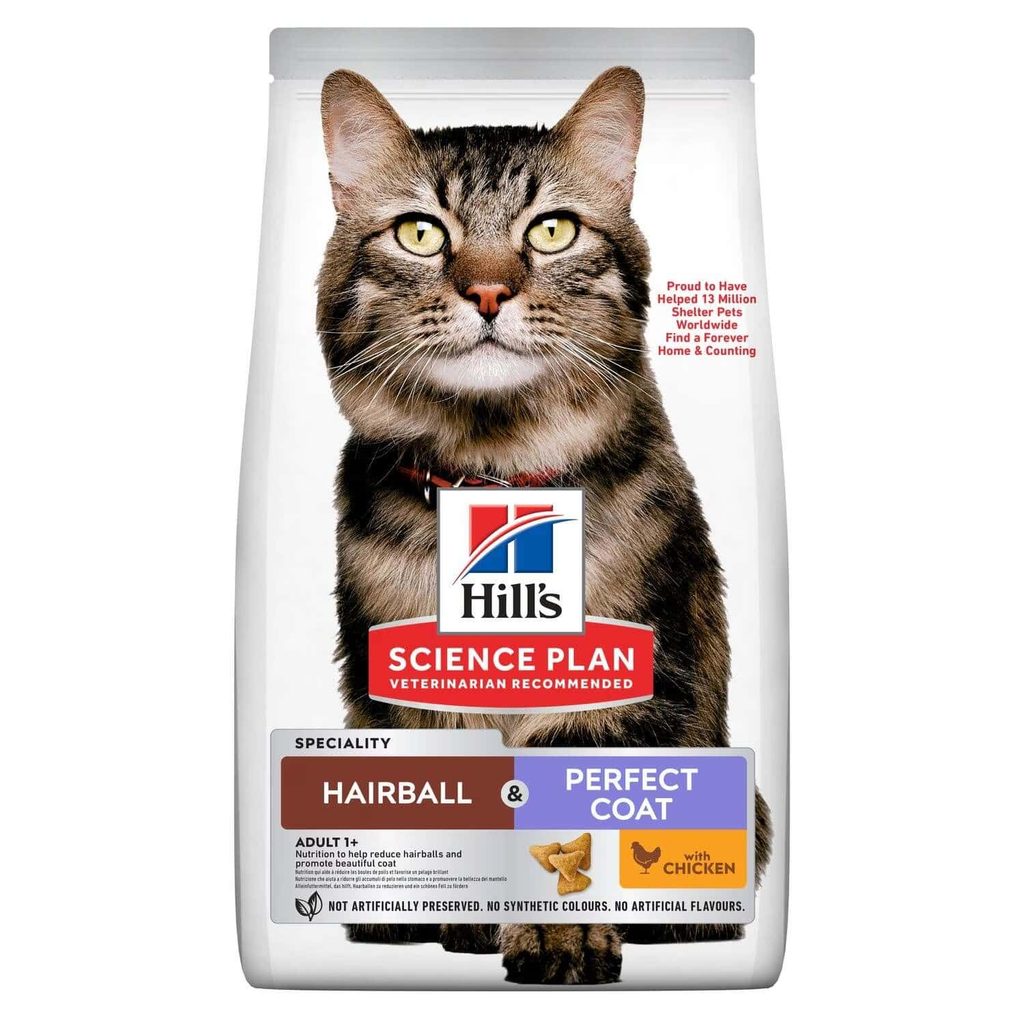
World of Birds also lists Hill’s Science Plan Hairball & Perfect Coat Adult Cat Food with Chicken, specifically positioned around hairball and skin-and-coat support. The current World of Birds listing shows this product as out of stock, so availability should be checked before purchasing.
This is a useful example of why product availability and nutritional suitability should be considered separately.
How Long Does It Take to See Coat Changes?
A coat does not normally change overnight after switching cat food. Hair growth, shedding cycles and underlying skin conditions take time, so the response depends on the cat, the original problem and whether nutrition was actually a contributing factor.
Do not switch foods repeatedly every few days.
A better approach is to:
- Introduce the new food gradually.
- Keep portions consistent.
- Avoid unnecessary treats.
- Monitor itching and shedding.
- Take occasional photos of the coat.
- Track changes over several weeks.
- Contact a veterinarian if symptoms worsen or do not improve.
This creates a much clearer picture of whether the diet is helping.
Frequently Asked Questions
What is the best cat food for skin and coat?
The best cat food for skin and coat is a complete and balanced formula that provides adequate protein, essential fatty acids, vitamins and minerals. Look for omega-3 and omega-6 fatty acids alongside appropriate protein and overall nutritional adequacy.
What ingredients are best for a cat’s coat?
Protein, omega-3 fatty acids, omega-6 fatty acids, vitamin E, vitamin A, zinc and copper all contribute to normal skin and coat function. However, the nutrients need to be supplied in appropriate amounts as part of a complete diet.
Does salmon help a cat’s skin and coat?
Salmon can contribute useful protein and omega-3 fatty acids, making salmon-based cat food a reasonable option for skin and coat nutrition. However, the complete nutritional profile matters more than salmon alone.
Is dry or wet food better for a cat’s coat?
Neither format is automatically better for coat health. A complete dry or wet food can support healthy skin and fur when it provides appropriate nutrients. Wet food has the additional advantage of supplying more dietary moisture.
Can poor cat food cause hair loss?
Nutritional deficiencies can affect the skin and hair, but hair loss has many possible causes. Parasites, allergies, infections and medical conditions can produce similar symptoms. Persistent or severe hair loss should be evaluated by a veterinarian.
Best Cat Food for Healthy Skin and Coat: Final Answer
The best cat food for healthy skin and coat is a complete and balanced formula that provides enough protein, essential fatty acids, vitamins and minerals for your cat’s life stage. Omega-3 and omega-6 fatty acids are useful nutrients to look for, while vitamin E, zinc, copper and vitamin A also contribute to normal skin and coat function.
At World of Birds in Souq Al Ali, Doha, cat owners can compare options such as Pawnee Salmon Derma Care, La Mito Chicken & Fish, Homie Premium Chicken and relevant wet foods. Product availability can change, so check the individual product listing before ordering.
For help choosing the right cat food for healthy skin and coat, visit World of Birds in Souq Al Ali, Doha, and compare the available options in person.
📍 Visit World of Birds – Souq Al Ali, Doha: Get Directions to World of Birds on Google Maps
