







How Much Water Should a Cat Drink Each Day? Complete Hydration Guide

How much water should a cat drink? A healthy cat needs roughly 50–60 mL of total water per kg of body weight each day, including water from food. Cornell University Veterinary College gives a similar guideline of about 4 ounces per 5 pounds of lean body weight daily.
At World of Birds in Souq Al Ali, Doha, we help cat owners choose food and everyday feeding options for cats in Qatar. The important point is that your cat does not need to drink the entire amount from its water bowl. Wet food can contain around 70–80% water, so cats eating moisture-rich food may naturally drink less.
This guide explains daily water needs, how wet and dry food affect hydration, how to encourage drinking, and which changes should prompt a veterinary check.
Key Takeaways
- Cats need water every day for normal body function.
- A useful baseline is around 50–60 mL of total water per kg daily.
- This includes moisture obtained from food.
- Wet cat food can provide a large part of a cat’s water intake.
- Cats eating mostly dry food usually need to drink more directly.
- Fresh water should always be available.
- Multiple clean water sources can encourage drinking.
- Sudden increases or decreases in drinking can indicate a health problem.
- Qatar’s warm climate makes sensible hydration management especially important.
- Never restrict your cat’s access to water unless specifically instructed by a veterinarian.
How Much Water Does a Cat Need?
A healthy cat generally needs around 50–60 mL of total water per kg of body weight each day. VCA gives a baseline of four ounces for every five pounds, while Cornell gives the same general calculation.
This is a total daily water requirement, not necessarily the amount your cat must drink from a bowl.
For example:
| Cat weight | Approx. total water per day |
| 3 kg | 150–180 mL |
| 4 kg | 200–240 mL |
| 5 kg | 250–300 mL |
| 6 kg | 300–360 mL |
| 7 kg | 350–420 mL |
These figures are practical estimates, not fixed prescriptions.
Does This Mean My Cat Must Drink That Much?
No. The amount includes water obtained through food, so a cat eating wet food may drink much less than the calculated total. Cats eating mainly dry food generally obtain less moisture from meals and therefore need to obtain more water through drinking.
This explains why comparing cats only by their bowl consumption can be misleading.
A cat that drinks little but eats moisture-rich wet food may still have adequate overall water intake.
How Does Wet Food Affect Cat Hydration?
Wet cat food can significantly contribute to daily hydration because it contains much more water than dry kibble. International Cat Care reports that wet diets commonly contain around 70–80% water, while Merck notes that canned pet foods can contain 60% to more than 87% water.
This is especially useful for cats that naturally drink little.
At World of Birds, our Cat Food range in Qatar includes wet and dry options for different feeding preferences.
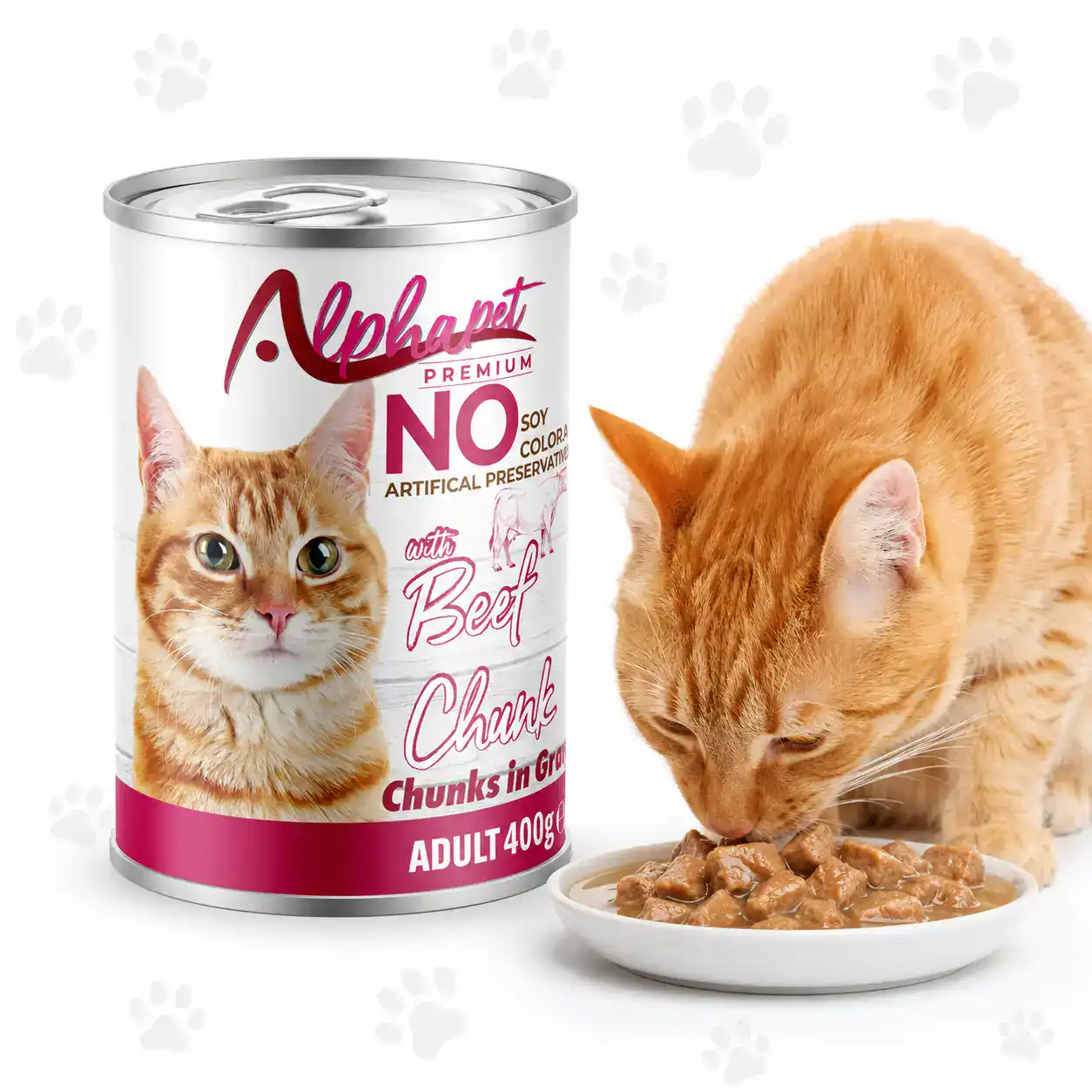
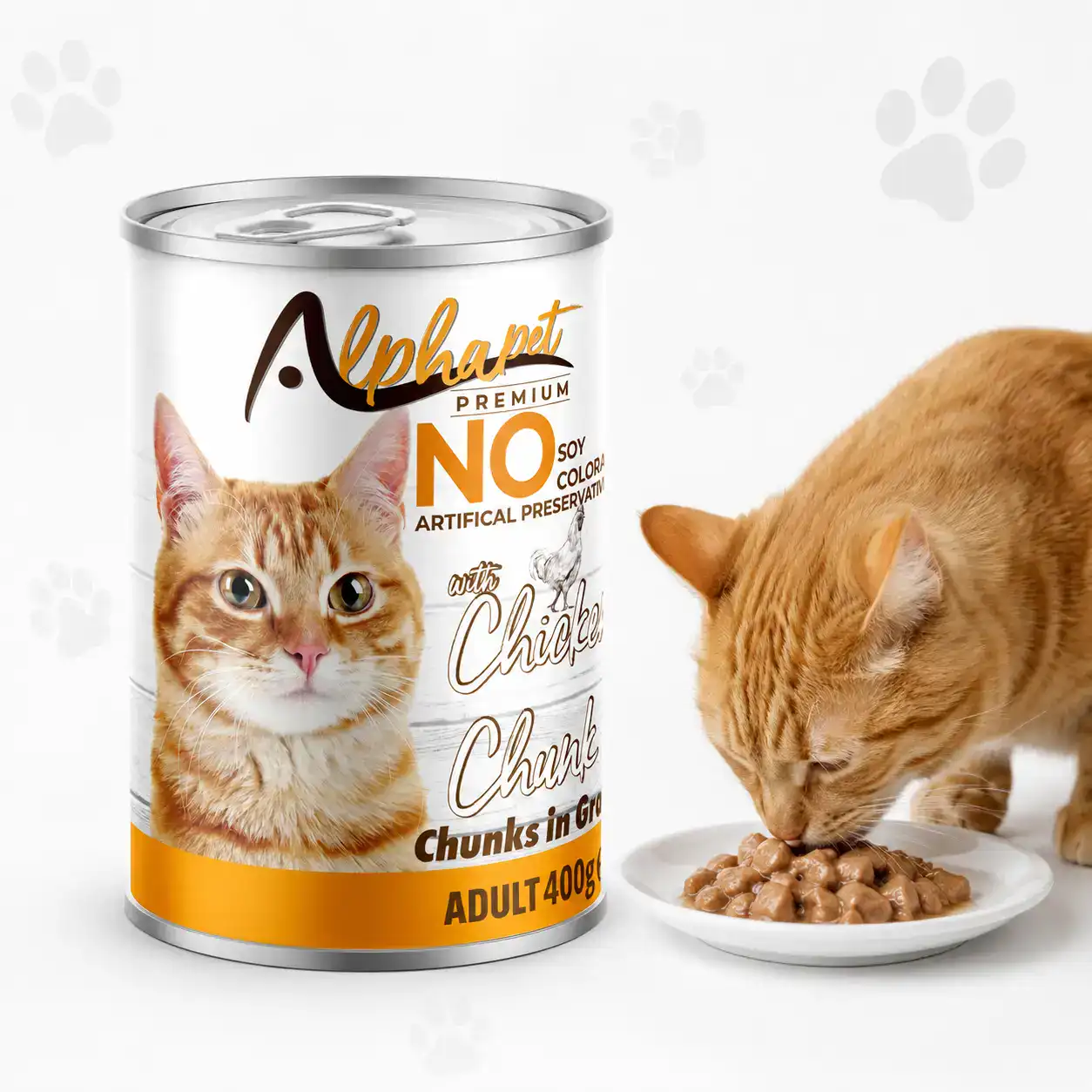
For example, Alpha Pet Premium Cat with Chicken in Gravy is a complete wet food for adult cats, with gravy that contributes dietary moisture.
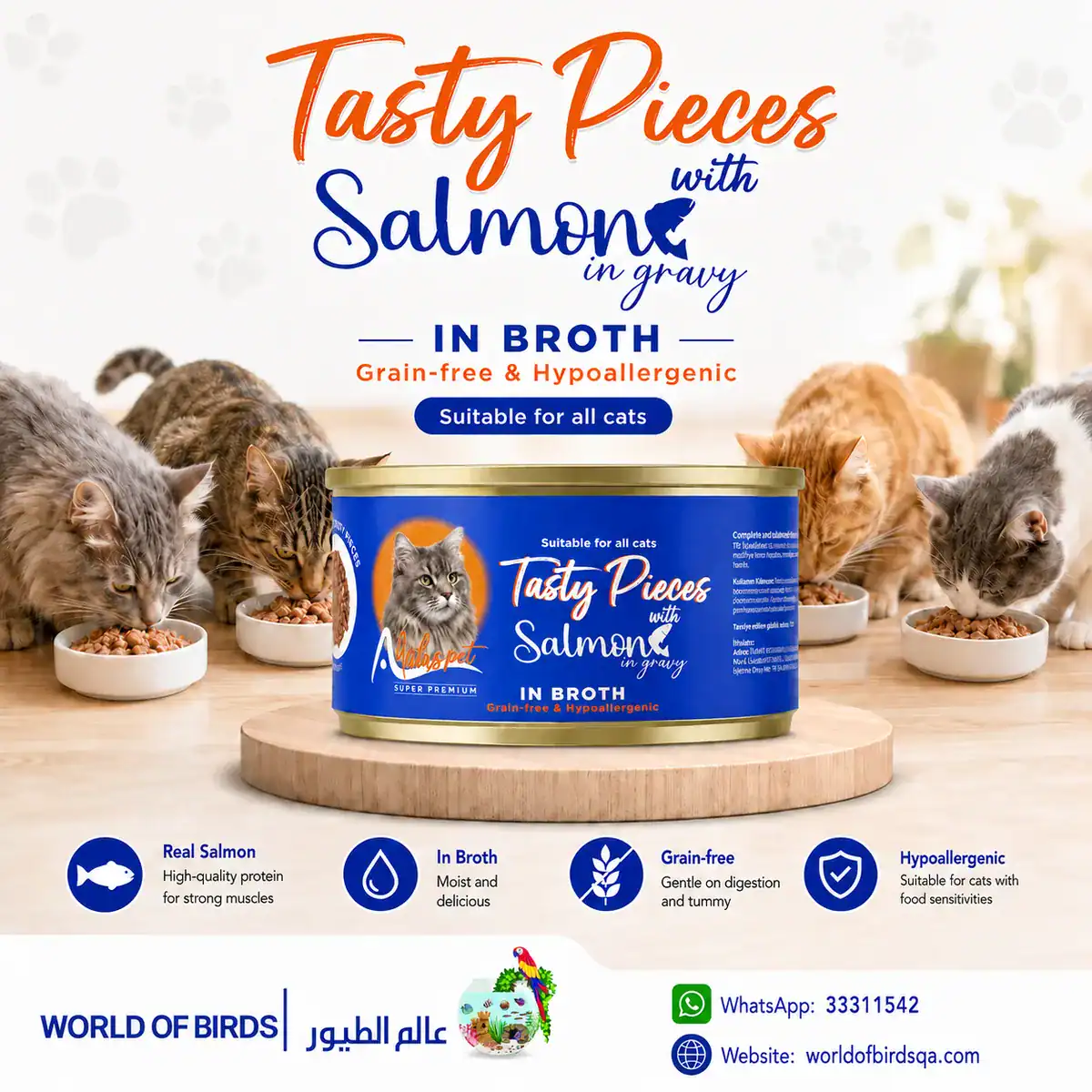
Another option is Alpha Pet Premium Cat with Salmon in Gravy . Its product information identifies it as a complete wet food for adult cats and recommends providing fresh drinking water alongside meals.
Wet Food vs Dry Food
| Factor | Wet Food | Dry Food |
| Water content | High | Low |
| Dietary moisture | High | Limited |
| Bowl drinking | May be lower | Often higher |
| Storage | Needs more careful handling after opening | Easier to store |
| Hydration support | Useful for low drinkers | Requires reliable water access |
The food type does not remove the need for fresh drinking water. Even cats eating wet food should have clean water available at all times.
For more food options, see our Top 7 Wet Cat Foods in Qatar guide.
How Much Water Should a Cat Drink on Dry Food?
Cats eating mostly dry food usually need to obtain a greater proportion of their daily water requirement by drinking. Dry pet food generally contains only around 3–11% water, compared with the much higher moisture levels found in canned food.
This does not mean every dry-food cat will drink the same amount. Individual drinking behaviour varies considerably.
If your cat eats dry food and rarely approaches its water bowl, make hydration easier rather than assuming it will drink when necessary.
Should You Add Water to Dry Food?
Adding small amounts of water to dry food can increase moisture intake if your cat accepts the changed texture. VCA recommends introducing added water gradually and stopping if the cat refuses the moistened food.
Do not allow a cat to go without food simply because it refuses moistened kibble. Some cats prefer their food dry.
In that case, focus on providing attractive and accessible water sources.
How Can You Encourage a Cat to Drink More?
The easiest ways to encourage drinking are providing fresh water, offering multiple water stations, trying different bowl types, and considering a fountain if your cat likes moving water. VCA recommends experimenting with bowl location, material, water temperature and fountains because individual preferences vary.
Try these practical steps:
- Refresh the water every day.
- Wash bowls regularly.
- Place bowls in quiet locations.
- Keep water away from the litter box.
- Offer more than one water station.
- Try ceramic or stainless-steel bowls.
- Test whether your cat prefers a fountain.
- Consider adding moisture through suitable wet food.
International Cat Care also recommends considering individual drinking preferences and introducing new water sources gradually.
Where Should You Put the Water Bowl?
Place water somewhere quiet and away from the litter tray, with easy access for the cat. Some cats also prefer water to be separated from their food, so offering different locations can help you identify the setup your cat prefers.
Avoid placing the only water bowl in a busy area. A multi-cat household may also benefit from multiple water stations.
This can reduce competition and make water accessible throughout the home.
Is a Water Fountain Better for Cats?
A water fountain is not automatically better for every cat, but some cats drink more readily from moving water. VCA recommends trying a fountain as one possible strategy, while International Cat Care advises introducing fountains gradually.
If you introduce a fountain:
- Let your cat investigate it first.
- Keep the fountain clean.
- Maintain the water level.
- Choose a quiet model if your cat dislikes noise.
- Place it somewhere your cat already feels comfortable.
Do not assume your cat will immediately use it. Some cats prefer a simple bowl.
What Are the Signs of Dehydration in Cats?
Signs of dehydration can include lethargy, weakness, poor appetite, dry or sticky gums and, in more severe cases, sunken eyes. Cornell Vet School and VCA both identify changes in energy, appetite and physical hydration status as important warning signs.
Possible warning signs include:
- Reduced activity
- Weakness
- Poor appetite
- Dry or sticky gums
- Sunken-looking eyes
- Reduced urine output
- Sudden changes in drinking behaviour
Dehydration can occur because of inadequate intake or increased fluid loss. Vomiting and diarrhoea can increase water loss.
Can You Check Hydration at Home?
Home observations can help identify possible dehydration, but they cannot replace veterinary assessment. Changes in gums, appetite, energy, urination and drinking habits can provide useful clues.
Do not deliberately restrict water to perform a home dehydration test. If you suspect dehydration, contact a veterinarian.
Is Drinking Too Much Water a Problem?
Yes. A sudden or sustained increase in water consumption can indicate an underlying health problem and should not automatically be considered a sign of good hydration. VCA lists kidney disorders, diabetes mellitus, hyperthyroidism and several other conditions among causes of increased thirst and urination.
Watch for changes such as:
- Suddenly emptying the water bowl
- Drinking from unusual places
- Increased urination
- Drinking repeatedly throughout the day
- Weight loss despite eating
- Changes in appetite or energy
A cat that suddenly starts drinking much more than usual should be evaluated by a veterinarian.
Do not reduce its water access to compensate.
When Should You See a Veterinarian?
Contact a veterinarian when your cat’s drinking changes suddenly, becomes excessive, or occurs alongside symptoms such as vomiting, diarrhoea, weight loss, poor appetite or increased urination. Increased thirst can accompany several medical conditions, so the underlying cause needs professional assessment.
Seek veterinary advice if you notice:
- Persistent increased thirst
- Sudden reduction in drinking
- Repeated vomiting
- Diarrhoea
- Weight loss
- Increased urination
- Poor appetite
- Marked lethargy
- Signs of dehydration
Cats can hide illness. A noticeable change from your cat’s normal drinking pattern therefore matters.
For cats with urinary concerns, our Cat Food for Urinary Health guide explains why hydration and appropriate nutrition are important considerations.
How Does Qatar’s Climate Affect Cat Hydration?
Qatar’s warm climate makes reliable access to fresh water particularly important, especially for cats exposed to heat or spending time in poorly cooled areas. However, indoor air conditioning, activity level and diet also influence a cat’s individual water needs.
At World of Birds in Souq Al Ali, Doha, we recommend keeping fresh water available throughout the day.
For indoor cats:
- Keep water away from direct sunlight.
- Check bowls regularly.
- Provide multiple water sources if needed.
- Avoid placing water directly beside the litter box.
- Consider moisture-rich food if appropriate.
- Monitor changes in drinking behaviour.
A cat living in an air-conditioned apartment may have different needs from an outdoor cat.
Do not use Qatar’s climate alone to calculate a fixed amount.
How Can Wet Food Support Hydration in Qatar?
Wet food can help cats obtain more water through their meals, which is useful for cats that drink little from bowls. International Cat Care reports that wet food commonly contains 70–80% water, while dry food contains much less.
World of Birds offers several wet-food options. For example, 4MyCat Chicken In Chunks Wet Food for Adult Cats is a wet food option listed for adult cats.
The goal is not to force every cat onto wet food.
Instead, consider the cat’s preferences, complete nutritional needs and overall water intake.
If your cat has a medical condition, ask your veterinarian whether increasing dietary moisture would be appropriate.
Does Water Intake Matter for Urinary Health?
Adequate hydration helps maintain normal urine production and is an important part of overall urinary care, but increased water intake is not a treatment for every urinary condition. Cats with bladder stones, kidney disease or other medical problems may have specific hydration and dietary needs determined by their veterinarian.
This is one reason hydration should be considered alongside nutrition. Do not use extra water as a substitute for veterinary treatment.
If your cat has recurring urinary symptoms, blood in the urine, difficulty urinating or frequent litter-box trips, seek veterinary care promptly.
How Do You Know If Your Cat Is Drinking Enough?
There is no single bowl-drinking number that proves every cat is adequately hydrated because total water intake includes food moisture and varies with health, diet and environment. A healthy cat that eats wet food may drink very little from its bowl while still obtaining substantial water through meals.
Look at:
- Food type
- Normal drinking behaviour
- Urination pattern
- Appetite
- Energy level
- Body weight
- Any recent illness
- Changes in thirst
Consistency matters.
A sudden change from your cat’s normal pattern is more useful than comparing its drinking amount with another cat.
Frequently Asked Questions
Q1: How much water should a cat drink per day?
A healthy cat generally needs around 50–60 mL of total water per kg of body weight each day. This includes moisture from food, so a 5 kg cat may need around 250–300 mL of total water daily, but not necessarily that much from its water bowl.
Q2: How much water should a 4 kg cat drink?
A 4 kg cat needs roughly 200–240 mL of total water per day as a practical baseline. The actual amount varies with diet, activity, environment and health. If the cat eats wet food, much of this water may come from the meal rather than drinking.
Q3: Do cats drinking wet food need water?
Yes. Cats eating wet food should still have fresh drinking water available at all times. Wet food can provide a substantial amount of dietary moisture, but it does not eliminate the need for a clean water source.
Q4: Why is my cat drinking more water than usual?
A sudden increase in drinking can be associated with medical conditions such as kidney disease, diabetes mellitus or hyperthyroidism. Increased urination often occurs at the same time. If the change is persistent or noticeable, contact your veterinarian.
Q5: How can I get my cat to drink more water?
Offer fresh water in multiple quiet locations and try different bowls or a fountain if your cat prefers moving water. Wet food can also increase dietary moisture. Introduce changes gradually and keep water away from the litter box.
Q6: Can cats drink too much water?
Yes. Excessive drinking can indicate an underlying medical problem rather than simply better hydration. Kidney disorders, diabetes, hyperthyroidism and other conditions can cause increased thirst. A persistent change should be discussed with a veterinarian.
Q7: Is wet food better for cat hydration?
Wet food can make it easier for cats to obtain water because it contains substantially more moisture than dry food. It can be particularly useful for cats that naturally drink little, but the diet should still be complete and appropriate for the individual cat.
How Much Water Should a Cat Drink? Final Answer
How much water should a cat drink? A useful baseline is around 50–60 mL of total water per kg of body weight daily, including moisture obtained from food. A 5 kg cat therefore needs roughly 250–300 mL of total water, although the amount it drinks directly can be much lower when it eats wet food.
The most important habit is simple: always provide fresh, clean drinking water and monitor your cat’s normal drinking pattern. Wet food can provide additional dietary moisture, while multiple water stations, suitable bowls and fountains may encourage cats that drink very little.
At World of Birds in Souq Al Ali, Doha, you can browse our Cat Food range in Qatar for wet and dry feeding options.
If your cat’s drinking suddenly increases or decreases, especially alongside weight loss, vomiting, diarrhoea, appetite changes or increased urination, consult a veterinarian rather than trying to manage the change through food or water alone.

One thought on “How Much Water Should a Cat Drink Each Day? Complete Hydration Guide”