






How to Read a Cat Food Label: Protein, Ash, Taurine & Ingredients Explained

To understand how to read cat food labels, check the ingredients, crude protein, fat, moisture, ash, taurine, and nutritional adequacy statement. Protein supports muscle maintenance, while taurine is essential for heart and eye health. Ash represents the food’s mineral content, and moisture helps determine its nutrient concentration. Always check whether the food provides complete nutrition for your cat’s life stage.
The Association of American Feed Control Officials (AAFCO) identifies protein, fat, fibre, and moisture as fundamental guaranteed analysis measurements.
At World of Birds – Pet & Aquatic Pet Store in Doha, Qatar, cat owners can compare nutritional information across different food brands.
This guide explains each label component, demonstrates real product comparisons, and helps you identify suitable nutrition for your cat.
What Information Appears on Cat Food Labels?
A cat food label provides information about ingredients, nutritional composition, feeding instructions, and the manufacturer’s intended use. These details help owners determine whether a product meets their cat’s dietary requirements.
Most commercial labels include the following sections.
| Label Section | What It Explains |
| Product name | Brand, formula and intended use |
| Ingredients | Ingredients used in the recipe |
| Guaranteed analysis | Guaranteed nutrient amounts |
| Analytical constituents | Declared nutrient composition |
| Nutritional adequacy | Suitable species and life stage |
| Feeding guide | Suggested daily portions |
| Calorie content | Energy provided by the food |
| Expiry date | Recommended storage and usage period |
The AAFCO guide to reading pet food labels explains these common labelling components.
Qatar imports pet food from different countries. Therefore, packaging terminology and nutritional declarations may differ between brands.
How to Read the Ingredients List
Cat food ingredients show which materials manufacturers use to produce the food. Ingredients generally appear in descending order according to their weight during formulation.
However, ingredient order does not establish nutritional quality or digestibility.
What Should the First Ingredient Be?
An identifiable protein source, such as chicken, turkey, or fish, can provide useful information about a formula.
Nevertheless, the first ingredient alone cannot determine whether the food provides better nutrition.
Fresh chicken contains substantial water. Dried chicken protein contains less moisture and may provide more concentrated protein.
Therefore, comparing ingredient names without considering nutrient composition can create misleading conclusions.
Are Meat Meals and By-Products Bad?
Meat meals and animal by-products are not automatically inferior ingredients. Suitable animal-derived ingredients can provide essential amino acids, vitamins, and minerals.
For example, liver contains several important nutrients. Properly processed animal proteins can also contribute to complete nutrition.
Assess the overall formulation, manufacturing standards, and nutritional adequacy rather than rejecting unfamiliar ingredient names.
Understanding Grain-Free Cat Food
Grain-free food does not automatically contain more animal protein or fewer carbohydrates.
Some formulas replace grains with potatoes, peas, or other ingredients. The finished nutrient profile determines whether the food meets your cat’s requirements.
Read our grain-free cat food guide for a detailed explanation of these formulas.
What Does Crude Protein Mean?
Crude protein measures the estimated total protein content of cat food using laboratory analysis. It does not directly indicate protein digestibility, amino acid balance, or the quality of individual protein sources.
Under AAFCO-style guaranteed analysis, manufacturers declare crude protein as a minimum percentage.
How Much Protein Should Cat Food Contain?
Cats require adequate protein because they are obligate carnivores. Their diets must supply essential amino acids and support normal body functions.
AAFCO nutrient profiles establish these minimum protein levels on a dry-matter basis:
| Cat Life Stage | Minimum Crude Protein |
| Adult maintenance | 26% |
| Growth and reproduction | 30% |
These percentages represent minimum nutrient-profile benchmarks under specified energy assumptions. They are not universal ideal protein targets.
Individual requirements depend on age, energy intake, digestibility, and health.
Our guide on how much protein cats need explains feline protein requirements in greater detail.
Is Higher Protein Always Better?
Not necessarily. Higher protein percentages do not automatically make food healthier or more suitable.
Protein quality, amino acid availability, and total calorie intake also matter. Cats with certain diagnosed medical conditions may require specialised nutritional management.
Compare complete nutritional information instead of selecting the highest percentage.
What Is Ash in Cat Food?
Ash in cat food represents the inorganic mineral residue remaining after laboratory combustion removes organic material. It includes minerals such as calcium, phosphorus, magnesium, potassium, and other inorganic elements.
Manufacturers do not normally add fireplace ash or burnt material as an ingredient.
Is Ash Bad for Cats?
No. Ash itself is not inherently harmful because cats require essential minerals.
However, total ash does not identify the amount of every individual mineral. A lower ash percentage does not automatically indicate superior nutrition.
For cats with urinary or kidney concerns, individual mineral levels may matter more than total ash.
What Is a Good Ash Percentage?
There is no single ideal ash percentage for every cat food. Appropriate mineral levels depend on the complete formula, moisture content, and your cat’s nutritional requirements.
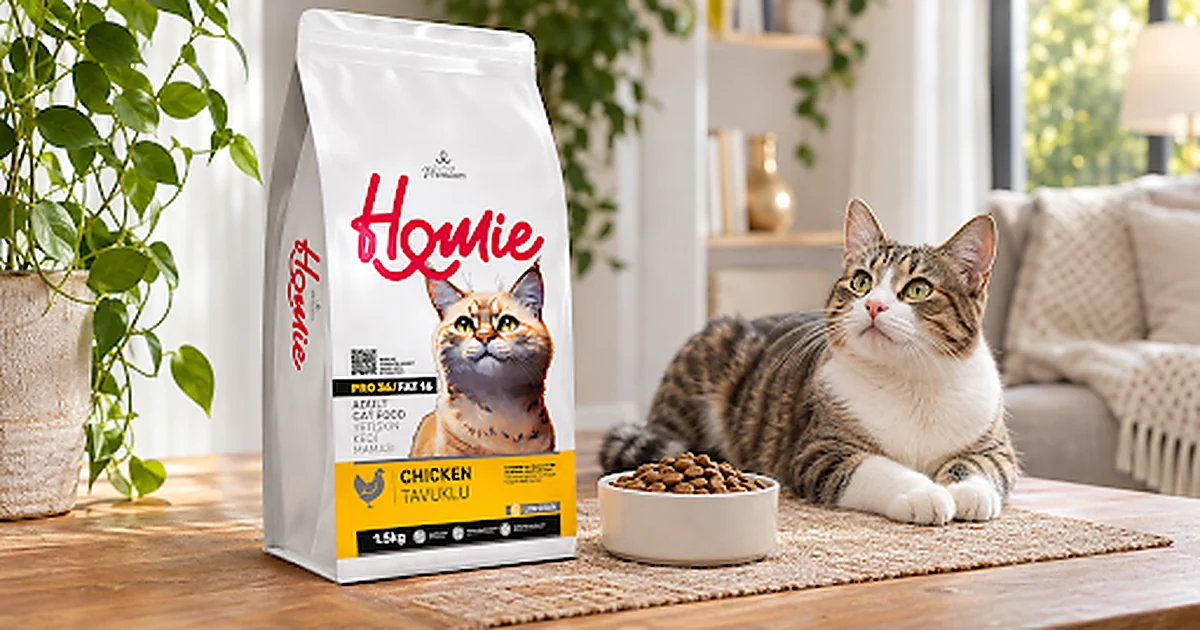
For example, Homie Super Premium Chicken Adult Cat Food declares 8% raw ash.
This figure needs interpretation alongside its protein, fat, and individual mineral values.
Our cat food for urinary health guide explains additional considerations for cats with urinary concerns.
Why Is Taurine Important?
Taurine is an essential amino acid that cats require through their diet. It supports normal vision, heart function, bile acid metabolism, and reproduction.
Cats cannot produce enough taurine to meet their requirements independently. Complete commercial cat food must therefore provide sufficient taurine.
How Much Taurine Should Cat Food Contain?
AAFCO nutrient profiles specify different minimum taurine concentrations for dry and canned cat food.
| Food Format | Minimum Taurine on Dry-Matter Basis |
| Dry extruded cat food | 0.10% |
| Canned cat food | 0.20% |
These standards account for differences in food processing and nutritional availability.
The percentages should not be confused with as-fed values printed on individual product labels.
What Happens When Cats Lack Taurine?
Taurine deficiency can contribute to serious health problems, including retinal degeneration and dilated cardiomyopathy.
These risks highlight why cats require properly formulated food rather than unbalanced homemade diets.
However, healthy cats eating complete food do not automatically need taurine supplements.
Consult a veterinarian before adding supplements to an existing diet.
Understanding Fat, Fibre and Moisture
Protein, ash, and taurine provide important information. However, fat, fibre, and moisture also influence feeding suitability and nutritional balance.
Crude Fat
Crude fat measures the declared fat content of food. Fat supplies concentrated energy and essential fatty acids.
Higher-fat food may provide more calories in smaller portions. This can benefit certain cats but may complicate weight management in others.
Compare calories alongside fat percentages when selecting adult or sterilised food.
Crude Fibre
Crude fibre measures a particular portion of dietary fibre using laboratory methods. It does not represent the food’s complete dietary fibre content.
Fibre can support normal digestive function and contribute to stool consistency.
Some hairball and weight-management formulas contain additional fibre. However, more fibre does not automatically mean better digestive health.
Moisture
Moisture indicates how much water the food contains.
Wet food typically contains significantly more water than dry kibble. This affects nutrient percentages, energy density, and daily feeding quantities.
Learn more in our cat hydration guide.
How to Compare Wet and Dry Labels
Compare wet and dry cat food using dry-matter values rather than directly comparing their as-fed percentages. Removing moisture from the calculation provides a more meaningful comparison of nutrient concentration.
Dry-Matter Calculation Formula
Dry matter percentage = 100 − moisture percentage
Dry-matter nutrient percentage = Label nutrient percentage ÷ dry matter percentage × 100
Consider two hypothetical cat food labels.
| Nutritional Value | Dry Cat Food | Wet Cat Food |
| Crude protein | 36% | 10% |
| Moisture | 10% | 80% |
| Dry matter | 90% | 20% |
| Protein on dry-matter basis | 40% | 50% |
The dry food appears to contain more protein when comparing packaging percentages.
However, the wet food has a higher protein concentration after accounting for moisture.
These calculations are illustrative and use assumed label values. Guaranteed minimums and maximums may differ from actual laboratory averages.
Why Does This Comparison Matter?
Owners sometimes dismiss wet food because its protein percentage appears relatively low.
However, water contributes significantly to wet food’s total weight. Comparing both products on a dry-matter basis avoids this misunderstanding.
The WSAVA Global Nutrition Guidelines provide further guidance on interpreting pet food labels and assessing nutritional suitability.
Real Cat Food Label Example
Reading an actual product label makes nutritional terminology easier to understand. The following example uses information from a World of Birds product listing.
Homie Super Premium Chicken Adult Cat Food
Homie Super Premium Chicken Adult Cat Food 1.5kg is a low-grain formula designed for adult cats.
Its ingredient list includes processed chicken protein, rice, sweetcorn, chicken fat, corn gluten, and hydrolysed chicken liver.
The product listing declares the following analytical components and nutritional additives.
| Label Component | Declared Amount |
| Processed chicken protein ingredient | 38% |
| Crude protein | 36% |
| Fat content | 16% |
| Raw ash | 8% |
| Crude cellulose | 2.5% |
| Taurine additive | 2,200 mg/kg |
| Omega-3 | 0.75% |
| Omega-6 | 3.7% |
What Do These Numbers Mean?
The 38% processed chicken protein figure describes the inclusion of a particular ingredient. The 36% protein figure describes the finished food’s declared protein content.
These values measure different things and should not be added together.
The listed taurine additive equals 0.22% by weight. However, an additive declaration may differ from the total taurine concentration in the finished food.
A full dry-matter comparison also requires the product’s moisture content. Check the current packaging for that information.
This example interprets published product information rather than independently tested laboratory results.
Cat Food Label Mistakes to Avoid
The most common label-reading mistakes involve confusing ingredient percentages, nutrient quality, marketing claims, and actual feeding requirements.
Avoid these errors when comparing products.
- Choosing by protein alone: Consider amino acids, digestibility, calories, and nutritional adequacy.
- Assuming low ash is always better: Evaluate individual minerals when medically relevant.
- Comparing wet and dry percentages directly: Account for differences in moisture.
- Trusting marketing terms alone: Premium wording does not establish nutritional superiority.
- Ignoring life-stage suitability: Kittens and adults require appropriate formulations.
- Confusing complete and complementary food: Complementary products may not provide complete daily nutrition.
How to Check Nutritional Adequacy
Look for a statement indicating that the product supplies complete nutrition for its intended life stage.
European-style labels may use the term “complete feed.” North American labels often contain an AAFCO nutritional adequacy statement.
The FDA guide to animal food labelling explains relevant United States labelling requirements.
These frameworks help interpret imported products. They should not be confused with specific Qatar regulatory requirements.
Check Packaging and Expiry Dates
Always inspect the packaging, batch information, and expiry date before purchasing.
In Qatar’s warm climate, store dry food away from excessive heat and direct sunlight. Keep opened wet food refrigerated according to manufacturer instructions.
Browse our cat food collection in Qatar to compare formulas and product details.
Frequently Asked Questions
Q1. What should I look for on a cat food label?
Answer: Check nutritional adequacy, life-stage suitability, protein, fat, moisture, ingredients, and calorie information. These details help determine whether the formula meets your cat’s needs.
Q2. Is 30% protein good for cat food?
Answer: It can be appropriate for some foods. However, consider moisture content, calorie density, amino acid balance, and your cat’s nutritional requirements.
Q3. Is ash in cat food harmful?
Answer: Ash represents mineral content and is not automatically harmful. Specific mineral concentrations matter more when cats have certain diagnosed medical conditions.
Q4. How do I know if cat food contains enough taurine?
Answer: Check its nutritional adequacy statement and available taurine information. Complete cat food should meet applicable nutrient requirements for its intended life stage.
Q5. What does crude protein mean on cat food?
Answer: Crude protein measures estimated total protein content through laboratory analysis. It does not independently establish protein digestibility or overall nutritional quality.
Q6. Is the first ingredient the most important?
Answer: The first ingredient has the greatest listed weight during formulation. However, ingredient order alone cannot establish nutritional suitability or finished food quality.
Q7. What does complete cat food mean?
Answer: Complete cat food supplies all essential nutrients for its intended life stage when fed appropriately. Complementary foods require other suitable foods to provide balanced nutrition.
Conclusion
Understanding how to read cat food labels helps you compare products using meaningful nutritional information rather than marketing claims.
Protein, ash, taurine, fat, and moisture each explain different aspects of a formula. However, complete nutrition, life-stage suitability, and individual health remain most important.
Compare nutrient values on the same basis and check feeding instructions before making dietary changes.
Find Suitable Cat Food at World of Birds
Explore the World of Birds cat food collection to compare Homie, Royal Canin, Hill’s, and other cat food brands.
Visit World of Birds – Pet & Aquatic Pet Store at Souq Al Ali, Doha, Qatar, or contact +974 33311542 for product information and availability.
