







How to Lower Ammonia in a Fish Tank: 7 Safe Steps

To lower ammonia in a fish tank safely, perform a 25–50% partial water change using conditioned water, reduce feeding, and maintain effective filtration. Remove uneaten food and decaying materials while increasing aquarium aeration. Test ammonia and nitrite regularly until both return to undetectable levels.
However, check pH and temperature before making major water changes. Extremely high ammonia combined with acidic water requires special precautions.
According to the Merck Veterinary Manual, un-ionised ammonia concentrations of 0.05 mg/L can damage fish gills.
At World of Birds – Pet & Aquatic Pet Store in Doha, Qatar, fishkeepers can explore filtration equipment and aquarium maintenance supplies.
This guide explains how to reduce ammonia quickly, identify its causes, and prevent dangerous ammonia spikes from returning.
What Is Ammonia in a Fish Tank?
Ammonia is a nitrogen-based waste compound produced by fish and decomposing organic material. It becomes dangerous when aquarium waste production exceeds the biological filter’s processing capacity.
Fish release ammonia through their gills. Uneaten food, dead plants, and other decomposing materials also contribute to ammonia accumulation.
In an established aquarium, beneficial microorganisms convert ammonia into nitrite and eventually nitrate.
Ammonia vs Ammonium
Aquarium water contains two related forms of ammonia.
| Compound | Chemical Formula | Toxicity |
| Un-ionised ammonia | NH₃ | More toxic to fish |
| Ammonium | NH₄⁺ | Generally less toxic |
| Total ammonia nitrogen | TAN | Combined nitrogen measurement |
Most aquarium ammonia tests measure total ammonia or total ammonia nitrogen. The proportion of toxic NH₃ depends strongly on pH and temperature.
The University of Florida’s ammonia guidance explains how these conditions influence ammonia toxicity.
What Causes High Aquarium Ammonia?
High ammonia usually develops when fish waste accumulates faster than beneficial bacteria can process it. New aquariums, excessive feeding, and disrupted filtration are common causes.
1. An Uncycled Fish Tank
New aquariums lack sufficient established biological filtration. Adding fish too early can cause ammonia and nitrite to accumulate rapidly.
This problem is commonly called new tank syndrome.
2. Overfeeding Aquarium Fish
Uneaten food decomposes and releases ammonia into the water. Excessive feeding also increases the amount of waste produced by fish.
Remove leftovers and provide portions appropriate for your fish species.
Read our guide on overfeeding aquarium fish for practical feeding advice.
3. Overstocking the Aquarium
Too many fish can overwhelm the aquarium’s biological filtration capacity. Larger fish may also produce more waste than owners expect.
Plan stocking according to adult fish size, aquarium volume, and filtration capacity.
4. Damaged Beneficial Bacteria
Replacing all filter media or washing biological media in chlorinated water can damage beneficial bacterial colonies.
Power cuts, prolonged filter interruptions, and certain medications may also disrupt biological filtration.
5. Decaying Organic Materials
Dead fish, rotting plants, and accumulated food contribute to ammonia production. These materials may become trapped behind decorations or inside filter compartments.
Inspect the aquarium regularly and remove decomposing material promptly.
Safe Ammonia Levels for Aquarium Fish
The safest ammonia level in an established freshwater aquarium is undetectable on a suitable test kit. Any detectable ammonia deserves investigation, especially when fish show signs of distress.
Aquarium Ammonia Reading Guide
| Total Ammonia Test Reading | Recommended Response |
| 0 ppm | Continue routine monitoring |
| 0.25 ppm | Investigate the cause and check pH |
| 0.5 ppm | Take corrective action and retest |
| 1.0 ppm or higher | Prompt assessment and ammonia reduction |
These readings provide general action guidance rather than universal toxicity thresholds.
Different test kits use different measurement conventions. Actual danger depends on the ammonia form, pH, temperature, and fish species.
Why Does High pH Increase Ammonia Toxicity?
Higher pH increases the proportion of ammonia present as toxic NH₃. Warmer water can also increase this proportion.
Therefore, two aquariums with identical total ammonia readings may present different levels of danger.
For Qatar fishkeepers, monitoring temperature becomes particularly important during warm weather.
How to Lower Ammonia in a Fish Tank
Lower aquarium ammonia through controlled water changes, reduced waste production, effective filtration, and frequent water testing. The following seven steps address immediate ammonia exposure and its underlying causes.
Step 1: Test Ammonia and Water Chemistry
Measure ammonia, nitrite, nitrate, pH, and temperature before selecting corrective measures.
Record the results so you can compare readings after treatment. Test replacement water for ammonia and relevant chemical differences.
If fish appear distressed, begin suitable emergency measures promptly.
Step 2: Perform a Partial Water Change
A partial water change dilutes ammonia by replacing contaminated water with suitable fresh water.
The University of Florida recommends considering 25–50% water changes when incoming water does not contain ammonia.
Use properly conditioned replacement water with compatible temperature and chemistry.
Important: Extremely high ammonia combined with acidic water requires special care. Suddenly raising pH can increase ammonia toxicity.
In such situations, seek aquatic veterinary advice before attempting a major water change.
Example: How Much Ammonia Can a Water Change Remove?
Consider a hypothetical 100-litre aquarium containing 1.0 ppm total ammonia.
| Water Changed | Replacement Volume | Estimated Remaining Ammonia |
| 25% | 25 litres | 0.75 ppm |
| 40% | 40 litres | 0.60 ppm |
| 50% | 50 litres | 0.50 ppm |
Calculation: Remaining ammonia = Initial concentration × Remaining water fraction
These estimates assume ammonia-free replacement water and complete mixing.
Fish may continue producing ammonia after the water change. Always retest rather than assuming the calculated result remains accurate.
Step 3: Reduce or Temporarily Stop Feeding
Reducing feeding helps limit additional waste production. Healthy adult fish can often tolerate a brief interruption in feeding during ammonia emergencies.
Remove uneaten food immediately and resume appropriate feeding when water conditions improve.
Young fry, specialised species, and fish with particular nutritional requirements may need different care.
Step 4: Remove Decaying Waste
Inspect the substrate, plants, and decorations for decomposing organic material.
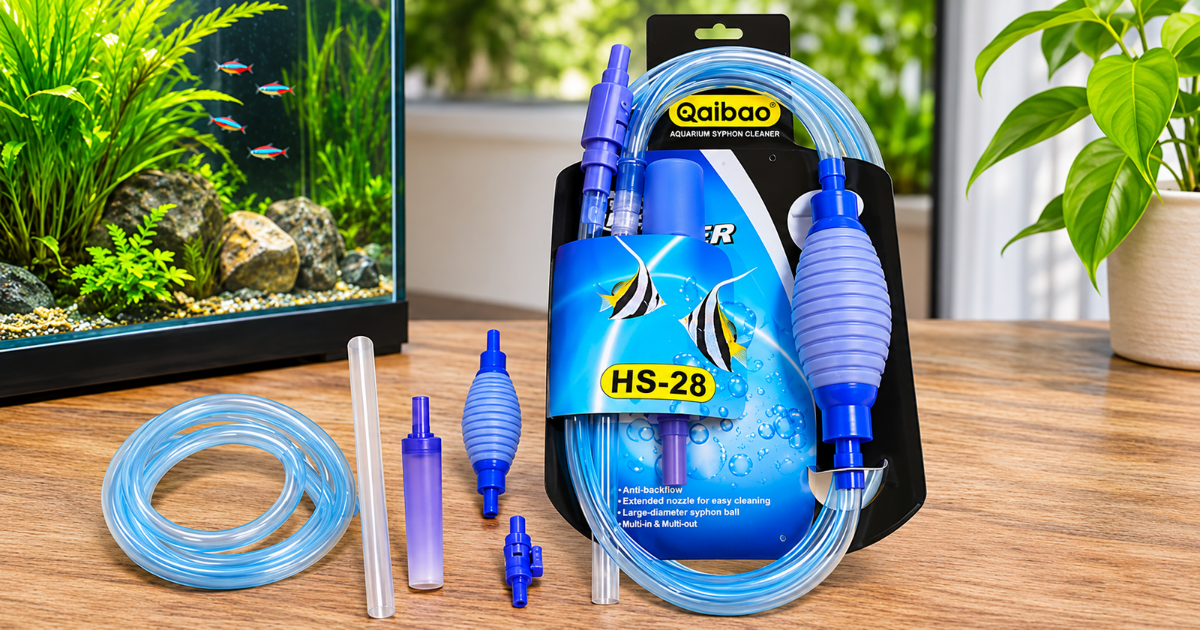
Remove dead leaves, uneaten food, and other visible waste. Use an aquarium siphon to clean affected substrate areas gently.
Avoid disturbing the entire aquarium unnecessarily.
Our aquarium cleaning guide for Qatar explains additional maintenance practices.
Step 5: Restore Biological Filtration
Beneficial bacteria process ammonia and nitrite within the aquarium’s biological filter. Check whether your filter operates correctly and provides sufficient circulation.
World of Birds lists the SOBO WP-1150F Aquarium Filter Pump, rated at 500 litres per hour.
This internal filter provides mechanical filtration and water circulation for suitable setups.
However, a new filter does not instantly remove ammonia through biological filtration. Its media must develop sufficient beneficial bacterial activity.
Step 6: Increase Aquarium Aeration
Adequate oxygen supports fish respiration and biological filtration. Increase suitable surface movement when ammonia levels rise or fish display breathing difficulties.
Check that your filter outlet operates correctly. Use supplementary aeration when necessary.
An air pump supports oxygenation but does not directly eliminate ammonia from aquarium water.
Step 7: Retest and Monitor Daily
Test ammonia and nitrite after corrective measures. Continue monitoring frequently until both remain undetectable.
Repeat appropriate water changes if harmful concentrations return.
Do not add more fish while the biological filter remains unstable.
Signs of Ammonia Poisoning in Fish
Ammonia poisoning can damage fish gills and interfere with normal biological functions. Symptoms may develop gradually or rapidly depending on exposure levels.
Common warning signs include:
- Rapid breathing or gasping near the surface.
- Reduced appetite or unusual inactivity.
- Unusual swimming or loss of coordination.
- Changes in gill appearance.
- Fish remaining near filter outlets.
- Sudden deterioration or unexplained deaths.
These symptoms do not independently confirm ammonia poisoning. Nitrite toxicity, oxygen shortages, and other diseases may produce similar signs.
What Should You Do If Fish Are Gasping?
Increase suitable aeration and test aquarium water immediately. Check the ammonia concentration, temperature, pH, and nitrite.
Perform appropriate corrective water changes when safe. Seek aquatic veterinary assistance if fish remain severely distressed.
Read our guide on why fish die in aquariums for additional warning signs.
Can Ammonia Removers Help?
Some aquarium treatments claim to bind ammonia, temporarily reduce its toxicity, or support biological filtration. These products may provide additional assistance when used according to their instructions.
However, they do not replace water changes, appropriate feeding, or established biological filtration.
Ammonia Treatment Comparison
| Treatment | Main Function | Important Limitation |
| Partial water change | Dilutes dissolved ammonia | Replacement water must be suitable |
| Water conditioner | Treats specified disinfectants | Not every conditioner treats ammonia |
| Biological filter | Processes ammonia and nitrite | Requires established microorganisms |
| Bacterial starter | Supports biological filter development | Does not guarantee instant cycling |
| Zeolite media | Can adsorb ammonium | Capacity is limited |
| Air pump | Improves oxygen exchange | Does not directly remove ammonia |
Always check product compatibility and dosage instructions. Some ammonia treatments may also affect how particular test kits interpret results.
Can Activated Carbon Remove Ammonia?
Ordinary activated carbon should not be relied upon for effective ammonia removal.
It primarily adsorbs certain dissolved substances. Ammonia control instead requires suitable biological filtration, water changes, or specifically designed treatment media.
How Long Does Ammonia Take to Drop?
A suitable water change can reduce ammonia immediately through dilution. However, restoring stable biological filtration may require several days or weeks.
The recovery period depends on the underlying cause, aquarium conditions, and existing bacterial activity.
Typical Ammonia Recovery Scenarios
| Situation | Expected Recovery |
| Temporary overfeeding | May improve within days |
| Minor filter disruption | Depends on remaining bacterial activity |
| Newly established aquarium | Several weeks may be required |
| Major biological filter failure | May require substantial filter recovery |
The Merck Veterinary Manual’s aquarium management guide explains that new biological filters may require up to eight weeks to establish.
Use repeated water testing rather than relying on a fixed recovery deadline.
Preventing Ammonia Spikes in Qatar
Prevent ammonia spikes by maintaining established biological filtration, controlling feeding, and regularly testing water. Aquarium owners in Qatar should also manage heat and oxygen availability.
Maintain Suitable Filtration
Keep your filter running continuously. Inspect its flow regularly and clean reusable media carefully when necessary.
Avoid replacing every filter component at the same time.
Read our aquarium filter cleaning guide for safe maintenance practices.
Avoid Excessive Aquarium Temperatures
Warm aquarium water can increase ammonia toxicity and reduce dissolved oxygen availability.
Position your tank away from direct sunlight. Monitor temperature during hot weather and air conditioning interruptions.
Maintain the temperature required by your fish species.
Check Replacement Water
Water chemistry can vary between municipal supplies, building storage systems, and bottled water.
Test unfamiliar water sources before aquarium use. Treat chlorine or chloramine using a suitable aquarium conditioner.
Maintain a Regular Testing Schedule
Test ammonia and nitrite more frequently after adding livestock, experiencing equipment failures, or performing major maintenance.
Established aquariums also benefit from regular monitoring.
Our aquarium water quality guide for Qatar explains the wider water chemistry requirements.
Frequently Asked Questions
Q1. What is the fastest way to lower ammonia in a fish tank?
Answer: An appropriate partial water change using suitable, ammonia-free replacement water can reduce ammonia quickly. Reduce feeding, maintain filtration, and retest water.
Q2. Can fish survive ammonia at 0.5 ppm?
Answer: Survival depends on pH, temperature, exposure duration, and species. Treat detectable ammonia as a warning and investigate its cause promptly.
Q3. Why does my ammonia keep rising after water changes?
Answer: Fish continue producing waste. An immature or damaged biological filter may not process ammonia fast enough.
Check feeding, filtration, and replacement water.
Q4. Can I lower ammonia without changing water?
Answer: Improved biological filtration and reduced feeding can help over time. Some specialised treatments may provide additional support.
However, appropriate water changes offer immediate dilution when necessary.
Q5. Does aquarium salt remove ammonia?
Answer: No. Aquarium salt does not remove ammonia from freshwater tanks. Salt use also depends on fish species and the specific condition being managed.
Q6. Will live aquarium plants reduce ammonia?
Answer: Aquatic plants can absorb nitrogen compounds and contribute to water stability. However, they cannot guarantee adequate ammonia control in an overloaded aquarium.
Q7. How do I know when the ammonia problem is resolved?
Answer: Ammonia and nitrite should remain undetectable during normal feeding and aquarium operation. Confirm stable conditions through repeated testing.
Conclusion
Understanding how to lower ammonia in a fish tank safely helps protect fish from harmful water conditions.
Appropriate partial water changes, reduced feeding, effective aeration, and biological filtration provide the foundation for ammonia control.
Identify the underlying cause and monitor water chemistry until conditions stabilise. Avoid sudden pH changes and unnecessary chemical treatments.
Keep Your Aquarium Healthy With World of Birds
Explore our aquarium equipment and aquatic supplies collection in Qatar for filtration products and aquarium maintenance equipment.
Visit World of Birds – Pet & Aquatic Pet Store at Souq Al Ali, Doha, Qatar, to explore products suited to your freshwater aquarium.
