







How Often to Clean an Aquarium Filter? A Practical Guide

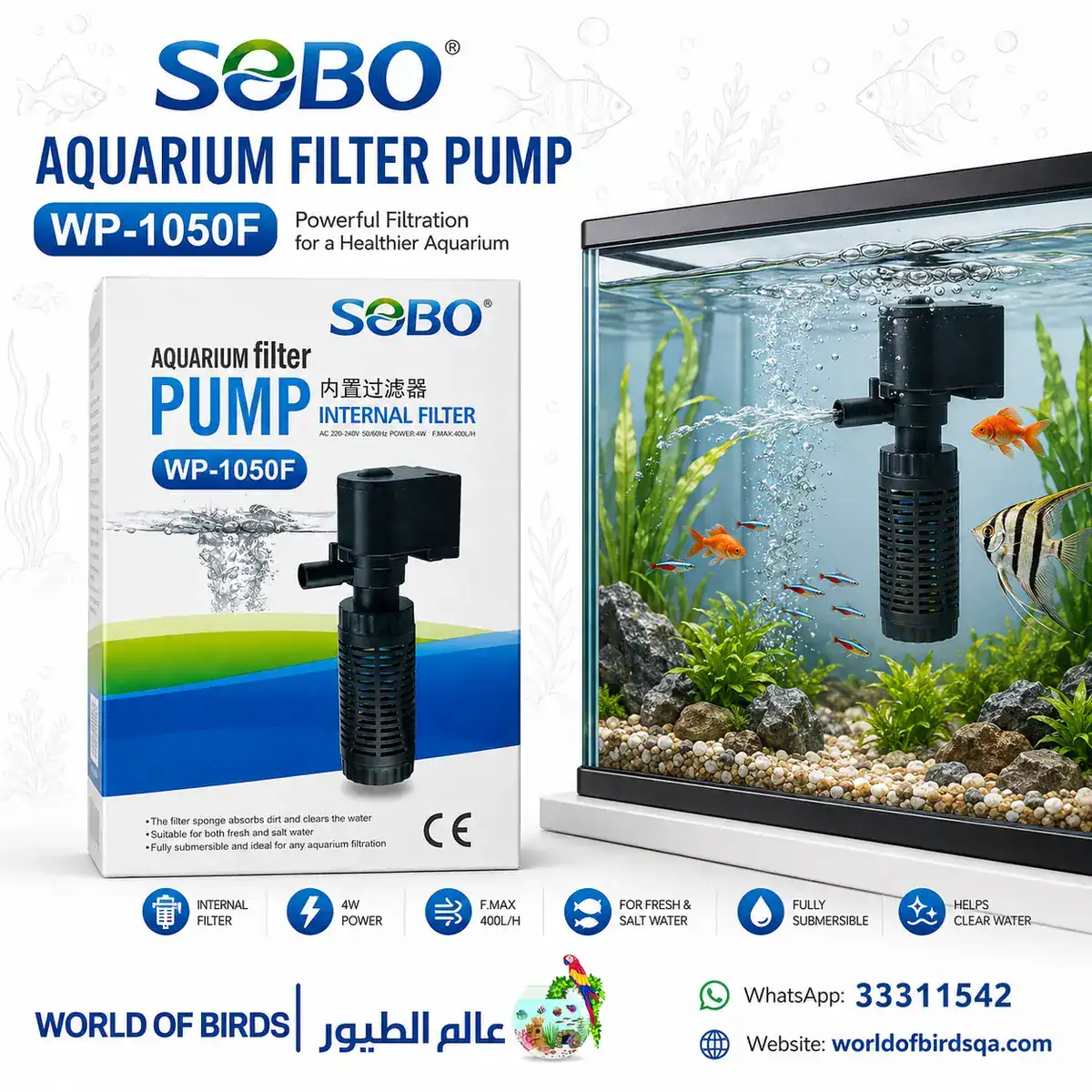
How often to clean an aquarium filter depends on filter type, fish load, feeding, debris buildup and water flow. For many freshwater tanks, mechanical media may need attention every few weeks, while biological media needs much less frequent cleaning. The key signal is reduced flow rather than a fixed calendar date.
At World of Birds in Souq Al Ali, Doha, we work with aquarium owners using internal filters, canister systems and other filtration equipment. Our existing aquarium-filter collection also stress regular inspection, gentle media cleaning and protection of beneficial bacteria.
This guide explains how often to clean an aquarium filter, what to clean, what to leave alone, and how Qatar aquarium owners can maintain filtration without disturbing the biological cycle.
Quick answer: Check your filter regularly and clean it when flow noticeably drops or mechanical media becomes clogged. Many home aquariums need mechanical-media cleaning every 2–6 weeks, while biological media usually needs much less attention.
Key Takeaways
- Clean the filter based on flow and debris, not the calendar alone.
- Mechanical sponges and pads usually need the most frequent cleaning.
- Biological media should be cleaned gently and only when necessary.
- Use removed aquarium water when rinsing established biological media.
- Never use soap or household cleaning chemicals.
- Avoid replacing all filter media at once.
- Heavy stocking and heavy feeding can shorten the cleaning interval.
- A sudden flow reduction can indicate a blocked intake, sponge or impeller.
How Often Should You Clean an Aquarium Filter?
Most aquarium filters need mechanical-media cleaning every few weeks, but the exact interval depends on the aquarium. A lightly stocked planted tank may need less frequent cleaning, while a heavily stocked tank can clog mechanical media much faster.
A practical starting schedule is:
| Filter component | Practical starting interval |
| Coarse sponge | Every 2–6 weeks |
| Fine sponge or pad | When clogged or flow drops |
| Filter floss | Replace when clogged |
| Biological media | Only when heavily dirty or restricting flow |
| Impeller | Inspect every 1–3 months |
| Intake | Inspect whenever flow decreases |
| Hoses | Inspect and clean when buildup restricts flow |
These are starting points rather than mandatory schedules. Filter design, stocking, feeding and media capacity can change the actual interval.
Why Flow Matters More Than the Calendar
A filter can look dirty and still work effectively. Likewise, a filter can look acceptable while a blocked intake or impeller reduces circulation.
Watch for:
- Noticeably weaker water output
- Reduced surface movement
- More debris remaining in the tank
- Increasing noise
- Visible sludge around mechanical media
- Blocked intake openings
A noticeable reduction in flow is one of the clearest maintenance signals.
When Should You Clean an Aquarium Filter?
Clean your aquarium filter when mechanical media becomes clogged, water flow decreases, or debris restricts the filtration system. Heavily stocked aquariums usually need more frequent maintenance than lightly stocked tanks.
Heavy Stocking
More fish generally produce more waste. That waste enters the filtration system and can clog mechanical media faster.
Goldfish and larger cichlids can be especially demanding because they produce substantial waste.
Heavy Feeding
Uneaten food can enter the filter. Overfeeding therefore increases the amount of debris captured by mechanical media.
Reducing unnecessary food can reduce filter workload.
Planted Aquariums
Plant debris can also collect inside filter intakes and sponges. Trim damaged leaves and remove loose plant material before it enters the filtration system.
Our aquarium plant care guide for Qatar covers regular plant maintenance and debris control in planted tanks.
How Do You Clean an Aquarium Filter Safely?
Clean an aquarium filter by removing the mechanical media, rinsing it gently in removed aquarium water, checking the intake and impeller, then reinstalling everything correctly. The main goal is to remove excess debris without unnecessarily removing beneficial bacteria.
Follow these steps:
- Turn off the filter and unplug it.
- Remove the mechanical media carefully.
- Place some aquarium water in a clean bucket.
- Gently squeeze or rinse the dirty sponge in that water.
- Inspect the intake for debris.
- Check the impeller for dirt or obstruction.
- Rinse relevant components without soap.
- Reassemble the filter correctly.
- Restart the system.
- Confirm normal water flow.
Avoid leaving the filter running while its intake or pump is exposed to air.
Why Use Aquarium Water?
Established biological media contains beneficial bacteria. Untreated tap water can contain chlorine or chloramine, which can damage these bacterial populations.
Aquarium Co-Op recommends rinsing filter media in old aquarium water or dechlorinated water.
Should You Clean Biological Filter Media?
Biological filter media should not be cleaned aggressively or replaced simply because it looks dirty. Beneficial bacteria colonise this media, so excessive cleaning can reduce biological filtration capacity.
Biological media includes materials such as:
- Ceramic rings
- Porous ceramic blocks
- Bio-balls
- Biological sponges
- Other porous filtration materials
Clean It Only When Necessary
Biological media does not need to look spotless. If water can still pass through the media, leave it alone.
When it becomes heavily clogged, gently swish it in removed aquarium water. Avoid aggressive scrubbing.
Never Replace All Bio-Media at Once
Replacing every biological medium at once removes a large part of the established bacterial habitat.
If replacement becomes necessary, replace portions gradually. This gives bacteria remaining in the aquarium time to colonise the new material.
How Often Should You Clean Different Filter Types?
Internal, sponge, HOB and canister filters can require different maintenance intervals because their media capacity and mechanical filtration designs differ. The correct interval still depends on actual flow and debris buildup.
Internal Aquarium Filters
Internal filters often have compact sponges. Their smaller media capacity can mean faster clogging in heavily stocked tanks.
Check the sponge and intake regularly. World of Birds stocks internal filtration options through its Aquarium Filters range.
Sponge Filters
Sponge filters are simple to maintain. Squeeze the sponge gently in removed aquarium water when flow becomes weak or the sponge becomes heavily loaded with debris.
Do not squeeze it under untreated tap water.
Canister Filters
Canister filters generally hold more media. They may therefore require less frequent mechanical cleaning than smaller internal systems. However, blocked hoses, intake pipes and impellers can still reduce flow.
Our existing Best Aquarium Filters in Qatar guide covers different aquarium-filter types and their maintenance requirements.
What Happens If You Clean the Filter Too Often?
Cleaning a filter too often can unnecessarily disturb beneficial bacteria, especially when biological media is aggressively rinsed or replaced. A filter should remove excess waste while preserving enough established biological filtration to support the aquarium’s nitrogen cycle.
Over-cleaning can happen when owners follow a rigid weekly schedule. A filter that still has good flow may not need complete cleaning. Instead, inspect the mechanical media and clean only the component that needs attention.
Should You Clean the Filter During a Water Change?
Yes, filter maintenance can be performed during a water change because removed aquarium water provides suitable water for rinsing filter media. However, avoid performing several major cleaning tasks at the same time when the aquarium is heavily established.
A simple routine is:
- Remove aquarium water for the water change.
- Put some of that water into a clean bucket.
- Turn off and unplug the filter.
- Rinse the dirty mechanical media gently.
- Inspect the intake and impeller.
- Reassemble the filter.
- Complete the water change.
- Restart the filter.
- Confirm normal flow.
Our Aquarium Water Quality Qatar guide explains how filtration, water changes and water testing work together.
How Often Should You Clean the Filter in Qatar?
Aquarium filter cleaning in Qatar should still be based on flow, stocking and debris, but warm indoor conditions can make regular observation particularly useful. Air conditioning, room temperature, feeding and aquarium stocking can all affect maintenance needs.
For Doha aquariums, use this practical routine:
Daily
- Check filter flow.
- Check the water surface.
- Look for blocked intake areas.
- Watch fish behaviour.
- Remove obvious uneaten food.
Weekly
- Inspect the filter intake.
- Check visible debris.
- Observe whether flow has changed.
- Perform routine water-quality checks.
Every Few Weeks
- Rinse mechanical media when clogged.
- Inspect the pump and impeller.
- Check hoses where applicable.
Less Frequently
- Inspect biological media.
- Clean canister hoses when buildup restricts flow.
- Replace worn mechanical material when necessary.
Do not automatically clean every component every month. Let the condition of the filter guide the work.
Why Is My Aquarium Filter Flow Weak?
Weak aquarium filter flow is commonly linked to clogged mechanical media, blocked intakes, dirty impellers or restricted hoses. Checking these components in order can help identify the problem before replacing the entire filter.
Start with the easiest checks:
- Check the aquarium water level.
- Inspect the intake.
- Remove visible debris.
- Check the mechanical sponge.
- Inspect the impeller.
- Check hoses on external filters.
- Reassemble the filter correctly.
- Restart and observe the flow.
If the flow remains weak, inspect the equipment according to the manufacturer’s instructions.
What Should You Never Use to Clean a Fish Tank Filter?
Never use soap, detergent or household cleaning chemicals on aquarium filter components. Residues can enter the aquarium and create problems for fish and other aquatic livestock.
Avoid:
- Dishwashing liquid
- Household disinfectants
- Glass cleaners
- Bleach unless a specific manufacturer-approved procedure requires it
- Scented cleaning products
- Abrasive household cleaners
For routine filter maintenance, aquarium water and appropriate cleaning tools are usually sufficient.
Frequently Asked Questions
How often should I clean my aquarium filter?
Clean your aquarium filter when flow decreases or mechanical media becomes clogged. For many freshwater aquariums, mechanical media needs attention every few weeks, while biological media usually needs much less frequent cleaning. Stocking, feeding and filter size can change the interval.
Can I clean my aquarium filter with tap water?
It is safer to rinse established biological filter media in removed aquarium water or properly dechlorinated water. Untreated tap water may contain chlorine or chloramine that can damage beneficial bacterial populations. Mechanical components can be cleaned according to the filter manufacturer’s instructions.
Should I replace aquarium filter media every month?
No, not all filter media needs monthly replacement. Mechanical floss may need frequent replacement when clogged, while durable biological media can remain in service much longer. Replace biological media gradually when it is damaged or unusable.
How do I know when my aquarium filter needs cleaning?
Reduced water flow is one of the clearest signs that an aquarium filter needs attention. Other signs include visibly clogged media, debris around the intake, increased noise or restricted water movement. Check the simplest blockage points before replacing the filter.
Can cleaning an aquarium filter kill beneficial bacteria?
Yes, aggressive cleaning can reduce beneficial bacteria, especially when biological media is scrubbed, disinfected or replaced completely. Gentle cleaning with removed aquarium water helps preserve established bacterial colonies while removing excess debris.
How often should I clean a sponge filter?
A sponge filter often needs cleaning every few weeks to about once a month, but flow should guide the final timing. Heavily stocked tanks may need more frequent cleaning. Gently squeeze the sponge in removed aquarium water rather than untreated tap water.
Should I clean all aquarium filter media at once?
No. Avoid cleaning or replacing all biological media at the same time. Keeping established media in the filter helps preserve the bacterial population. Mechanical media can receive more regular cleaning because its primary role is capturing physical debris.
How Often to Clean an Aquarium Filter: Final Answer
How often to clean an aquarium filter depends on its flow, media condition, tank stocking and feeding level. For many home freshwater aquariums, mechanical media may need cleaning every few weeks. Biological media should receive gentler and less frequent maintenance.
The safest approach is simple: watch the flow, clean clogged mechanical media, protect biological media and never use household cleaning chemicals.
At World of Birds in Souq Al Ali, Doha, we stock internal filters, canister filters and other aquarium filtration equipment for different freshwater setups. Browse our Aquarium Filters range and review your tank size, fish load and current filtration before selecting equipment.
For more aquarium maintenance guidance, read our How to Set Up Filter for Aquarium guide.
Visit World of Birds in Souq Al Ali, Doha or contact our team with your tank size and current filter setup for help with suitable aquarium filtration and maintenance.
