







Does a Fish Tank Need an Air Pump? When You Really Need One

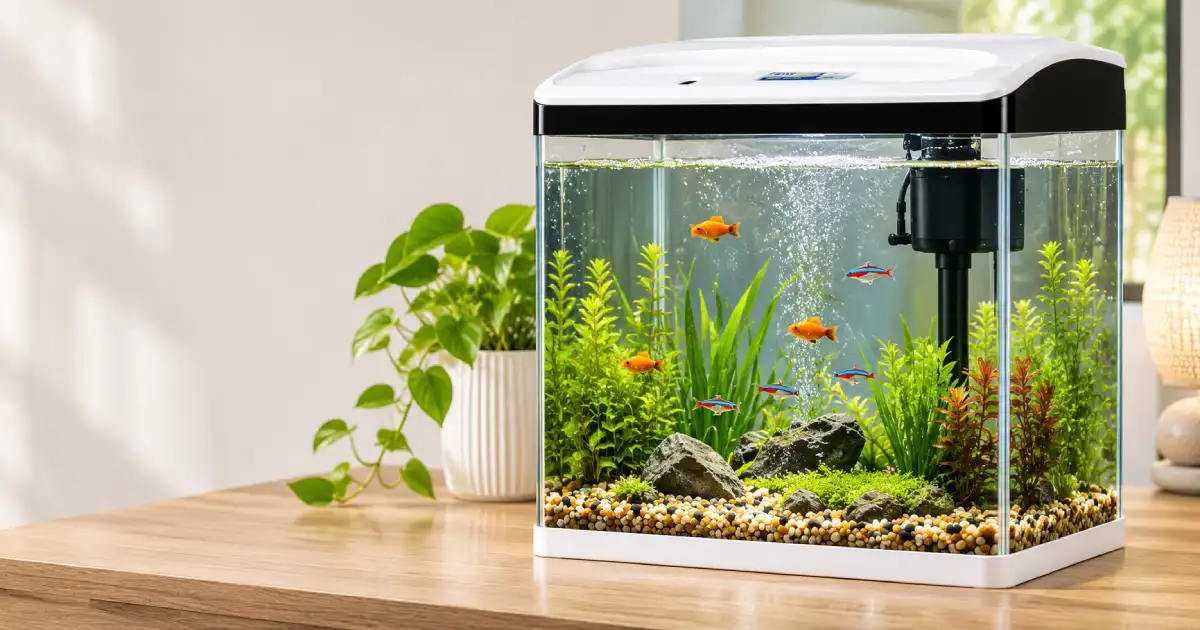
Does a fish tank need an air pump? Not every aquarium needs one. A fish tank can maintain adequate oxygen without an air pump if its filter provides sufficient surface movement. However, an air pump becomes important when oxygen levels drop, water circulation is weak, or fish require additional aeration.
Air pumps also operate sponge filters and provide emergency aeration during power outages when battery-powered models are available.
According to the Merck Veterinary Manual, dissolved oxygen above 5 mg/L is suitable for most fish. Lower concentrations can cause stress and serious health problems.
At World of Birds – Pet & Aquatic Pet Store in Doha, Qatar, fishkeepers can explore aquarium equipment and maintenance supplies.
This guide explains when an air pump is necessary, how it works, and how to maintain healthy oxygen levels.
What Does an Aquarium Air Pump Do?
An aquarium air pump pushes atmospheric air through tubing into the fish tank. An attached air stone releases bubbles, creating water movement and improving gas exchange at the surface.
Fish absorb dissolved oxygen through their gills. They do not normally breathe oxygen directly from aquarium bubbles.
An air pump helps oxygen enter the water while allowing excess carbon dioxide to escape. The rising bubbles also encourage circulation between deeper and surface water.
How Does Aquarium Aeration Work?
Aquarium aeration increases contact between water and atmospheric air. Surface movement plays an important role in this process.
The Merck Veterinary Manual’s aquatic systems guidance explains how water movement and filtration contribute to adequate oxygenation.
An air stone, filter outlet, or suitable water pump can all improve gas exchange. Their effectiveness depends on aquarium design, water temperature, and oxygen demand.
When Does a Fish Tank Need an Air Pump?
A fish tank needs additional aeration when its existing circulation cannot maintain adequate dissolved oxygen. Air pumps are especially useful in the following aquarium conditions.
1. Low Oxygen Levels
Fish require sufficient dissolved oxygen to survive. An air pump can improve circulation and oxygen exchange when levels become inadequate.
The Merck Veterinary Manual’s water-quality reference recommends dissolved oxygen above 5 mg/L for most freshwater systems.
However, suitable oxygen levels vary between species. Aim for conditions that meet your fish’s specific requirements.
2. Warm Aquarium Water
Warm water holds less dissolved oxygen than cooler water under comparable conditions. Fish may also consume more oxygen as temperatures increase.
This matters for aquarium owners in Qatar, particularly during hot summer months or air conditioning interruptions.
An air pump provides additional aeration when aquarium temperatures rise. However, it cannot replace proper temperature control.
3. Heavily Stocked Aquariums
More fish generally create greater oxygen demand and produce more waste. Beneficial filter bacteria also consume oxygen while processing aquarium waste.
Additional aeration may help support a busy aquarium. Nevertheless, an air pump cannot make excessive stocking safe.
Read our fish stocking guide by tank size before adding more fish.
4. Air-Driven Sponge Filters
A sponge filter requires airflow to operate. Rising air draws aquarium water through the sponge, supporting mechanical and biological filtration.
These filters are popular in breeding tanks, shrimp aquariums, and smaller freshwater setups.
Without a functioning air pump, an air-driven sponge filter cannot maintain its normal water flow.
5. Aquariums With Weak Water Circulation
Some aquarium filters provide limited surface movement. Deep tanks and densely arranged decorations can also create areas with poor circulation.
An air stone helps move water through these areas. Position it where additional circulation is needed.
Check that the filter remains appropriately sized for your tank.
6. Power Cuts and Emergencies
A battery-powered aquarium air pump can provide temporary aeration when normal electrical equipment stops working.
This is useful during power cuts, filter failures, or fish transportation.
A backup air pump supports oxygen exchange but cannot maintain every function of a complete filtration system.
When Is an Air Pump Optional?
An air pump is optional when your aquarium already maintains sufficient dissolved oxygen through filtration and surface movement.
Tanks With Strong Surface Movement
Many internal, hang-on-back, and canister filters create adequate water movement. Their outlets can disturb the surface and improve gas exchange.
A separate air pump may offer little additional benefit when oxygen levels already meet your fish’s requirements.
Explore our best aquarium filters in Qatar guide for suitable filtration options.
Well-Maintained Community Aquariums
A properly stocked aquarium with effective filtration may not require supplementary aeration.
Regular water changes, appropriate temperatures, and controlled feeding help maintain stable conditions.
However, oxygen requirements can change as fish grow or stocking levels increase.
Planted Aquariums With CO₂ Injection
Live aquatic plants release oxygen during photosynthesis. They also consume oxygen through respiration, including during darkness.
Excessive aeration can increase carbon dioxide loss in planted aquariums using supplemental CO₂.
Therefore, some planted tanks use carefully controlled circulation instead of continuous bubble production.
Monitor dissolved oxygen and CO₂ rather than assuming plants provide enough oxygen throughout the day.
Our planted aquarium guide for Qatar explains additional setup considerations.
Aquarium Air Pump vs Filter
An air pump improves aeration, while an aquarium filter removes particles and supports biological waste processing. These devices have different functions, although some filtration systems use both.
| Feature | Aquarium Air Pump | Aquarium Filter |
| Main purpose | Improve aeration | Maintain water quality |
| Creates bubbles | Yes, with an air stone | Depends on design |
| Removes solid waste | No | Yes, through mechanical filtration |
| Supports biological filtration | Indirectly | Yes, with suitable filter media |
| Improves circulation | Yes | Yes |
| Processes ammonia | Not independently | Through established beneficial bacteria |
| Essential for every tank | Not always | Most conventional fish tanks need suitable filtration |
Can an Air Pump Replace a Filter?
No. An air pump connected only to an air stone cannot replace biological filtration.
It does not independently process harmful ammonia or remove accumulated solid waste.
However, an air pump connected to a suitable sponge filter can operate a complete filtration component.
Explore more in our aquarium filter pump guide.
Signs Your Fish Need More Oxygen
Fish gathering near the surface, breathing rapidly, or showing unusual weakness may indicate low oxygen. These symptoms require immediate attention because oxygen shortages can become dangerous quickly.
Common Signs of Oxygen Stress
- Several fish repeatedly gasp at the surface.
- Fish show unusually rapid gill movement.
- Fish gather near the filter outlet.
- Normal swimming activity decreases.
- Fish appear weak or lose their usual appetite.
These signs can also result from ammonia, nitrite, excessive CO₂, or gill disease.
The Merck Veterinary Manual’s aquatic environmental disease guide explains these important distinctions.
What Should You Do Immediately?
- Increase surface movement and switch on suitable aeration.
- Check whether the aquarium filter is operating correctly.
- Stop supplemental CO₂ if excessive CO₂ is suspected.
- Test oxygen, ammonia, nitrite, and water temperature.
- Prepare suitable, temperature-matched water for a partial water change if needed.
- Seek aquatic veterinary assistance if fish remain distressed.
Avoid suddenly cooling the aquarium or adding unnecessary chemicals.
Read our guide on why fish die in aquariums for additional water-quality warning signs.
How to Choose an Aquarium Air Pump
The best aquarium air pump provides enough airflow for your tank without creating excessive turbulence. Consider aquarium size, depth, equipment requirements, and fish behaviour.
Match Airflow to Tank Size
Manufacturers commonly specify airflow in litres per minute or litres per hour.
Larger or deeper aquariums may need stronger pumps. Multiple air stones also increase airflow requirements.
Check the recommended aquarium size and maximum operating depth before buying.
Example Airflow Comparison
| Aquarium Setup | Pump Features to Consider |
| Small freshwater tank | Gentle, adjustable airflow |
| Medium community tank | Adjustable airflow with suitable circulation |
| Large aquarium | Greater airflow and adequate operating pressure |
| Two sponge filters | Dual outlets or suitable airline splitter |
| Emergency backup | Battery-powered operation |
These recommendations describe equipment features rather than guaranteed pump capacities.
Actual airflow depends on water depth, tubing length, and air stone resistance.
Consider Noise and Fish Comfort
Some air pumps produce noticeable vibration during operation. Rubber feet and suitable placement can reduce noise.
Adjustable airflow is useful for fish that prefer gentle water movement. Bettas, for example, may struggle against excessive currents.
For species-specific guidance, explore our betta fish care guide.
How to Install an Air Pump
Installing an aquarium air pump requires the correct tubing, air stone, and backflow protection.
Step-by-Step Installation
- Place the air pump outside the aquarium in a dry location.
- Connect suitable aquarium airline tubing to the pump outlet.
- Fit a check valve in the correct airflow direction.
- Attach an air stone or compatible sponge filter.
- Position the equipment inside the aquarium.
- Switch on the pump and adjust airflow if possible.
- Check that bubbles and surface movement remain consistent.
Never submerge an external air pump. Keep electrical connections dry and use a drip loop in the power cable. A check valve helps prevent aquarium water from travelling backwards through the airline.
Maintaining Your Air Pump
Inspect tubing regularly for cracks, kinks, or loose connections. Clean or replace clogged air stones according to manufacturer instructions.
Reduced bubble output can indicate a blockage or worn pump component. Check the equipment before assuming your aquarium needs a larger pump.
Should an Aquarium Air Pump Run All Day?
An air pump should run continuously when your aquarium relies on it for oxygenation or sponge filtration. Switching it off can reduce water circulation and biological filter performance.
Night-time aeration can be particularly useful in planted tanks because photosynthetic oxygen production stops in darkness.
If your aquarium maintains adequate oxygen independently, supplementary aeration may not need continuous operation.
Aquarium Oxygen Monitoring Example
Consider a hypothetical planted aquarium with these dissolved oxygen readings:
| Testing Time | Oxygen Level |
| Morning | 4.8 mg/L |
| Afternoon | 7.2 mg/L |
| Evening | 6.4 mg/L |
The morning reading suggests inadequate oxygen for many common fish. Afternoon oxygen production may hide the overnight decline.
Additional night-time aeration could help, but further testing is necessary.
These figures are illustrative, not actual aquarium measurements. The example demonstrates why testing at different times can reveal hidden oxygen problems.
Buying Aquarium Air Pumps in Qatar
Fishkeepers in Doha should consider reliable aeration when planning an aquarium. Warm conditions, indoor temperature changes, and equipment interruptions can affect oxygen availability.
Choose equipment based on your tank’s actual requirements rather than bubble appearance alone.
Browse the World of Birds aquatic equipment collection for aquarium filtration and maintenance supplies.
Before purchasing, confirm airflow specifications, tubing compatibility, noise levels, and current product availability.
Frequently Asked Questions
Q1. Can fish live without an air pump?
Answer: Yes. Fish can live without an air pump when the aquarium maintains sufficient dissolved oxygen through filtration and surface movement.
Q2. Do fish need bubbles in their tank?
Answer: Not necessarily. Fish need dissolved oxygen rather than visible bubbles. Suitable water circulation can maintain oxygen without an air stone.
Q3. Should I turn off my air pump at night?
Answer: Keep it running if your aquarium depends on aeration or an air-driven sponge filter. Oxygen levels can also decline overnight in planted tanks.
Q4. Can an air pump be too powerful?
Answer: Yes. Excessive airflow can create uncomfortable currents for some fish. Use adjustable airflow or suitable positioning to maintain gentle circulation.
Q5. Do goldfish need an air pump?
Answer: Goldfish benefit from effective filtration and adequate oxygenation. Additional aeration may help when water circulation is weak or oxygen demand is high.
Q6. Does a betta fish need an air pump?
Answer: Bettas may not need supplementary aeration when water conditions remain suitable. They also require access to the surface and gentle water movement.
Find Aquarium Equipment at World of Birds
Does a fish tank need an air pump? The answer depends on dissolved oxygen, water circulation, fish requirements, and filtration.
A well-maintained aquarium with adequate surface movement may not require additional aeration. However, warm tanks, sponge filters, and oxygen-deficient aquariums can benefit from an air pump.
Monitor water conditions regularly and choose equipment that supports a stable aquarium.
Explore the World of Birds aquatic collection in Qatar for aquarium equipment, filtration supplies, and maintenance products.
Visit World of Birds – Pet & Aquatic Pet Store in Souq Al Ali, Doha, Qatar, for assistance with your aquarium setup.
