







How to Cycle a Fish Tank: Beginner Nitrogen Cycle Guide

To cycle a fish tank safely, add conditioned water, run the filter continuously, and introduce a controlled ammonia source. Test ammonia, nitrite, and nitrate regularly. Your tank is ready when it processes a measured ammonia dose, leaving zero ammonia and nitrite within 24 hours.
Fish tank cycling usually takes four to six weeks. However, the Merck Veterinary Manual explains that biological filtration can take up to eight weeks.
At World of Birds – Pet & Aquatic Pet Store in Doha, Qatar, beginners can explore essential aquarium supplies.
This guide explains the nitrogen cycle, fishless cycling, and water testing for a healthy aquarium.
What Is the Aquarium Nitrogen Cycle?
The aquarium nitrogen cycle is a biological process that converts harmful fish waste into less toxic compounds. Beneficial bacteria transform ammonia into nitrite and then nitrate, helping maintain safe aquarium water.
Stage 1: Ammonia Formation
Fish waste, uneaten food, and decomposing materials produce ammonia. It can damage fish gills and cause serious health problems.
New aquariums lack sufficient beneficial bacteria, making early stocking dangerous.
Stage 2: Nitrite Production
Beneficial microorganisms convert ammonia into nitrite. Nitrite remains toxic because it interferes with oxygen transport in fish.
During cycling, falling ammonia and rising nitrite indicate developing biological filtration.
Stage 3: Nitrate Production
Nitrite-oxidising bacteria convert nitrite into nitrate, which is generally less toxic. However, excessive nitrate can still harm fish.
Regular partial water changes and healthy aquatic plants help control nitrate levels.
| Nitrogen Compound | Main Source | Desired Established Tank Reading |
| Ammonia | Fish waste and decomposing food | 0 ppm |
| Nitrite | Ammonia oxidation | 0 ppm |
| Nitrate | Nitrite oxidation | Low, species-appropriate level |
The nitrogen cycle continues throughout an aquarium’s life. Cycling establishes the biological foundation rather than completing a one-time cleaning process.
What You Need to Cycle a Tank
Successful fish tank cycling requires suitable filtration, conditioned water, an ammonia source, and reliable water testing. Prepare these essentials before introducing any livestock.
Aquarium Filter
The filter provides water movement and surfaces where beneficial bacteria can establish colonies.
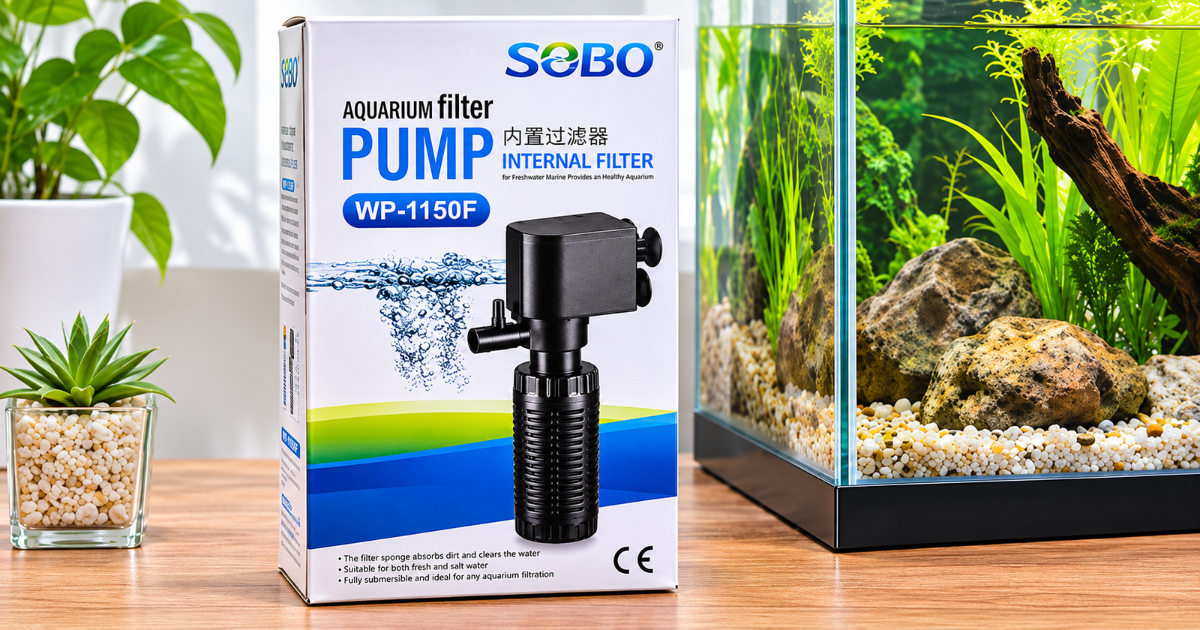
World of Birds offers the SOBO WP-1150F Aquarium Filter Pump, rated at 500 litres per hour.
This internal filter provides water circulation and filtration for suitable aquarium setups. Select equipment according to tank volume, filter media capacity, and planned livestock.
Water Conditioner
Aquarium water conditioner neutralises chlorine and chloramine, protecting fish and beneficial bacteria. Follow the manufacturer’s dosage instructions.
Water Testing Kit
An aquarium test kit measures ammonia, nitrite, and nitrate. Additional pH and carbonate hardness tests help monitor conditions that affect cycling.
Controlled Ammonia Source
Aquarium-grade ammonium chloride provides a measurable ammonia source for fishless cycling. Fish food also releases ammonia as it decomposes, but precise dosing is more difficult.
How to Cycle a Fish Tank
Fishless cycling is the preferred beginner method because bacteria develop without exposing fish to toxic waste. Follow these seven steps to establish and test your biological filter.
Step 1: Set Up the Aquarium
Position the aquarium on a suitable stand and install your substrate, decorations, filter, and heater when required.
Fill the tank with appropriately conditioned water.
Our beginner fish tank setup guide explains the complete equipment installation process.
Step 2: Run the Filter Continuously
Switch on the aquarium filter and check that water circulates properly. Keep biological filtration operating throughout the cycling process.
Beneficial bacteria require oxygenated water to process nitrogen waste. Supplementary aeration may help when surface movement is insufficient.
For installation guidance, read our aquarium filter setup guide.
Step 3: Add an Ammonia Source
Introduce aquarium-grade ammonium chloride according to its instructions. A common fishless cycling protocol starts with an ammonia reading around 2 ppm.
Confirm the concentration using a compatible test kit. Product strengths and testing units differ, so avoid copying another aquarium’s dosage.
Never add cycling ammonia to a tank containing fish.
Step 4: Monitor Ammonia and Nitrite
Test aquarium water every one or two days during cycling.
Initially, ammonia may remain detectable while bacterial colonies establish. Nitrite should eventually appear as ammonia processing improves.
Record each reading rather than relying on memory. This makes cycling progress easier to recognise.
Step 5: Maintain Suitable Cycling Conditions
Follow your cycling product’s instructions for further ammonia additions. Avoid repeatedly adding large doses when ammonia or nitrite remains elevated.
Keep the temperature appropriate for your intended tropical aquarium. Maintain oxygenation and check pH if the cycling process slows.
Step 6: Perform a Final Cycling Test
When ammonia and nitrite reach zero, perform a measured ammonia challenge following your cycling protocol.
Many fishless methods use approximately 2 ppm as the challenge concentration.
Test again after 24 hours. Both ammonia and nitrite should return to zero before the aquarium receives fish.
Step 7: Change Water and Add Fish Gradually
Perform a suitable water change to reduce accumulated nitrate. Use conditioned replacement water with compatible temperature and chemistry.
Confirm that ammonia and nitrite remain undetectable. Check that nitrate meets the needs of your intended fish.
Introduce a modest initial number of fish. Avoid immediately stocking the aquarium to its maximum planned capacity.
How Long Does Fish Tank Cycling Take?
Cycling a freshwater aquarium commonly takes four to six weeks. Some systems require up to eight weeks, depending on biological media, temperature, oxygen, and water chemistry.
The calendar provides only an estimate. Water testing determines when an aquarium is ready.
Typical Fish Tank Cycling Timeline
| Cycling Stage | Approximate Timing | Expected Water Test Pattern |
| Initial setup | Week 1 | Ammonia detectable |
| First bacterial development | Weeks 1–3 | Nitrite begins appearing |
| Further bacterial growth | Weeks 3–6 | Nitrate appears or increases |
| Final cycling test | Weeks 4–8 | Ammonia and nitrite return to zero |
These stages overlap and may develop at different speeds. Established biological media can sometimes shorten the process.
Can You Cycle a Tank in 24 Hours?
Some aquariums can establish biological filtration quickly using sufficient mature filter media. However, adding bottled bacteria alone does not guarantee immediate readiness.
A successful ammonia-processing test provides stronger evidence than elapsed time.
The Ornamental Aquatic Trade Association provides resources covering responsible aquarium setup and fish care.
How to Know Your Tank Is Cycled
Your fish tank is cycled when its biological filter processes a measured ammonia dose without leaving detectable ammonia or nitrite.
Nitrate production can indicate that biological filtration is developing. However, nitrate alone does not establish cycling completion.
Example Fishless Cycling Test Log
| Test Day | Ammonia | Nitrite | Nitrate |
| Day 1 | 2.0 ppm | 0 ppm | 0 ppm |
| Day 12 | 1.0 ppm | 1.0 ppm | 5 ppm |
| Day 25 | 0 ppm | 2.0 ppm | 20 ppm |
| Day 38 | 0 ppm | 0 ppm | 35 ppm |
Illustrative readings only. These are not measured World of Birds aquarium test results.
In this example, the initial test results show progress towards biological filtration.
The final step requires a controlled ammonia challenge. Confirm that ammonia and nitrite return to zero within the following 24 hours.
What If Nitrate Remains at Zero?
Live aquarium plants can absorb nitrogen compounds and reduce measurable nitrate. Some source water conditions can also influence test results.
A planted aquarium may therefore show little nitrate despite active biological filtration.
Evaluate ammonia-processing capacity rather than relying on nitrate alone.
Fishless Cycling vs Fish-In Cycling
Fishless cycling establishes beneficial bacteria without live fish. Fish-in cycling attempts to develop biological filtration while fish already occupy the aquarium.
| Factor | Fishless Cycling | Fish-In Cycling |
| Fish present | No | Yes |
| Ammonia source | Controlled external source | Fish waste |
| Animal welfare risk | Lower | Higher |
| Water testing | Regular | Frequent, often daily |
| Recommended for beginners | Yes | Generally no |
What If You Already Added Fish?
Do not add extra ammonia. Test ammonia and nitrite immediately, then monitor both frequently.
Perform appropriately sized water changes whenever harmful waste accumulates. Use conditioned, temperature-matched replacement water.
Feed conservatively and maintain effective aeration. Seek aquatic veterinary assistance if fish develop gasping, weakness, or other serious symptoms.
Our guide to why fish die in aquariums explains additional water-quality risks.
Why Is Your Aquarium Cycle Stalling?
Aquarium cycling may stall because of inadequate oxygen, low alkalinity, unsuitable temperatures, excessive ammonia, or disrupted biological media.
Low pH or Carbonate Hardness
Nitrification consumes alkalinity and can gradually lower aquarium pH. Insufficient buffering may slow bacterial activity.
Test pH and carbonate hardness before making adjustments. Avoid sudden chemical changes.
Turning Off the Filter
Extended filter interruptions can reduce oxygen supply to beneficial microorganisms. Keep filtration and suitable circulation running throughout the process.
Excessive Ammonia Dosing
Adding too much ammonia does not necessarily accelerate bacterial growth. Excessive concentrations may inhibit cycling and complicate water testing.
Follow a controlled dosing protocol instead of repeatedly adding ammonia without testing.
Cleaning Biological Media Incorrectly
Beneficial bacteria establish on filter media and other aquarium surfaces. Washing established media with chlorinated water can damage these colonies.
Avoid replacing all biological media simultaneously. Read our aquarium filter cleaning guide for suitable maintenance practices.
Maintaining a Cycled Aquarium in Qatar
A cycled aquarium requires ongoing maintenance to remain healthy. Qatar fishkeepers should pay particular attention to water preparation, temperature stability, and oxygenation.
Strong summer heat can increase aquarium temperatures and reduce dissolved oxygen. Indoor air conditioning may also influence water conditions.
Follow these maintenance practices:
- Test ammonia and nitrite after introducing new fish.
- Maintain suitable water circulation and temperature.
- Perform regular partial water changes.
- Avoid excessive feeding and overcrowding.
- Preserve established biological filter media.
- Check replacement water before adding it.
Our aquarium water quality guide for Qatar explains other essential water parameters.
Frequently Asked Questions
Q1. How do you cycle a fish tank for beginners?
Answer: Set up the aquarium, condition the water, run the filter, and introduce a controlled ammonia source. Test water regularly until biological filtration processes ammonia and nitrite effectively.
Q2. Can I add fish after one week?
Answer: Only if testing confirms adequate biological filtration and suitable water conditions. Most new aquariums require several weeks before they can safely support fish.
Q3. Do I need water conditioner during cycling?
Answer: Yes, when using water containing harmful disinfectants. Chlorine and chloramine can damage the microorganisms responsible for biological filtration.
Q4. Can live plants help cycle a fish tank?
Answer: Live plants can absorb nitrogen compounds and support aquarium stability. However, their presence does not prove that biological filtration can handle your planned fish population.
Q5. Should I change water during fishless cycling?
Answer: Water changes may help when ammonia, nitrite, or acidity becomes excessive. Use conditioned water and follow your chosen cycling protocol.
Q6. Can I cycle a fish tank without a filter?
Answer: Some specialised aquariums rely on other biological surfaces and suitable circulation. However, an appropriate filter provides a more manageable starting point for most beginners.
Q7. What are the signs of a fully cycled aquarium?
Answer: Ammonia and nitrite should return to zero after a controlled ammonia challenge. Suitable nitrate, temperature, and water chemistry must also be confirmed before stocking.
Conclusion
Understanding how to cycle a fish tank helps prevent dangerous ammonia and nitrite accumulation during aquarium setup.
Fishless cycling allows beneficial bacteria to establish before fish enter the tank. Maintain filtration, follow a controlled ammonia dosing method, and confirm biological filtration through water testing.
Remember that clear water does not prove cycling completion. Test results provide the evidence needed to introduce fish safely.
Start Your Aquarium With World of Birds
Explore our aquarium filters and filtration supplies in Qatar to find equipment suited to your freshwater setup.
Visit World of Birds – Pet & Aquatic Pet Store at Souq Al Ali, Doha, Qatar, for aquarium equipment and setup assistance.
