






Best Kitten Food in Qatar 2026: Wet, Dry & Feeding Guide


Kittens grow quickly, so feeding them is different from feeding an adult cat. If you are searching for kitten food Qatar, focus first on food formulated for growth, then consider whether wet food, dry food or a combination fits your kitten’s age, appetite and daily feeding routine.
The best kitten food provides complete and balanced nutrition for growth. Both wet and dry kitten food can work, and many kittens can eat a combination of the two when the total daily portion is controlled.
AAFCO recognises growth as a separate nutritional life stage and explains that a complete food contains all required nutrients, while a balanced food supplies them in appropriate ratios. Kittens therefore need nutrition intended for growth rather than relying routinely on adult-maintenance food.
At World of Birds, we stock kitten and cat nutrition products from our Souq Al Ali store in Doha. You can also browse our current cat food in Qatar range online.
This guide focuses specifically on kitten nutrition, including dry kitten food, wet kitten food, feeding frequency, age-based feeding and the move from kitten food to adult cat food.
What Makes Good Kitten Food?
A kitten food should match the nutritional requirements of growth rather than simply having an appealing flavour or ingredient list.
Complete and Balanced Nutrition for Growth
Look for food that states it provides complete and balanced nutrition for growth, kittens or an appropriate all-life-stages profile.
AAFCO states that the nutritional adequacy statement is one of the most useful parts of a pet-food label because it identifies the life stage the food is intended to support. Recognised stages include growth, maintenance, gestation/lactation and all life stages.
This gives owners a better basis for assessing kitten food than relying only on words such as chicken, salmon or premium on the front of the pack.
Kitten Food vs Adult Cat Food
Kitten food is formulated for growth, while adult-maintenance food is formulated for mature cats.
Growing kittens have different energy and nutrient requirements from adult cats. A few bites from an adult cat’s bowl are different from routinely using adult-maintenance food as a kitten’s main diet.
For a broader look at how feeding changes across different life stages, see our pet food by breed and age in Qatar guide.
Check the Life-Stage Statement
Do not rely only on the front label. AAFCO explains that the nutritional adequacy statement is generally located on the back or side of the packaging and identifies whether the food is intended for growth, maintenance or another recognised life stage.
For a kitten, that life-stage information is central to the purchase.
Follow the Individual Feeding Guide
There is no reliable universal grams-per-day amount that applies to every kitten food.
Calorie density differs between products. Wet foods also vary in pouch or can size, while dry foods can provide different amounts of energy per gram.
Start with the feeding directions for the specific product, then monitor body weight, body condition and growth.
Best Dry Kitten Food in Qatar
Dry kitten food in Qatar can provide suitable growth-stage nutrition when the formula is complete and balanced for kittens.
Dry food is practical to weigh, store and divide into measured meals. Our World of Birds range includes both chicken and salmon-based kitten formulas.
| Dry kitten food | Format | Main flavour | Profile |
| Hill’s Science Plan Kitten Food with Chicken | Dry kibble | Chicken | Growth-stage dry formula |
| Homie Kitten & Mother Chicken | Dry kibble | Chicken | Low-grain kitten and mother formula |
| Homie Kitten & Mother Salmon | Dry kibble | Salmon | Salmon-based low-grain formula |
Current product availability can change, so check each live product page before visiting our Doha store.
Hill’s Science Plan Kitten Food with Chicken 1.5kg
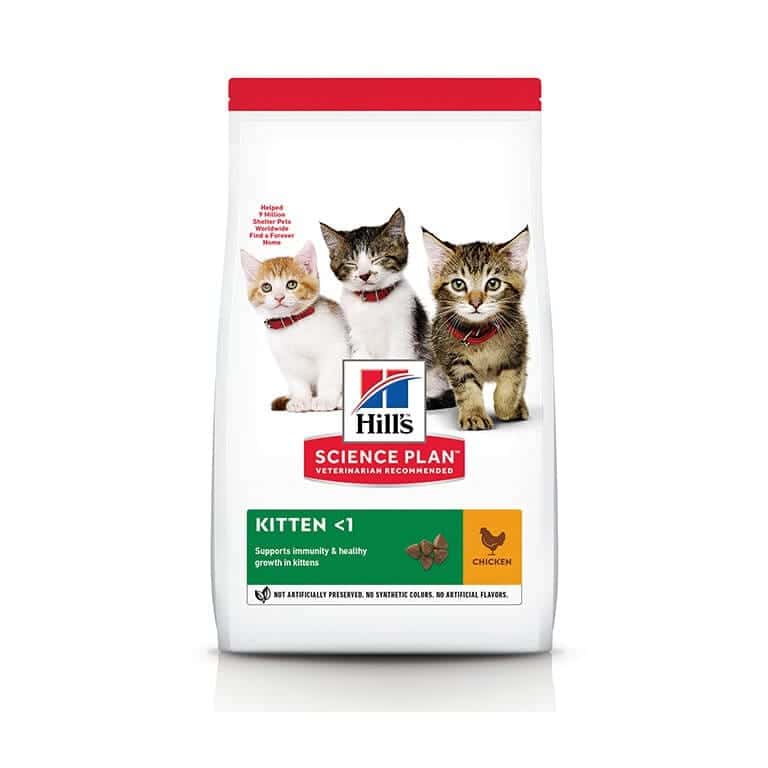
Hill’s Science Plan Kitten Food with Chicken is a chicken-based dry kitten formula intended for the growth stage.
Hill’s states that its Science Diet Kitten Chicken Recipe provides complete and balanced nutrition for growing kittens and gestating or lactating adult female cats, substantiated through AAFCO feeding procedures.
This makes it relevant for owners looking for a dedicated dry formula rather than an adult-maintenance diet.
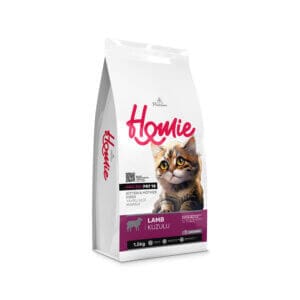
Homie Super Premium Kitten & Mother Chicken Low Grain Cat Food 1.5kg
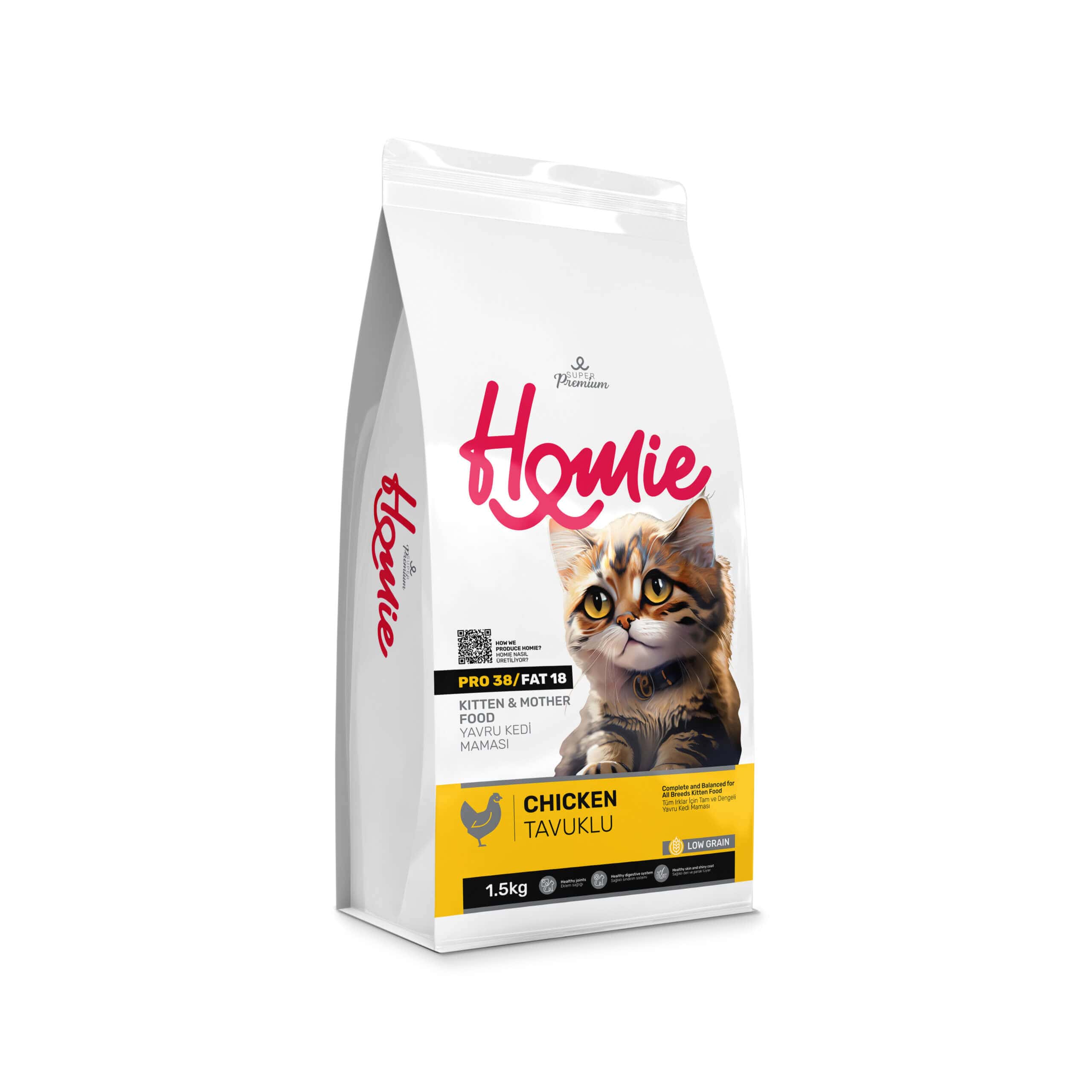
Homie Super Premium Kitten & Mother Chicken Low Grain Cat Food is a chicken-based dry formula for kittens and nursing mothers.
Our product page identifies it as:
- Dry cat food
- Chicken flavour
- Low-grain formula
- Suitable for kittens from 0 to 1 year
- Suitable for nursing mothers
- Complete and balanced according to the product listing
The page also advises adjusting feeding according to weight and activity and keeping fresh water available.
Homie Super Premium Kitten & Mother Salmon Low Grain 1.5kg
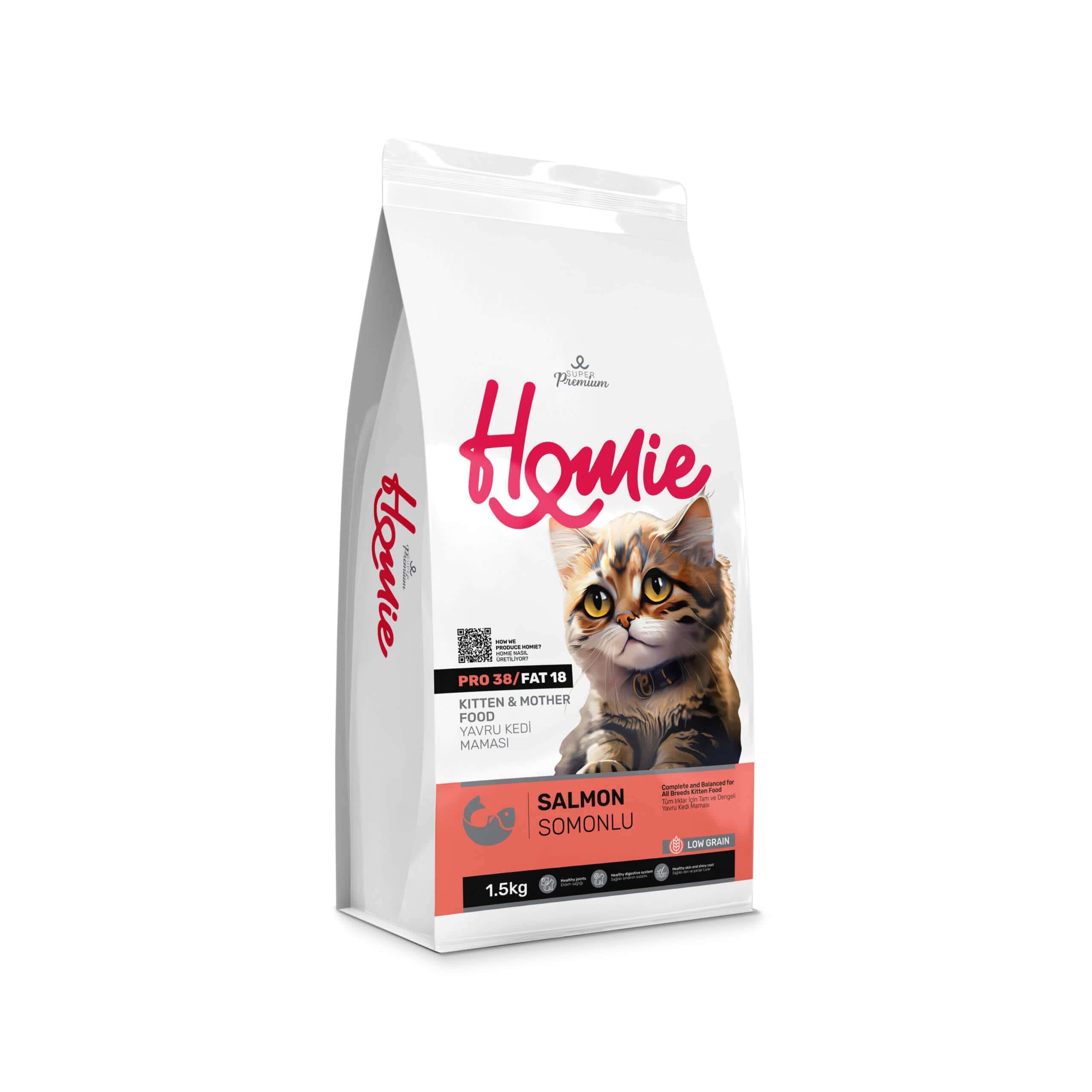
Homie Super Premium Kitten & Mother Salmon Low Grain provides a salmon-based alternative.
Our product page identifies it as dry food for kittens and nursing mothers, with kittens listed from 0 to 1 year. The page also describes the formula as complete and balanced and advises portion adjustments according to weight and activity.
For broader dry-cat-food information beyond the kitten stage, our popular dry cat foods in Qatar guide covers the wider category separately.
Best Wet Kitten Food in Qatar
Wet kitten food provides substantially more moisture through the food itself than dry kibble and comes in textures such as mousse or chunks in gravy.
The important question is still whether the product is formulated as an appropriate kitten or growth-stage diet.
Hill’s Science Plan Kitten & Mother Tender Mousse Chicken & Turkey 85g x24
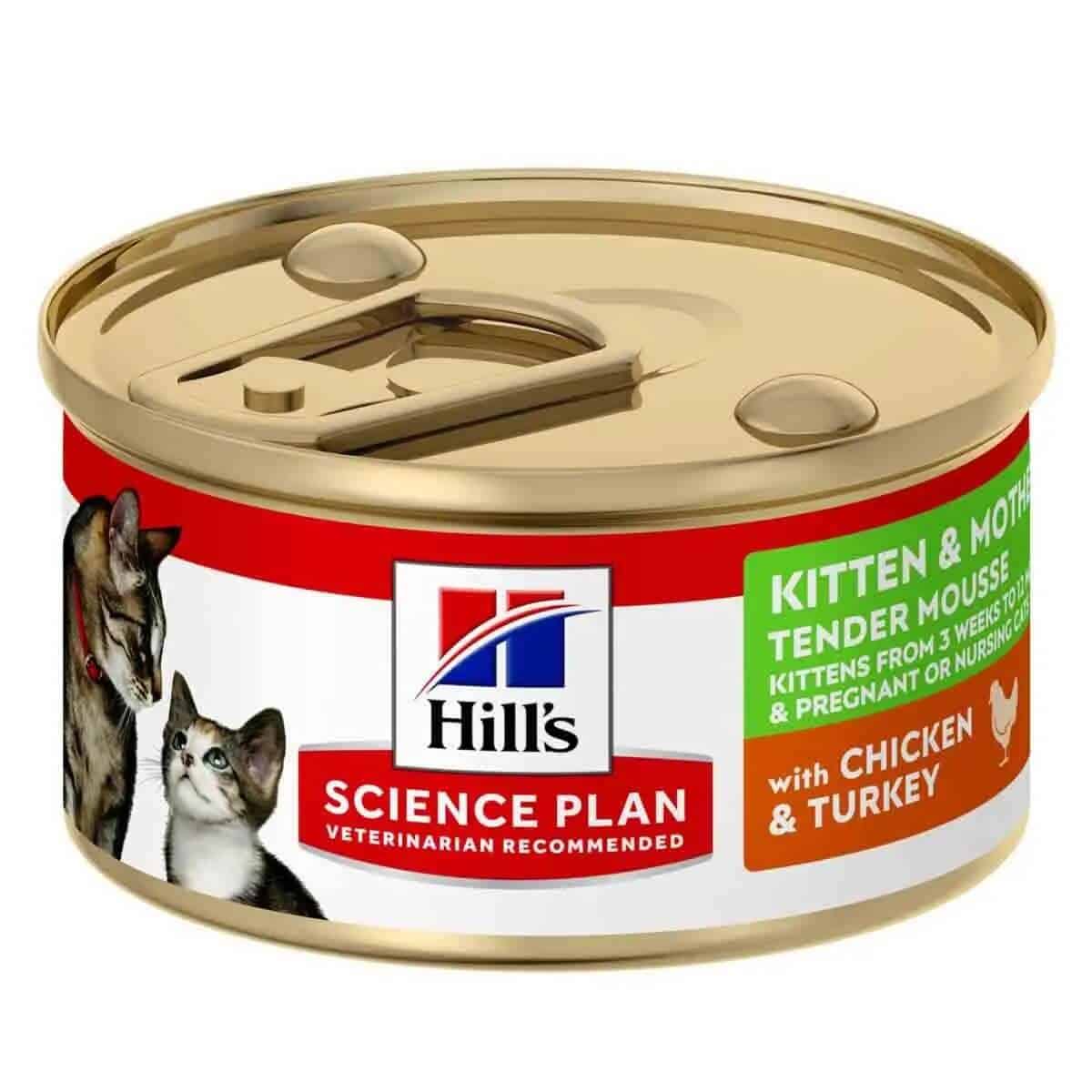
Hill’s Science Plan Kitten & Mother Tender Mousse Chicken & Turkey is a wet mousse formulated for kittens and pregnant or nursing cats.
Our product page lists:
- Chicken and turkey
- Smooth mousse texture
- 85 g cans
- Kitten and mother-cat feeding
- Suitability from weaning through the kitten stage
The softer mousse texture can be useful during the transition towards solid food. Our page also recommends dividing daily feeding into several smaller meals for kittens.
At the latest check, this product was listed as out of stock. Keep the link in the guide as a relevant World of Birds kitten formula, but check the live page for availability.
Hill’s Science Plan Tender Chunks in Gravy Kitten Turkey 85g x12
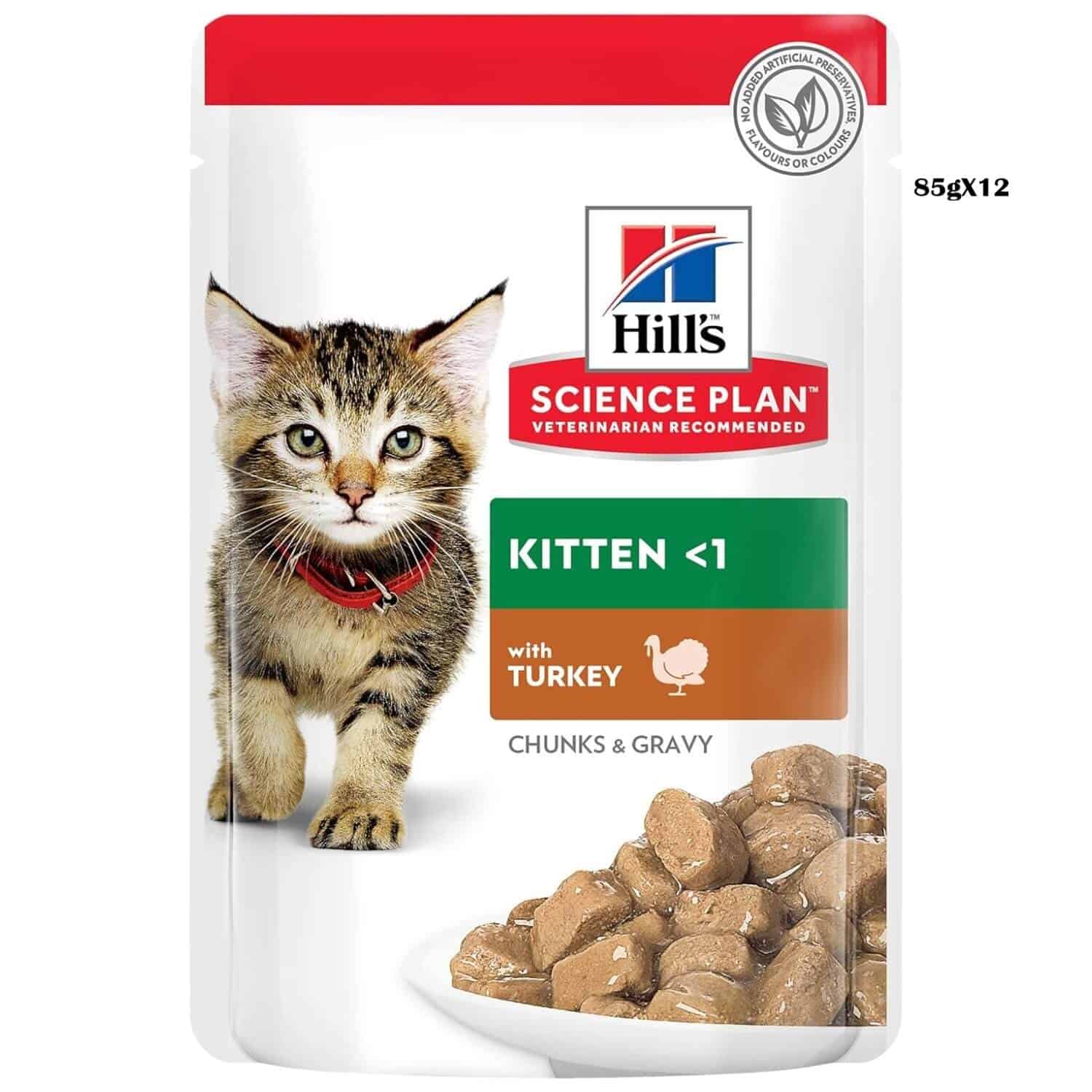
Hill’s Science Plan Tender Chunks in Gravy Kitten Turkey provides a chunk-and-gravy texture rather than mousse.
This gives owners another wet-food format for kittens that comfortably handle more textured food.
Texture preference varies between kittens, but nutritional suitability should remain the first consideration.
For the wider category outside kitten-only nutrition, our wet cat food in Qatar guide covers general wet-food products separately.
Wet vs Dry Kitten Food: Which Is Better?
Neither wet nor dry kitten food is automatically better for every kitten. Both formats can provide suitable nutrition when they are complete and balanced for growth.
| Factor | Wet kitten food | Dry kitten food |
| Moisture | Higher | Lower |
| Texture | Mousse, pâté or chunks | Kibble |
| Storage after opening | Usually needs more careful storage | Easier to store dry |
| Portion measurement | Depends on pouch or can | Easy to weigh |
| Growth suitability | Yes, when formulated for growth | Yes, when formulated for growth |
Wet Kitten Food Benefits
Wet food supplies more dietary moisture because water forms a larger part of the food itself.
It also provides softer textures, which can be practical during parts of the weaning process or for kittens that readily accept soft food.
Follow the storage instructions on the specific pouch or can after opening.
Dry Kitten Food Benefits
Dry kitten food is easy to weigh and divide into controlled portions.
It also stores easily before serving and can fit feeding routines based on several small measured meals.
Dry food does not replace drinking water. Fresh water should remain available throughout the day.
For more detail on dry feeding beyond kittens, see our article Is Dry Food Bad for Cats?.
Which Format Fits a Kitten’s Routine?
Focus on:
- Whether the food is suitable for growth
- Whether the kitten eats the texture comfortably
- Whether the total daily portion can be controlled
- Whether there are veterinary dietary requirements
Some kittens eat mainly wet food, some eat dry food, and others have a measured combination.
Can Kittens Eat Wet and Dry Food Together?
Yes, kittens can eat wet and dry kitten food together when both foods are nutritionally appropriate and the combined portions fit the kitten’s total daily needs.
This is commonly called mixed feeding.
How Mixed Feeding Works
You might divide the day into:
- Wet food at one meal
- Dry food at another
- A combination of measured wet and dry portions
The exact pattern matters less than controlling the full day’s intake.
Avoid Double Feeding
This is where mixed feeding can go wrong.
Do not automatically feed: 100% of the dry-food daily recommendation + 100% of the wet-food daily recommendation.
That may provide more calories than intended.
Instead, reduce each portion so the combined feeding plan matches the kitten’s requirements. Product calorie information and feeding guides can help, and a vet can advise when precise calorie control is necessary.
Keep Fresh Water Available
Wet food increases dietary moisture, but it does not replace access to drinking water.
Keep clean, fresh water available every day regardless of the food format.
How Often Should You Feed a Kitten?
Most growing kittens do well when their total daily food is divided into three to four small meals or more.
VCA recommends splitting the controlled daily portion into three to four smaller meals or more and adjusting portions according to growth.
Why Kittens Benefit From Smaller Meals
Kittens are growing while still having relatively small bodies. Dividing the daily allowance lets them eat smaller quantities at each meal rather than receiving the entire day’s food at once.
The aim is controlled growth and appropriate body condition.
Practical Kitten Feeding Schedule
| Kitten stage | General feeding approach |
| Newly weaned kitten | Several small kitten-appropriate meals |
| Young growing kitten | 3 to 4 small meals or more |
| Older kitten | Measured daily amount divided between meals |
| Wet and dry feeding | Divide the full daily intake between both formats |
This is a feeding framework, not a universal portion chart.
The required amount depends on the kitten, the food and its calorie density.
Signs the Portion May Need Reviewing
Monitor:
- Body weight
- Body condition
- Growth
- Appetite
- Stool quality
- Activity level
VCA recommends controlled portions and adjustments based on growth rate rather than unrestricted feeding.
Kitten Feeding Guide by Age
Kitten feeding changes as the animal moves from milk feeding through weaning, active growth and eventually maturity.
A newborn kitten and a ten-month-old kitten should not follow the same feeding routine.
Newborn and Pre-Weaning Kittens
Newborn kittens depend on their mother’s milk or an appropriate kitten milk replacer when maternal feeding is unavailable. Ordinary wet kitten food or dry kibble should not be treated as a replacement for neonatal milk feeding.
VCA advises using commercial kitten milk replacer for orphaned kittens and following its feeding instructions.
Weak, orphaned or poorly feeding newborn kittens should receive veterinary care.
During Weaning
Weaning is a gradual move from milk to solid kitten food.
Soft kitten-appropriate food can become part of that process as the kitten develops. VCA notes that kittens may begin sampling solid food before full weaning and that kittens are generally fully weaned by around eight weeks.
Around 6 to 8 Weeks
By approximately 6 to 8 weeks, kittens can generally eat wet or dry kitten food.
At this stage, focus on:
- Food formulated for kitten growth
- Several small meals
- Fresh drinking water
- Measured portions
- Gradual food changes
2 to 6 Months
This is an active growth period. Continue a kitten-appropriate growth diet and revise portions as body weight and growth change.
The same quantity should not automatically be used month after month without checking the product feeding guide and the kitten’s body condition.
6 to 12 Months
Growth continues during the later kitten stage, although the rate gradually slows. Continue appropriate growth-stage nutrition while monitoring body condition and maturity.
For most kittens, this is also the period when owners begin thinking about the eventual transition to adult food.
When Should You Switch From Kitten Food to Adult Cat Food?
Many kittens move to adult cat food at around one year of age, but maturity should also be considered.
VCA states that veterinary nutritionists recommend transitioning at one year of age or when maturity is reached, whichever is later. It also notes that most cats reach 80% to 90% of predicted adult size between about 9 and 12 months, while some large breeds may take longer.
Why Switching Too Early Is Not Ideal
Kitten food is formulated around growth. Adult-maintenance food targets a different nutritional stage.
Changing too early can mean replacing the growth diet before the kitten has finished developing.
Look at Maturity, Not Only the Calendar
A small domestic cat and a large-breed cat may not mature at exactly the same rate.
Your veterinarian can assess:
- Body weight
- Body condition
- Breed
- Growth history
- Overall maturity
Our pet food by breed and age in Qatar guide covers the broader life-stage topic, while this page stays focused specifically on kitten feeding.
How to Change Your Kitten’s Food Safely
Abrupt food changes can upset some kittens’ digestion.
A gradual food transition over about seven days is a practical starting point when moving between kitten foods.
VCA suggests a seven-day transition pattern when changing between cat foods.
A Simple 7-Day Kitten Food Transition
| Days | Old food | New food |
| Days 1 to 2 | 75% | 25% |
| Days 3 to 4 | 50% | 50% |
| Days 5 to 6 | 25% | 75% |
| Day 7 | 0% | 100% |
The exact pace can vary.
For the later transition from kitten food to adult food, VCA advises a gradual period of roughly 7 to 14 days.
Watch Your Kitten During the Change
Monitor:
- Appetite
- Stool
- Vomiting
- Activity
- Willingness to eat the new food
If your kitten refuses food or develops persistent digestive symptoms, contact a veterinarian rather than repeatedly switching products without guidance.
Where to Buy Kitten Food in Qatar
World of Birds supplies kitten food in Qatar through our Souq Al Ali store in Doha and our online cat-food category.
Our cat food in Qatar category currently contains a large range of cat foods across different brands and life stages.
Before buying kitten food Qatar products, check:
- Kitten age
- Current body weight
- Growth-stage suitability
- Wet or dry format
- Feeding instructions
- Current diet
- Any veterinary dietary requirements
If a kitten is already eating a nutritionally appropriate food comfortably, make any change gradually rather than switching suddenly.
Frequently Asked Questions About Kitten Food in Qatar
What Is the Best Food for a Kitten in Qatar?
The best food for a kitten is a complete and balanced diet formulated for growth and appropriate for the kitten’s age and health. Wet, dry or mixed feeding can all work. Check the life-stage statement, follow the product feeding instructions and monitor growth rather than relying only on brand, flavour or ingredient marketing.
Is Wet or Dry Food Better for Kittens?
Both wet and dry kitten food can be suitable when they provide complete and balanced nutrition for growth. Wet food contains more dietary moisture, while dry food is convenient to store and weigh. VCA states that kittens can generally eat either format by around 6 to 8 weeks.
How Many Times a Day Should I Feed My Kitten?
Most growing kittens do well with three to four small meals or more each day. Divide the total daily food rather than giving three or four full daily portions. Adjust the amount according to the product feeding guide, growth and body condition.
Can Kittens Eat Adult Cat Food?
Adult-maintenance food should not routinely replace a properly formulated kitten diet while the kitten is still growing. Kitten foods are formulated for growth and generally differ from adult foods in energy and nutrient levels. Occasional access to an adult cat’s food is different from using it as the main diet.
When Should I Switch From Kitten Food to Adult Cat Food?
Many cats transition around one year of age, but maturity matters too. VCA recommends moving to adult food at one year or when maturity is reached, whichever is later. Large-breed cats can take longer to mature than typical domestic cats.
Feed Your Kitten for Healthy Growth
A kitten food Qatar plan should start with growth-stage nutrition, not simply the flavour printed on the front of the pack.
Check that the food is appropriate for kittens, follow the individual feeding guide and divide the day’s food into smaller meals. Wet food, dry food or a measured combination can all fit a kitten’s routine when the total diet meets growth needs.
As your kitten grows, adjust portions rather than feeding the same amount indefinitely. Make food changes gradually and wait until maturity before moving fully to an adult-maintenance diet.
At World of Birds Qatar, we stock kitten and cat nutrition products for pet owners across Doha and Qatar from our Souq Al Ali store. Browse our current cat food products range and contact us with your kitten’s age, current diet and preferred food format before visiting.
Visiting us in Doha? Get directions to World of Birds in Souq Al Ali and check our latest store details before you visit.


One thought on “Best Kitten Food in Qatar 2026: Wet, Dry & Feeding Guide”