






How to Choose Pet Food by Breed and Age in Qatar


Most Qatar pet owners choose food the same way they choose a restaurant – by reputation. Royal Canin is popular, so they buy Royal Canin. A friend recommends Homie, so they switch to Homie. The brand matters far less than most people think. What matters enormously is whether the food matches the pet’s current life stage and body size.
A Royal Canin Maxi Puppy and a Royal Canin Maxi Adult are nutritionally as different as two completely different products. Feeding a large breed puppy on adult food deprives it of the precise calcium ratios it needs for bone development. Feeding a senior cat on kitten food overloads kidneys that are already working harder with age.
Pet food by breed and age Qatar pet owners choose correctly is one of the most impactful decisions you will make for your dog or cat. In Qatar specifically – where most pets live indoors in AC-cooled apartments, exercise significantly less than their breed genetics expect, and navigate one of the world’s most extreme outdoor climates – getting this right matters more than in temperate countries.
At World of Birds Qatar, we have been supplying pet food to Doha customers since 1985. Browse our dog food Qatar collection and cat food collection to see what is currently available.
Why Breed and Age Matter More Than Brand When Choosing Pet Food in Qatar
Walk into any pet shop in Doha and you will see the same pattern. A customer picks up a bag of Royal Canin, checks the price, and puts it in the basket.
The brand is fine. But if that customer has a 6-month-old German Shepherd puppy and just bought an adult formula – or a 9-year-old Labrador and bought standard adult food instead of a senior formula – the food is nutritionally wrong. The consequences accumulate silently over months.
A puppy needs twice the energy per kilogram of body weight that an adult dog needs. A senior cat’s kidneys cannot process the same phosphorus load that a kitten handles easily. These are not minor variations – they are fundamental nutritional differences that no brand reputation can compensate for.
Qatar adds another layer of complexity. Most pets in Doha live primarily indoors in AC-cooled apartments. They exercise significantly less than their breed genetics expect. The climate creates dehydration risk that cooler countries simply do not face. Getting the pet food by breed and age Qatar match right matters more here than almost anywhere else.
For a general overview of pet nutrition in Qatar, read our simple guide to pet food in Qatar.
Dog Food by Age – Puppy, Adult, and Senior in Qatar
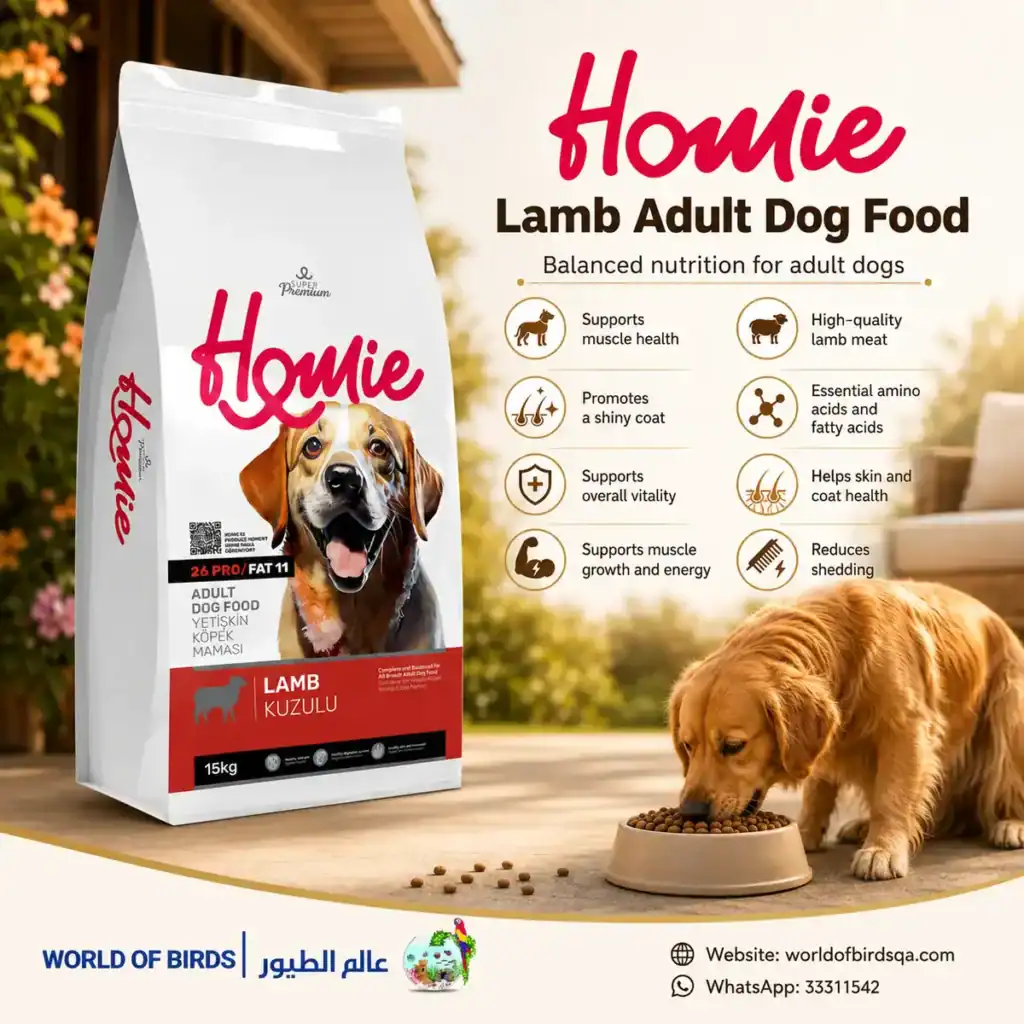
Age is the primary filter when choosing dog food. Before breed size, before brand, before price – the food must match the life stage. Browse dog food at World of Birds Qatar to see current age-specific options available in Doha.
Puppy Food in Qatar – What Growing Dogs Actually Need
A puppy is not a small adult dog. Its nutritional requirements are completely different – and feeding adult food to a puppy, even briefly, has consequences.
What puppy food must contain:
- Minimum 22% crude protein – for muscle and tissue development
- Minimum 8% fat – for energy and brain function
- DHA (docosahexaenoic acid) – for brain and eye development
- Calcium and phosphorus in a precise ratio – for bone development
The calcium-phosphorus ratio is especially critical for large breed puppies. Too much calcium during puppyhood causes abnormal bone development in large breeds – it does not make bones stronger, it makes them form incorrectly. Large breed puppy formulas control this ratio specifically. Standard puppy food or adult food does not.
When to Switch From Puppy Food to Adult Dog Food in Qatar
This is where most Qatar dog owners make their most costly timing mistake.
Switching timeline by breed size:
| Breed Size | Adult Weight | Switch Age |
| Small breeds | Under 10kg | 9 to 12 months |
| Medium breeds | 10 to 25kg | 12 months |
| Large breeds | 25 to 45kg | 12 to 18 months |
| Giant breeds | 45kg+ | 18 to 24 months |
Switch gradually over 7 to 10 days. Days 1 to 3: 75% puppy food, 25% adult food. Days 4 to 6: 50/50. Days 7 to 9: 25% puppy food, 75% adult food. Day 10: full adult food.
Switching too early creates nutritional gaps during the final development phase. Switching too late overfeeds growth-specific nutrients – including the excess calcium that causes joint problems in large breeds.
Adult Dog Food in Qatar – Maintenance Nutrition
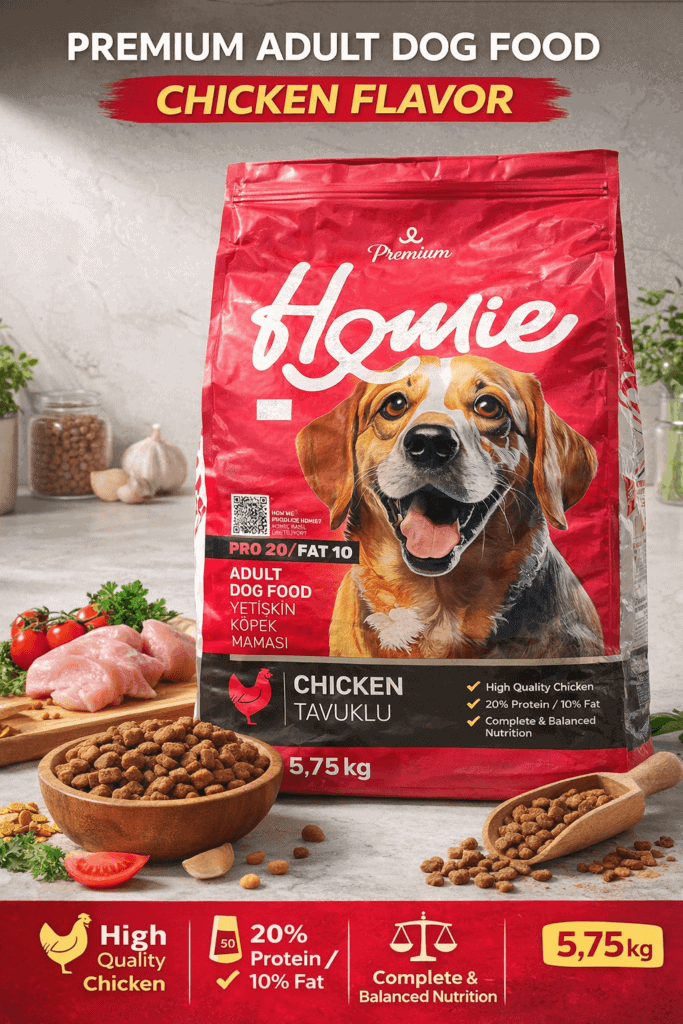
Adult dog food is maintenance nutrition – not growth stimulation, not recovery support. The goal is to sustain a healthy adult body, not build it. Minimum requirements on the label: Protein 18%, fat 5%.
Qatar-specific problem: Most active dog breeds in Qatar live primarily indoors. A Border Collie, German Shepherd, or Labrador that gets 20 minutes of outdoor exercise per day in Qatar’s heat instead of 2 hours in a cooler country needs significantly fewer calories than the food packaging suggests. Feeding standard-energy adult food to an indoor-sedentary large breed dog in Qatar causes obesity within 12 to 18 months. Look for “light,” “indoor,” or “weight management” formulas for active breeds with restricted Qatar exercise schedules.
Senior Dog Food in Qatar – When Does Your Dog Become a Senior?
The answer varies dramatically by size.
Senior age thresholds:
| Breed Size | Senior From |
| Small breeds | 10 to 12 years |
| Medium breeds | 8 to 10 years |
| Large breeds | 6 to 8 years |
| Giant breeds | 5 to 6 years |
What senior dog food must contain: Lower phosphorus (kidneys process this less efficiently with age), higher fibre (digestive slowdown), glucosamine and chondroitin (joint support), lower calorie density.
Dog Food by Breed Size – Small, Medium, and Large Breed Differences
Age determines the stage. Breed size determines the formula within that stage. A 2-year-old Chihuahua and a 2-year-old German Shepherd are both adult dogs – but they need completely different food.
Browse all dog food options at World of Birds Qatar for size-specific formulas available in Doha.
Small Breed Dog Food in Qatar
Breeds: Poodle, Shih Tzu, French Bulldog, Chihuahua, Maltese, Pomeranian – all under 10kg adult weight.
What small breed food must have:
- Higher calorie density per gram – small dogs have fast metabolisms that burn energy quickly
- Smaller kibble size – small jaws cannot chew standard-sized kibble effectively
- Higher protein-to-body-weight ratio
Medium Breed Dog Food in Qatar
Breeds: Golden Retriever (young), Cocker Spaniel, Border Collie, Beagle, Bulldog – 10 to 25kg.
Medium breeds are the most straightforward to feed. Most “adult dog food” without a size designation is formulated for this range as the industry default. Confirm the food is not labelled as a large breed formula – which has controlled calcium and lower calorie density that medium breeds do not need.
Large and Giant Breed Dog Food in Qatar
German Shepherd, Husky, Labrador, Rottweiler, Great Dane – 25kg and above.
What large breed food must have:
- Lower calorie density per gram – to prevent rapid growth that damages joints during development
- Controlled calcium and phosphorus – excess causes joint deformity in growing large breed puppies
- Added glucosamine and chondroitin – joint support from the adult stage onward
- Larger kibble size – encourages proper chewing and slows eating
Qatar-specific warning: German Shepherds, Huskies, Labradors, and Rottweilers are all popular in Qatar – and all are large breeds that develop joint problems significantly faster when fed the wrong size formula. Feeding a large breed dog on a standard or small breed formula is one of the most common causes of early hip and elbow deterioration in Qatar’s large breed dog population.
Popular Dog Breeds in Qatar – Specific Nutritional Needs
Beyond size and age, certain breeds have specific nutritional vulnerabilities. These are the breeds we see most frequently at our Souq Al Ali store – and the food questions we answer most often.
For further guidance on keeping your dog healthy in Qatar’s climate, read our dog grooming tips and care guide and our 5 essential pet care tips for Qatar.
German Shepherd Food in Qatar
German Shepherds are large, active, working dogs with two specific vulnerabilities: hip and elbow dysplasia, and digestive sensitivity.
What a GSD’s food needs:
- Minimum 25% protein for muscle maintenance
- Added glucosamine and chondroitin from the adult stage onward
- Prebiotics and easily digestible protein sources – GSDs have sensitive digestive systems
GSDs in Doha exercise far less than their working dog genetics require. Use controlled-calorie large breed adult formulas – not high-performance or working dog formulas designed for dogs with full exercise loads.
Labrador and Golden Retriever Food in Qatar
Labradors and Golden Retrievers are genetically predisposed to obesity, with research suggesting many Labradors carry a gene variant that reduces satiety signalling.
What these breeds need:
- Calorie-controlled adult formulas from 12 months onward
- High fibre content to promote satiety
- L-carnitine for fat metabolism support
After neutering – which reduces metabolic rate by 20 to 30% – switch immediately to a weight management or light formula. Standard adult formulas will cause weight gain in neutered Labradors and Goldens in Qatar’s indoor conditions.
Husky Food in Qatar
Huskies are cold-climate, high-activity working dogs kept in one of the world’s hottest countries.
What Huskies need nutritionally:
- High protein – minimum 25 to 30%
- High fat – Huskies evolved to burn fat as their primary fuel source. Low-fat diets cause coat dullness and energy problems
- Moderate to high calorie density
Cat Food by Age – Kitten, Adult, and Senior in Qatar
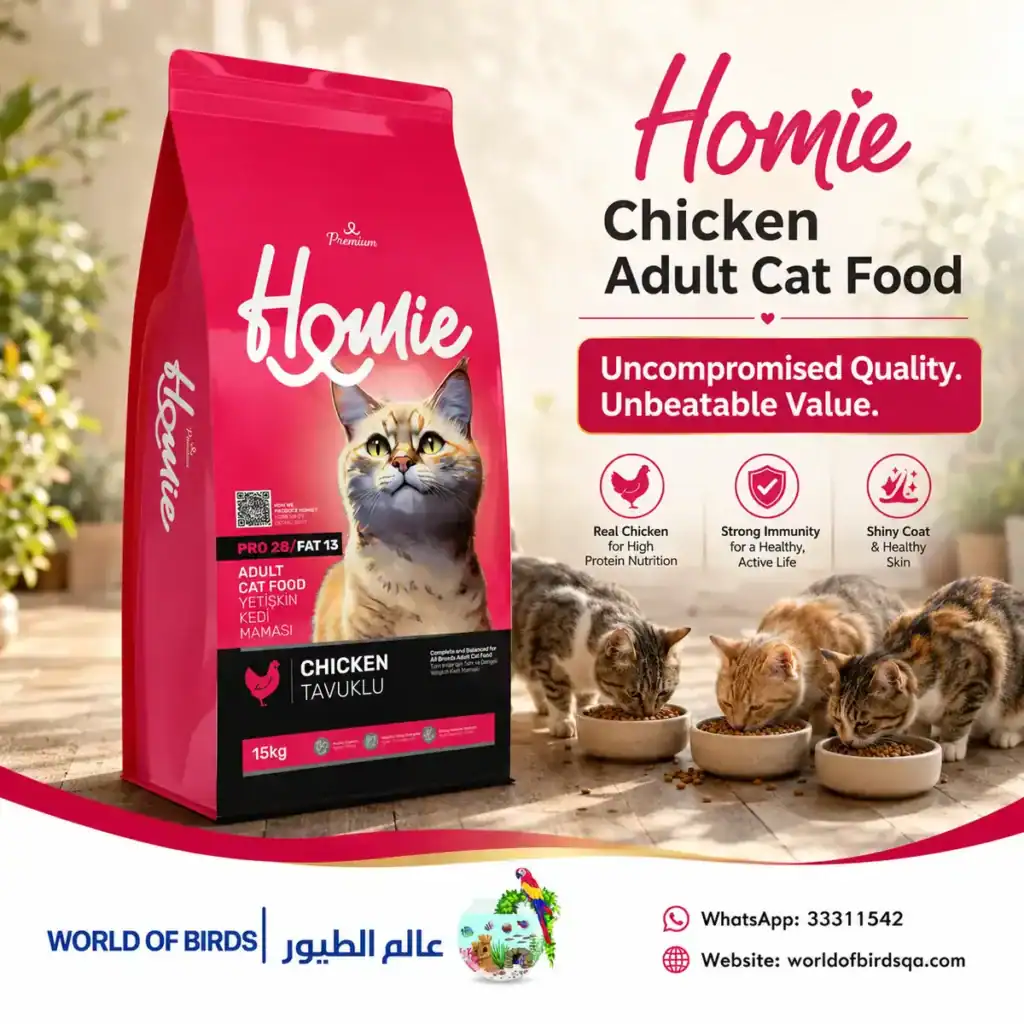
Cats are obligate carnivores. Their nutritional requirements are not a variation of dog nutrition – they are fundamentally different. Cats cannot synthesise taurine, arginine, or arachidonic acid from plant sources. These must come from animal protein in every meal, at every life stage.
Browse cat food at World of Birds Qatar to see kitten, adult, and senior options available in Doha.
Kitten Food in Qatar – The First 12 Months
What kitten food must contain:
- Minimum 30% protein – significantly higher than adult requirements
- DHA for brain and eye development
- Higher fat for energy
- Calcium and phosphorus for bone development
Feed kittens 3 to 4 small meals daily. Their small stomachs cannot handle the larger, less frequent meals suited to adult cats.
When to Switch From Kitten to Adult Cat Food
Standard breeds: Switch at 12 months.
Large cat breeds (Maine Coon, Norwegian Forest Cat, Ragdoll): Switch at 18 months.
Switch gradually over 7 to 10 days. Cats are significantly more resistant to food changes than dogs. A cat that rejects new food will simply stop eating – a dangerous outcome in a species already prone to fatty liver disease from food refusal.
Adult Cat Food in Qatar – 1 to 7 Years
What adult cat food must contain:
- Minimum 26% protein – cats cannot reduce their protein metabolism even when calorie-restricted
- Taurine – essential amino acid cats cannot synthesise. Must be listed on every cat food label
- Moderate fat, controlled phosphorus
Qatar-specific: Most Qatar cats live exclusively indoors. Indoor cat formulas with controlled calories and added fibre for hairball management are more appropriate than standard adult formulas for the majority of Qatar cat owners.
Senior Cat Food in Qatar – 7 Years and Older
What senior cat food must contain:
- Highly digestible protein – aging kidneys struggle with protein waste products
- Reduced phosphorus – the kidney-protecting change in senior formulas
- Omega-3 fatty acids for joint health and cognitive function
- Smaller, softer kibble – aging teeth and gums need easier-to-chew food
Popular Cat Breeds in Qatar – Specific Nutritional Needs
Just as popular dog breeds have specific nutritional vulnerabilities, Qatar’s most common cat breeds have distinct dietary requirements beyond age and indoor lifestyle.
Persian Cat Food in Qatar
Persians are Qatar’s most popular purebred cat – and one of the most nutritionally specific.
What Persian cats need:
- Breed-specific kibble with a flattened shape – Persians have brachycephalic (flat-faced) skull structure and cannot pick up standard round kibble efficiently
- High-quality protein for coat health – the Persian’s long, dense coat requires consistent protein supply to maintain condition
- Hairball control formula – Persians groom heavily and their long fur creates significant hairball risk in Qatar’s dry AC air
Royal Canin produces a Persian-specific adult formula that addresses kibble shape, coat nutrition, and hairball control simultaneously. It is the most practical single-product solution for Persian owners in Qatar.
Maine Coon and Large Cat Breed Food in Qatar
Maine Coons are the largest domestic cat breed – males often reach 8 to 10kg. Their nutritional needs differ from standard adult cat requirements in ways Qatar owners frequently overlook.
What Maine Coons need:
- Kitten formula until 18 months – they mature more slowly than standard breeds
- Large breed adult formulas from 18 months onward – with joint support (glucosamine) for their heavy frame
- Controlled calorie density – Maine Coons in Qatar’s indoor environment are prone to weight gain despite their large size
Siamese and Oriental Breed Food in Qatar
Siamese and Oriental breeds are the opposite of Maine Coons – they are lean, vocal, highly active cats with fast metabolisms.
What Siamese and Oriental breeds need:
- Higher calorie density than standard indoor cat formulas – their fast metabolism burns energy quickly even indoors
- High protein – Siamese are muscular cats relative to their frame
- Mental stimulation through feeding – these breeds are prone to stress-related digestive issues. Puzzle feeders and multiple small meals reduce anxiety-related food problems
Indoor vs Outdoor Cat Food in Qatar – Why This Matters More Than You Think
In most countries, “indoor cat food” is a niche category for apartment dwellers. In Qatar, it is the default – because virtually every cat in Doha lives indoors.
What indoor cat formulas contain differently:
- Lower calorie density – indoor cats burn fewer calories than outdoor cats
- More dietary fibre – dry AC air causes cats to groom more frequently, ingesting more fur
- L-carnitine – for healthy fat metabolism in sedentary cats
- Added urinary tract support – indoor cats drink less water, increasing urinary concentration
The practical consequence: Feeding a standard adult cat formula to an indoor Qatar cat causes slow, steady weight gain over months. The food is not wrong – the activity assumption it is based on is wrong for a Qatar indoor cat.
How to Read a Pet Food Label in Qatar
Every pet food sold in Qatar must carry a nutrition label. Most Qatar pet owners ignore these labels entirely – and choose food by packaging instead. The label contains the information that actually matters.
The five things to check on every pet food label:
1. The first ingredient. Ingredients are listed by weight before cooking. The first ingredient should always be a named animal protein – “chicken,” “lamb,” “salmon.” Not “meat and animal derivatives,” not “poultry by-products,” not “cereals.” Named animal protein first.
2. Crude protein percentage. For dogs: minimum 18% (adult), 22% (puppy), 25% (large active breeds). For cats: minimum 26% (adult), 30% (kitten). If the protein percentage is below these thresholds, the food is nutritionally inadequate regardless of brand.
3. Life stage declaration. The label must state which life stage the food is formulated for – “puppy,” “adult,” “senior,” or “all life stages.” “All life stages” formulas are formulated to the most demanding standard (puppy/kitten requirements) and may be too calorie-dense for adult or senior pets.
4. Breed size designation. For dogs: check whether the formula is labelled for small, medium, or large breeds. Feeding the wrong size formula long-term causes the joint and metabolic problems described throughout this guide.
5. AAFCO or FEDIAF statement. Reputable pet food sold in Qatar should carry a statement that the food meets AAFCO (US) or FEDIAF (European) nutritional standards for the declared life stage. This is the minimum quality assurance marker.
Portion Size Guidance for Qatar Pets
Getting the right food is half the equation. Getting the right amount is the other half – and in Qatar’s indoor-heavy pet lifestyle, overfeeding is the most common nutritional mistake after wrong life stage selection.
The Qatar-specific problem with packaging portions: Pet food packaging portion guidelines assume an average activity level for the breed. An average Labrador in the UK might get 2 hours of outdoor exercise daily. An average Labrador in Qatar gets 20 to 30 minutes. The packaging does not know this. If you feed a Qatar Labrador the “recommended” portion from a standard adult formula package, you are overfeeding by 30 to 50%.
Pet Food Brands Available at World of Birds Qatar
World of Birds has been supplying pet food to Qatar customers since 1985. Our Souq Al Ali store stocks dog food and cat food across multiple brands covering all life stages and breed sizes.
Key brands available at World of Birds Qatar:
Royal Canin – the most breed-specific pet food range globally. Produces formulas for German Shepherds, Labradors, Persian cats, Maine Coons, and dozens of specific breeds. Vet-recommended.
Hill’s Science Diet – wellness formulas and prescription diets for pets with specific health conditions (kidney, weight, digestive, joint).
Alpha – premium wet and dry formulas for dogs and cats covering all life stages. High protein content from named animal sources – a strong option for Qatar pet owners prioritising ingredient quality.
Homie – breed and life stage specific formulas covering puppy, adult, and senior stages. Homie Puppy Food is available in high-energy chicken formula specifically designed for growing dogs in Qatar’s climate.
Promaster Puppy Food – nutritionally complete puppy formula with high protein and essential nutrients for healthy growth. A practical choice for Qatar puppy owners looking for quality at an accessible price point.
Our staff can advise on which brand and specific formula suits your pet’s current breed, age, and health status. For complete pet care guidance beyond food, read our best pet supplies guide for Qatar.
Message us on 33311542 via WhatsApp to check availability before visiting.
Store details: Location: Souq Al Ali, Doha, Qatar WhatsApp: 33311542 Phone: +974 33311542
Frequently Asked Questions About Pet Food by Breed and Age in Qatar
What is the best pet food for puppies in Qatar?
Puppy food is food labelled “puppy” or “junior” – never adult formulas. Look for minimum 22% protein, 8% fat, added DHA, and calcium-phosphorus ratios appropriate for growth. The best pet food by breed and age Qatar buyers can choose for a puppy is matched to the dog’s expected adult size – small breed puppy food for dogs under 10kg adult weight, large breed puppy food for dogs expected to exceed 25kg. In Qatar’s hot climate, supplement dry kibble with wet puppy food or soaked kibble to support hydration.
When should I switch my dog from puppy to adult food in Qatar?
Small breeds (under 10kg): 9 to 12 months. Medium breeds: 12 months. Large breeds: 12 to 18 months. Giant breeds: 18 to 24 months. Switch gradually over 7 to 10 days – mix increasing proportions of adult food with decreasing puppy food. Switching too early causes nutritional gaps. Switching too late overfeeds growth nutrients to a fully developed dog.
Do cats in Qatar need indoor-specific food?
Yes. Virtually all cats in Qatar live indoors – standard adult cat formulas are formulated for cats with outdoor activity levels. Indoor cat formulas provide fewer calories, more fibre for hairball control, and L-carnitine for weight management. Feeding a standard adult formula to an indoor Qatar cat causes steady weight gain over time regardless of portion management. This is one of the most common cat nutrition mistakes among Qatar pet owners.
Is wet food or dry food better for pets in Qatar?
Both have a role. Dry food supports dental health and stores easily in Qatar’s heat. Wet food provides critical moisture – especially important for cats and senior pets. The recommended Qatar approach: quality dry food as the daily staple, wet food 2 to 3 times per week. Never leave wet food in the bowl for more than 20 minutes in Qatar’s warm indoor conditions.
Where can I buy breed and age-specific pet food in Qatar?
World of Birds at Souq Al Ali, Doha stocks pet food by breed and age Qatar pet owners need – dog food and cat food across multiple brands covering all life stages and breed sizes. We have been supplying Qatar pet owners since 1985. Browse our dog food Qatar collection and cat food collection online, or contact us on WhatsApp at 33311542 before visiting.
Find the Right Pet Food for Your Dog or Cat at World of Birds Qatar
Pet food by breed and age Qatar pet owners choose correctly is the most impactful nutritional decision you will make for your dog or cat. Brand loyalty matters far less than matching the right life stage and breed size – and Qatar’s indoor lifestyle and hot climate make that match more important here than in most countries.
World of Birds stocks dog food and cat food across all life stages and breed sizes at Souq Al Ali – along with the expertise of 41 years supplying Qatar’s pet owners.
Browse dog food by breed and age at World of Birds Qatar, or browse cat food at World of Birds Qatar.
Message us on WhatsApp at 33311542 for personalised food recommendations for your specific pet before visiting or Find us on Google Maps.

2 thoughts on “How to Choose Pet Food by Breed and Age in Qatar”