






How Much Should I Feed My Cat? Daily Feeding Guide by Weight

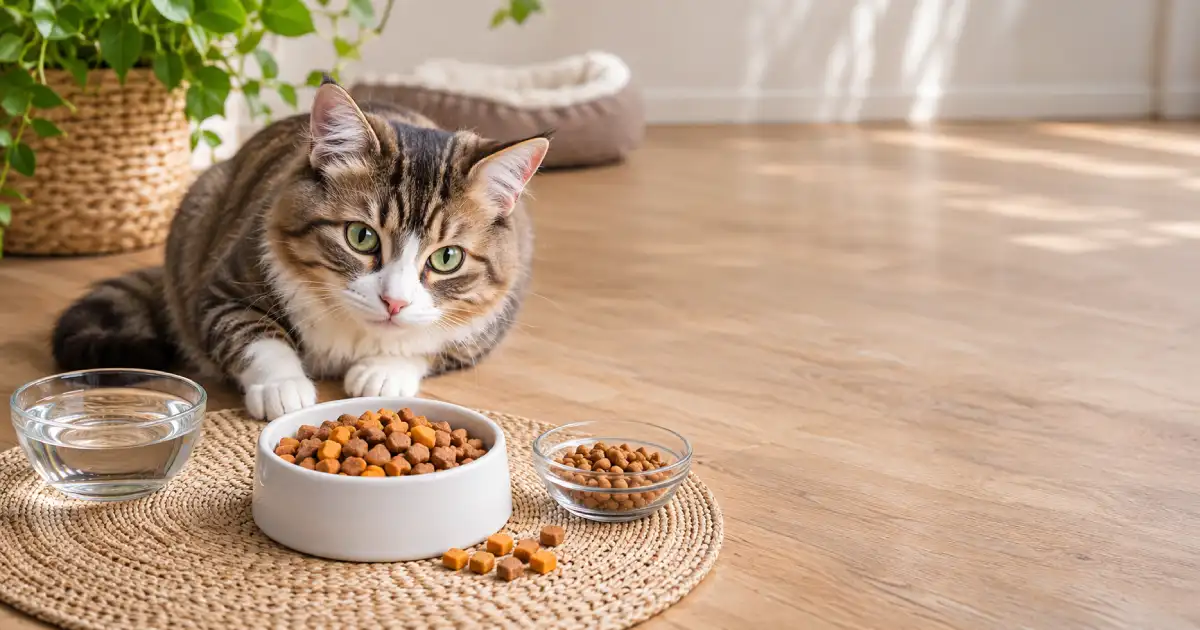
How much should I feed my cat? A healthy, neutered adult cat weighing 4 kg may need approximately 240–280 calories per day. This equals around 60–70 grams of dry food containing 4 calories per gram. However, your cat’s ideal weight, age, activity level, and food calorie content determine its actual daily portion.
A smaller cat may require less food, while growing kittens and active cats often need more calories.
According to the 2021 AAHA Feline Life Stage Guidelines, monitoring calorie intake and body condition helps prevent unhealthy weight gain.
At World of Birds – Pet & Aquatic Pet Store in Doha, Qatar, cat owners can explore dry and wet food for different nutritional needs. This guide provides a feeding chart by weight, portion calculations, age-specific advice, and practical feeding routines.
Daily Cat Feeding Chart by Weight
A cat feeding chart by weight provides a useful starting point for planning daily meals. However, the correct amount depends on individual energy requirements and the food’s calorie density.
The following estimates apply to healthy neutered adult cats at their ideal body weight.
| Ideal Cat Weight | Estimated Daily Calories | Example Dry Food Per Day |
| 3 kg (6.6 lbs) | 192–225 kcal | 48–56 g |
| 4 kg (8.8 lbs) | 240–280 kcal | 60–70 g |
| 5 kg (11 lbs) | 280–330 kcal | 70–83 g |
| 6 kg (13.2 lbs) | 325–380 kcal | 81–95 g |
| 7 kg (15.4 lbs) | 360–420 kcal | 90–105 g |
Source: Nutritional Assessment in the Cat: Practical Recommendations for Better Medical Care. Dry food quantities assume an energy density of 4 kcal per gram.
These figures are estimates, not fixed feeding prescriptions. Inactive cats may require considerably fewer calories than the ranges shown.
The chart uses ideal weight rather than current weight for overweight cats. Consult your veterinarian before starting a weight-loss programme.
How to Calculate Cat Food Portions
Calculate your cat’s daily food amount by dividing its calorie requirement by the food’s calorie density. This method works for dry kibble, wet food, and mixed feeding.
Step 1: Estimate Daily Energy Needs
Veterinarians often calculate resting energy requirement, known as RER.
RER = 70 × body weight in kilograms raised to the power of 0.75
Daily maintenance needs can then be estimated using a life-stage factor.
The 2021 AAHA Nutrition and Weight Management Guidelines provide general energy factors for cats.
| Cat Lifestyle | Example Energy Factor |
| Healthy neutered adult | 1.2–1.4 × RER |
| Intact adult | 1.4–1.6 × RER |
| Inactive or obesity-prone | Approximately 1.0 × RER |
| Growing kitten | Approximately 2.5 × RER |
Individual needs can fall outside these estimates. Veterinary assessment helps establish a more accurate calorie target.
Step 2: Check Food Calories
Find the energy content on your cat food packaging. Manufacturers may display calories per kilogram, cup, can, or pouch.
For example, dry food containing 3,800 kcal per kilogram provides 3.8 kcal per gram.
Step 3: Calculate the Daily Portion
Suppose your cat needs 228 calories daily. Its dry food contains 3.8 calories per gram.
Daily food amount = 228 ÷ 3.8 = 60 grams
You could divide this amount into two 30-gram meals.
This original calculation illustrates how to convert calorie requirements into food portions. Use your own food label and recommended calorie target for accurate results.
How Much Dry Food Should Cats Eat?
Many healthy adult cats weighing approximately 4–5 kg may eat around 50–80 grams of dry food daily. The actual quantity depends on calorie density and individual energy needs.
Dry food contains less moisture than wet food. Consequently, small portions often provide substantial calories.
Example Dry Food Comparison
| Daily Calorie Target | Food at 3.5 kcal/g | Food at 4.0 kcal/g |
| 180 kcal | 51 g | 45 g |
| 220 kcal | 63 g | 55 g |
| 260 kcal | 74 g | 65 g |
| 300 kcal | 86 g | 75 g |
Notice how the same calorie target produces different serving sizes. Therefore, copying another brand’s feeding amount may cause overfeeding.
You can compare available products in our cat food collection in Qatar.
Should You Use Cups or Grams?
A digital kitchen scale provides more consistent measurements than a household cup. Kibble size and shape can affect how much food fits inside a cup.
Measure the entire daily allowance each morning. Then divide it between meals and enrichment activities.
For proper food storage, read our guide on how long dry cat food lasts after opening.
How Much Wet Food Should Cats Eat?
The daily wet food amount depends on the calories contained in each pouch or can. A cat needing 240 calories would require three pouches containing 80 calories each.
Wet cat food provides dietary moisture and often has fewer calories per gram than dry food.
Always check whether the wet food provides complete nutrition. Complementary foods may not meet every nutritional requirement when fed alone.
Wet Food Feeding Examples
| Calories Per Pouch | 160 kcal Target | 240 kcal Target |
| 60 kcal | 2.7 pouches | 4 pouches |
| 80 kcal | 2 pouches | 3 pouches |
| 100 kcal | 1.6 pouches | 2.4 pouches |
These examples demonstrate calorie-based calculations. Actual feeding instructions depend on the product and your cat’s requirements.
Explore our best wet cat food in Qatar guide to compare suitable options.
Can You Mix Wet and Dry Food?
Yes, cats can eat both wet and dry food within a balanced feeding plan. Count calories from both formats rather than adding wet food to a full dry-food allowance.
Consider a cat with a daily target of 240 calories.
- Breakfast: One wet food pouch containing 80 calories.
- Dinner: 40 grams of dry food containing 4 calories per gram.
- Total: 240 calories.
This approach offers variety while maintaining a controlled calorie intake.
Feeding Cats by Age and Lifestyle
Cats require different feeding amounts throughout their lives. Growing kittens, healthy adults, older cats, and pregnant cats have different nutritional requirements.
How Much Should You Feed a Kitten?
Kittens generally need more calories relative to their body weight than adult cats. They require complete kitten food to support growth and development.
Feed young, weaned kittens several small meals throughout the day. Reduce meal frequency gradually as they mature.
World of Birds offers Royal Canin Kitten Gravy, formulated for kittens aged four to twelve months.
Check the packaging for age-specific portions. Very young kittens may require a different feeding approach.
How Much Should Adult Cats Eat?
Adult cats need enough energy to maintain healthy body condition. Their food requirements depend on size, activity, sterilisation status, and metabolism.
Start with an appropriate daily calorie estimate. Adjust portions according to weight trends rather than appetite alone.
How Much Should Senior Cats Eat?
Senior cats do not automatically need smaller meals. Some older cats require additional calories to maintain weight and muscle.
The AAHA guidelines for mature and senior cats highlight changing energy needs during ageing.
Monitor your senior cat’s weight regularly. Unexplained weight loss or appetite changes require veterinary assessment.
How Much Should Sterilised Cats Eat?
Sterilised cats may need fewer calories after neutering. Their appetite can remain strong despite reduced energy expenditure.
Measure portions carefully and provide daily play. Monitor body condition instead of relying on feeding guidelines alone.
A product such as Homie Special Sterilised & Light Chicken offers a formula designed for sterilised adult cats.
How Much Should Indoor Cats Eat?
Indoor cats may spend less energy than highly active outdoor cats. However, every indoor cat has different activity patterns.
Use measured meals and interactive toys to encourage movement. Review our best cat food for indoor cats guide for additional nutritional considerations.
How Often Should You Feed Your Cat?
Most healthy adult cats can eat two or more measured meals daily. Smaller, frequent meals may also suit their natural feeding preferences.
A consistent schedule helps owners monitor food intake. It can also reduce uncertainty about whether a cat has eaten enough.
| Cat Life Stage | Typical Meal Frequency |
| Young, weaned kitten | 3–4 or more meals |
| Older kitten | 3 meals |
| Healthy adult | 2–4 meals |
| Senior cat | 2–4 meals, adjusted as needed |
These are general suggestions. Your cat’s medical needs and feeding preferences may require a different routine.
Is Free Feeding a Good Idea?
Leaving dry food available continuously can make calorie intake difficult to track. Some cats regulate their intake, while others overeat.
Measured feeding offers greater control. Puzzle feeders and automatic feeders can distribute portions throughout the day.
How to Know If Your Cat Eats Enough
A healthy body condition matters more than an empty food bowl. Check your cat’s body shape, weight, muscle condition, and appetite regularly.
Signs of Healthy Body Condition
- Ribs are easy to feel without excessive fat.
- A visible waist appears behind the ribs when viewed from above.
- Your cat maintains a stable, appropriate weight.
- Activity and appetite remain consistent.
The WSAVA Global Nutrition Guidelines provide body-condition assessment resources for pet owners and veterinary professionals.
A score of approximately four or five out of nine generally indicates ideal body condition.
Speak with a veterinarian if your cat gains weight, loses muscle, or develops persistent appetite changes.
Common Cat Feeding Mistakes
Even high-quality cat food cannot prevent every feeding-related problem. Avoid these common mistakes when planning daily portions.
Overfeeding Treats
Treats add calories and may displace complete nutrition. Keep treats within approximately 10% of the total daily calorie allowance.
Ignoring Wet Food Calories
Adding wet food without reducing dry portions increases total energy intake. Calculate both food types together.
Using the Same Portion for Every Cat
Two cats weighing 4 kg may have different nutritional requirements. Age, activity, health, and body condition influence their needs.
Changing Portions Too Quickly
Sudden calorie restriction can be dangerous for cats. Overweight cats require a controlled, veterinarian-guided weight-loss plan.
Forgetting Fresh Drinking Water
Keep fresh water available throughout the day. Read our guide on how much water a cat should drink for more hydration advice.
Frequently Asked Questions
Q1. How much food should a 4 kg cat eat?
Answer: A healthy neutered 4 kg adult may require approximately 240–280 calories daily. Less-active cats may need fewer calories.
Q2. How many grams of cat food per day?
Answer: A cat needing 240 calories would eat 60 grams of food containing 4 kcal per gram.
Q3. Is 50 grams of dry food enough for a cat?
Answer: It may be sufficient for some cats. Fifty grams containing 4 kcal per gram supplies 200 calories.
Q4. How many wet food pouches should a cat eat?
Answer: Divide your cat’s daily calorie target by calories per pouch. A 240-calorie target equals three 80-calorie pouches.
Q5. Should I feed my cat once or twice daily?
Answer: Most healthy adult cats do well with two or more measured daily meals. Individual feeding routines may vary.
Q6. Why does my cat act hungry all the time?
Answer: Persistent hunger may reflect feeding habits, insufficient calories, boredom, or medical conditions. Consult a veterinarian if appetite changes unexpectedly.
Final Words
The answer to how much should I feed my cat depends on ideal body weight, daily energy requirements, and food calorie density.
Use the feeding chart as a starting point. Calculate accurate portions, account for treats, and monitor your cat’s body condition regularly.
Explore the World of Birds cat food collection for kitten, adult, sterilised, wet, and dry food options.
Visit World of Birds – Pet & Aquatic Pet Store at Souq Al Ali, Doha, Qatar, to explore suitable feeding options.