







Aquatic Turtle Tank Setup: Tank, Filter, Temperature & Feeding

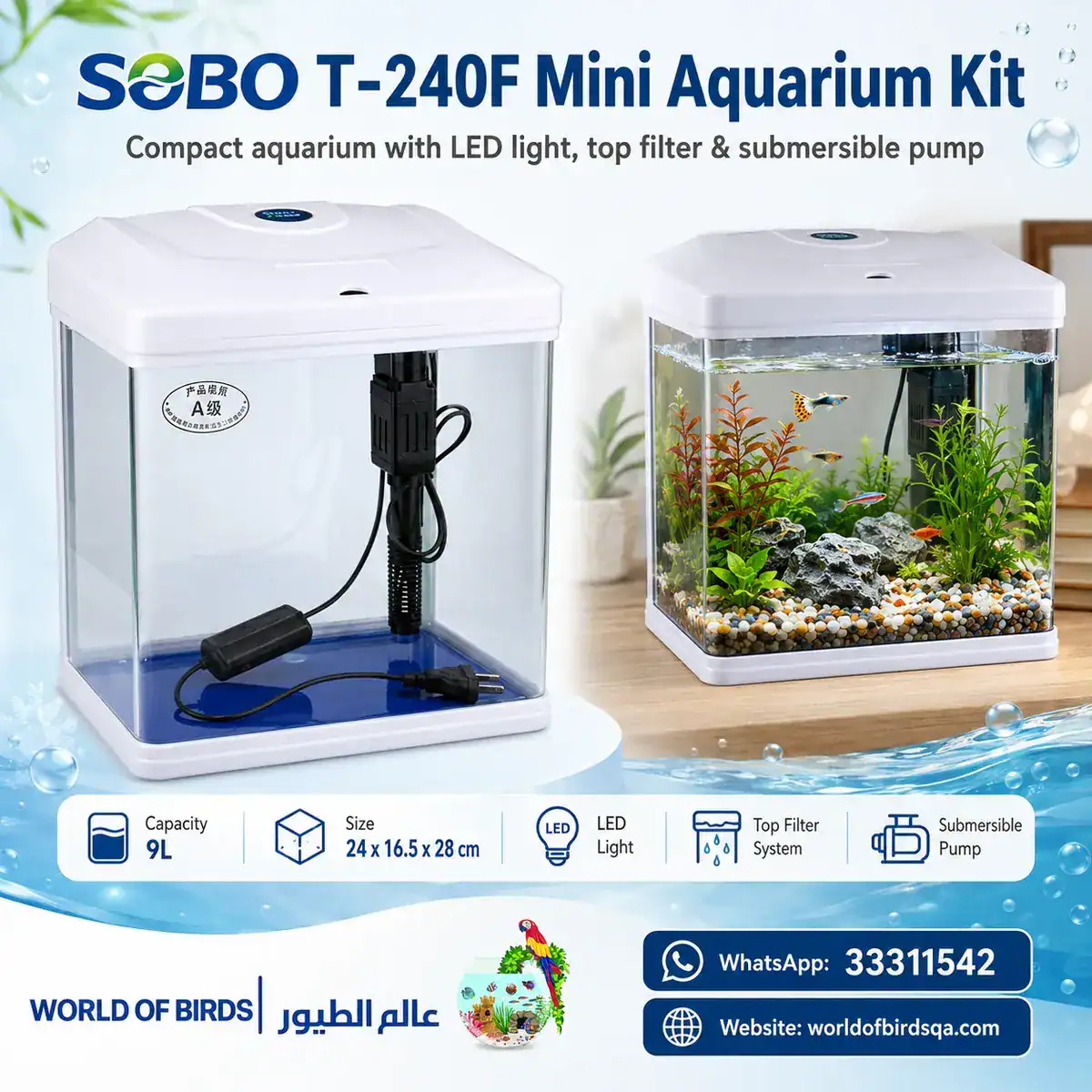
A proper aquatic turtle tank setup needs swimming space, clean water, a dry basking area, UVB lighting, safe heat and strong filtration. The enclosure must also match the turtle’s species and expected adult size. VCA Animal Hospitals recommends around 10 gallons of water per inch of shell length, with adequate space for swimming.
At World of Birds in Souq Al Ali, Doha, turtle owners can find aquatic equipment and turtle food for different setups. Their current aquatic range includes aquarium tanks, filters, heaters, cleaning tools and turtle-suitable food options.
This guide focuses specifically on aquatic turtles. It explains tank size, filtration, temperature, basking, UVB, feeding and cleaning. Species can have different requirements, so use these figures as practical starting points rather than universal rules.
What Does an Aquatic Turtle Tank Need?
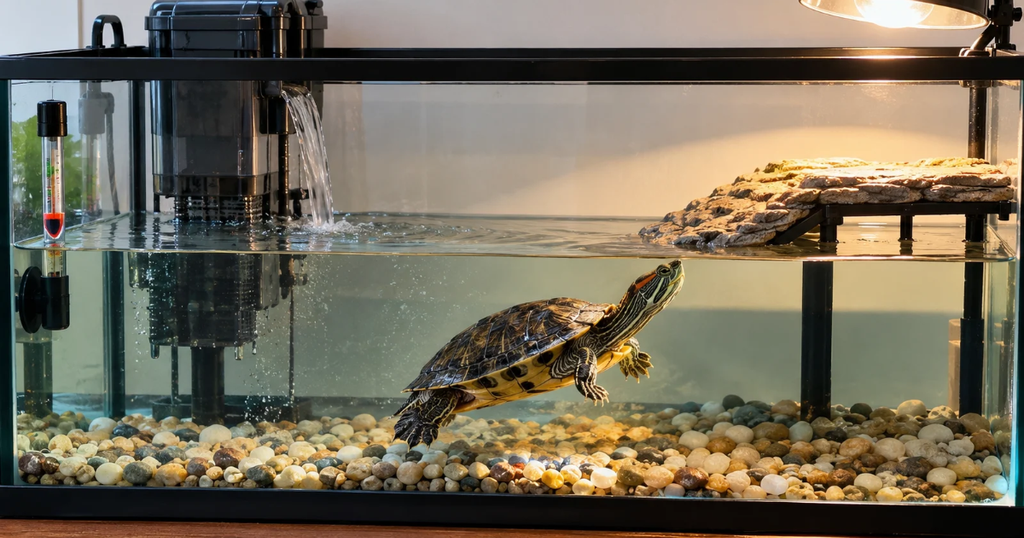
An aquatic turtle tank needs swimming water, a dry basking area, UVB lighting, suitable heat, filtration and safe access between water and land. The tank also needs enough space for the turtle to move naturally without constantly touching the enclosure.
A practical setup includes:
- Appropriately sized tank
- Strong water filter
- Water heater when required
- Water thermometer
- Dry basking platform
- Heat lamp
- Reptile-specific UVB lighting
- Safe substrate or bare bottom
- Turtle food
- Water conditioner
- Cleaning equipment
The setup should grow with the turtle. A tank that works for a juvenile may become unsuitable as the turtle matures.
How Big Should a Turtle Tank Be?
A common aquatic turtle guideline is about 10 gallons of water per inch of shell length, but adult size should guide long-term planning. VCA recommends enough swimming space for full submersion, with water depth around 1.5–2 times shell length.
PetMD also uses the 10-gallon-per-inch guideline for aquatic turtles. It recommends considering a 40-gallon or larger habitat for many aquatic turtles.
Use Adult Size for Planning
Buying a tiny tank for a baby turtle can create an expensive upgrade cycle.
The better approach is to consider the turtle’s expected adult shell length before choosing the enclosure.
For example, a turtle measuring 4 cm has a shell length of about 1.6 inches. The 10-gallon guideline gives roughly 16 gallons, or about 60 litres, as a scaling calculation.
That calculation is not a recommended permanent tank size. The turtle’s adult size can require considerably more space.
Water Depth Matters
The turtle should have enough water to swim and turn safely. VCA suggests water depth around 1.5–2 times the turtle’s shell length.
The exact depth still depends on species, swimming ability and enclosure design.
A secure basking platform should remain easy to reach from the water.
Avoid Very Small Tanks
Small tanks create faster changes in water quality. They also limit swimming space and make equipment placement more difficult.
World of Birds currently lists several aquarium sizes, including the SOBO SO-600F 64L, but that product is presented as a general freshwater aquarium.
Therefore, do not assume a fish tank is automatically suitable for long-term turtle housing.
Browse the Aquarium Tanks and Stands range and match any tank to the turtle’s adult requirements.
What Filter Is Best for a Turtle Tank?
Aquatic turtle tanks need strong filtration because turtles produce significant waste and eat inside the water. VCA recommends a good-quality filter and regular water changes, while PetMD recommends filtration capable of processing the tank water several times per hour.
Canister filters are often useful for larger turtle habitats.
They provide space for multiple filtration stages and keep equipment outside the swimming area.
Choosing Filter Capacity
Do not choose a filter based only on the tank’s stated capacity.
Consider:
- Actual water volume
- Turtle size
- Number of turtles
- Feeding habits
- Waste production
- Filter media capacity
- Manufacturer specifications
World of Birds currently stocks several higher-flow filtration options.
For example, the Dophin C1000 Aquarium Canister Filter 1650 L/H provides 1,650 L/H flow and multi-stage filtration. Its product page lists it for medium to large freshwater aquariums.
It should only be selected when its capacity and flow suit the actual turtle enclosure.
What Temperature Should a Turtle Tank Be?
Water temperature should remain within a species-appropriate range, while the basking area should be warmer and completely dry. For common red-eared slider guidance, VCA recommends water around 24–29°C, while PetMD recommends around 24°C water and an 29–35°C basking area.
These figures should not be applied blindly to every aquatic turtle.
Species, age and health can change the appropriate temperature.
Water Temperature
Use a submersible thermometer to monitor the water. A heater may be needed when indoor temperatures cannot maintain the required range.
World of Birds currently stocks several aquarium heaters.
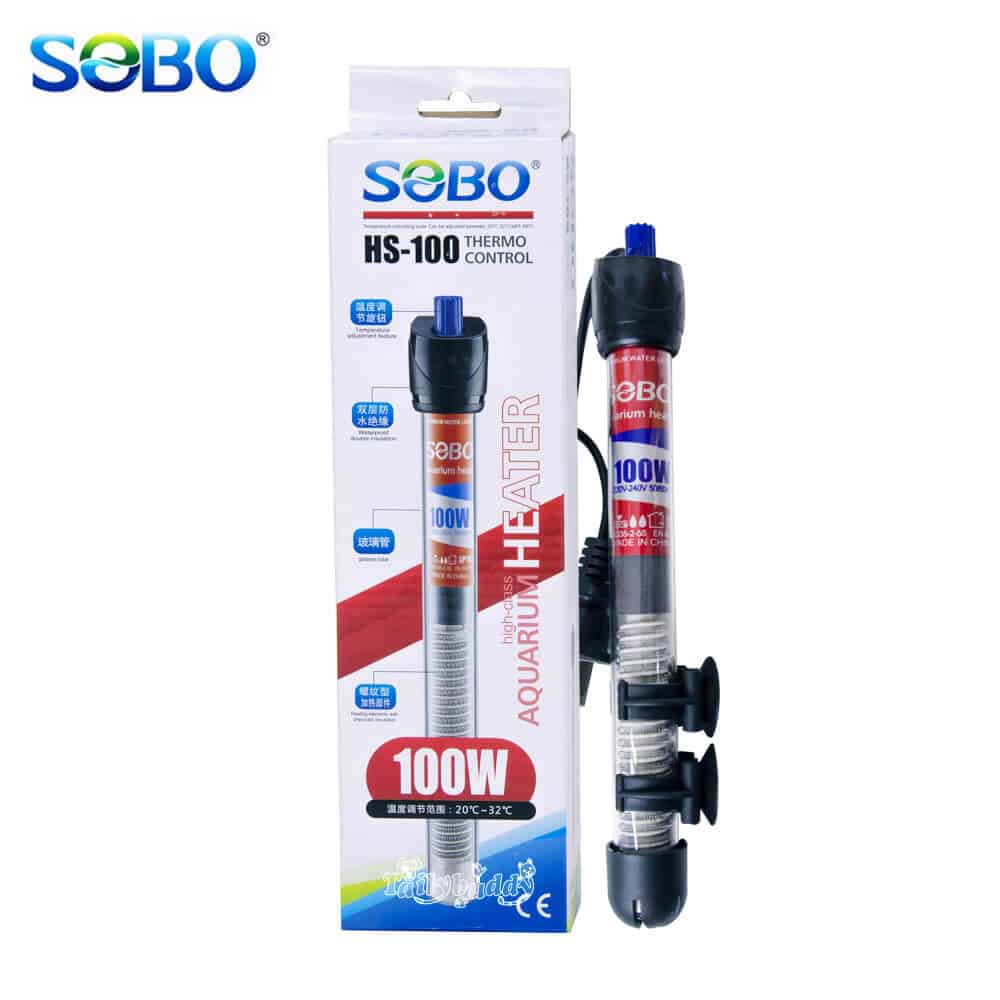
The SOBO 100W Glass Aquarium Water Heater HS 100 has adjustable temperature control, a built-in thermostat and automatic shut-off.
However, its 100W capacity should only be used when it matches the actual enclosure and heating requirement.
See the Aquarium Heaters and Thermometers range for available options.
Basking Temperature
The basking area needs a separate heat source. The turtle should be able to climb completely out of the water and dry its shell.
The heat source should sit above the basking area. Never allow the turtle to contact the hot bulb or heating equipment directly.
Does an Aquatic Turtle Need UVB Light?
Yes, aquatic turtles housed indoors generally need appropriate UVB exposure to support vitamin D3 production and calcium metabolism. VCA explains that UVB supports vitamin D3 production, which helps turtles absorb dietary calcium and maintain healthy bones and shells.
UVB is not the same as ordinary aquarium lighting. A decorative LED does not automatically provide the required UVB spectrum.
Position UVB Correctly
Follow the bulb manufacturer’s recommended distance. Glass and many transparent materials can block UVB.
VCA specifically notes that UVB should reach the turtle without glass or plastic between the light and animal. The UVB fixture should cover the basking zone appropriately. Replace bulbs according to the manufacturer’s replacement schedule.
How Do You Set Up an Aquatic Turtle Tank?
Set up the enclosure by preparing the tank, treating the water, installing filtration, creating the basking zone, adding heat and UVB, and checking conditions before introducing the turtle. The equipment should run correctly before the turtle enters the enclosure.
Step 1: Choose a Stable Location
Place the tank on a strong, level surface. Avoid direct sunlight and unstable furniture.
Qatar’s indoor air conditioning can also affect water temperature. Keep the enclosure away from strong AC airflow.
Step 2: Prepare the Water
Use an appropriate water conditioner for tap water. Follow the conditioner manufacturer’s dosage. Do not add untreated tap water directly to the established habitat.
World of Birds’ Aquarium Water Quality Qatar guide explains why water treatment and testing matter for aquarium environments.
Step 3: Install the Filter
Install the filter according to its instructions. Check the inlet and outlet positions.
Make sure water circulates through the full enclosure. Avoid creating excessive current that prevents the turtle from resting comfortably.
Step 4: Build the Basking Area
Create a stable platform above the waterline. The turtle must climb onto it without struggling.
The entire turtle should fit on the dry surface.
Step 5: Add Heat and UVB
Place the heat source above the basking zone.Position the UVB according to the manufacturer’s instructions.
Create a clear basking zone without placing glass between the UVB and turtle.
Step 6: Check Temperature
Use a water thermometer and check the basking temperature. Do not rely on the heater’s dial alone.
The actual temperature is what matters.
Step 7: Test the Setup
Run the filter and heating equipment before introducing the turtle. Check for leaks, unstable platforms and unsafe cables.
Confirm that the turtle can easily move between water and the basking area.
What Should Aquatic Turtles Eat?
Aquatic turtles need a species-appropriate diet that changes with age, size and species. VCA explains that common aquatic turtles such as red-eared sliders are omnivores, with juveniles generally eating more animal protein and adults becoming more omnivorous.
Commercial turtle food can provide a convenient part of the diet.
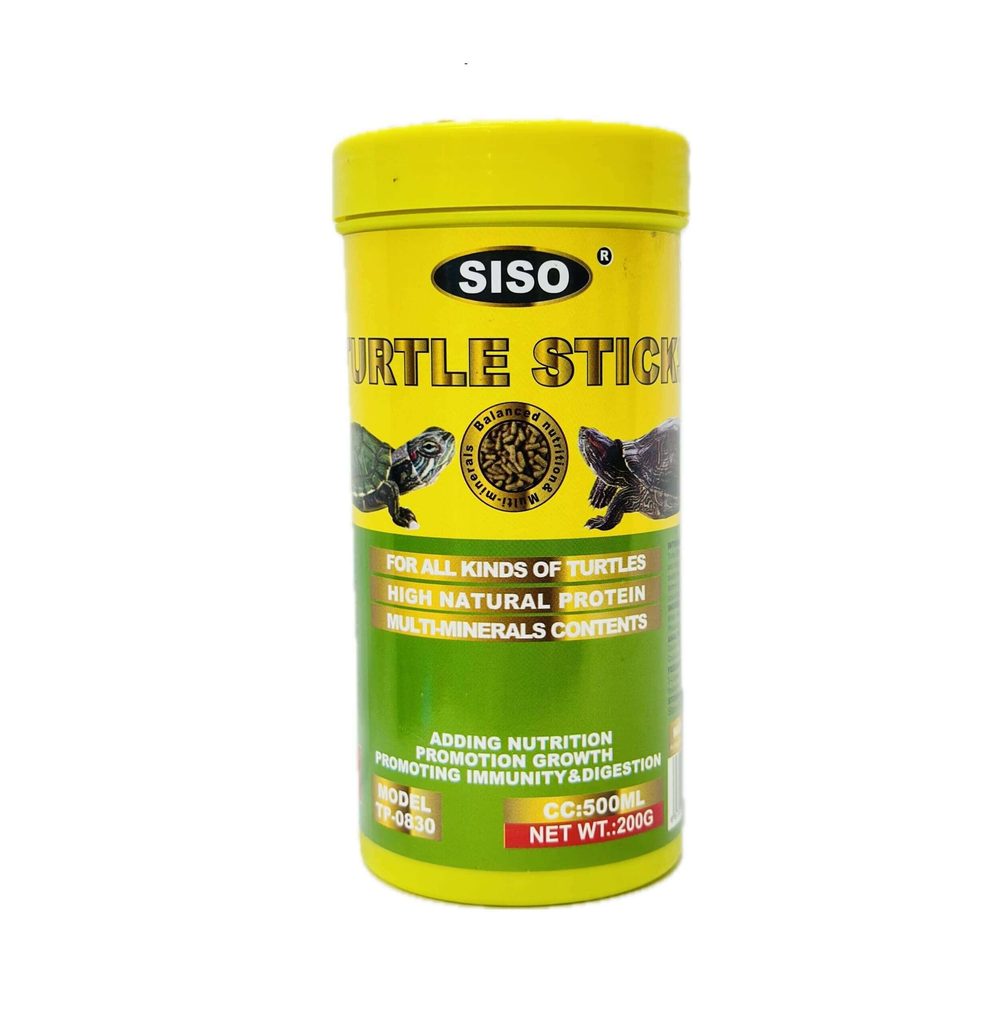
World of Birds currently lists SISO 500ml Turtle Stick Turtle Food as food formulated for aquatic turtles. The product information describes it as a stick-format food intended to support growth and general nutrition.
Another available option is SISO 100ml Fish & Turtle Food with Super SD Shrimp. The product is listed for fish and aquatic turtles and uses a shrimp-based pellet format.
Follow the feeding instructions for the selected product.
How Often Should You Feed an Aquatic Turtle?
Feeding frequency depends on the turtle’s age and size, so juveniles generally eat more frequently than adults. VCA states that healthy juvenile aquatic turtles may eat daily, while adults can often be offered a suitable portion every two or three days.
Do not use one feeding schedule for every species. Adjust portions according to the turtle’s development and diet.
Remove uneaten food from the main tank. This helps reduce waste and keeps the water cleaner.
How Do You Keep a Turtle Tank Clean?
Regular water changes, filtration and waste removal are essential because aquatic turtles eat and eliminate in the same water. VCA recommends changing turtle tank water at least weekly, with frequency increasing when the water becomes dirty.
A filter reduces waste buildup. It does not replace water changes.
Simple Cleaning Routine
Daily:
- Remove uneaten food.
- Check turtle behaviour.
- Check water temperature.
- Look for obvious waste.
Weekly:
- Check water quality.
- Perform an appropriate water change.
- Inspect the filter.
- Clean visible waste.
- Check the basking area.
As needed:
- Clean filter components.
- Remove algae.
- Inspect equipment.
- Replace worn filter media according to its condition.
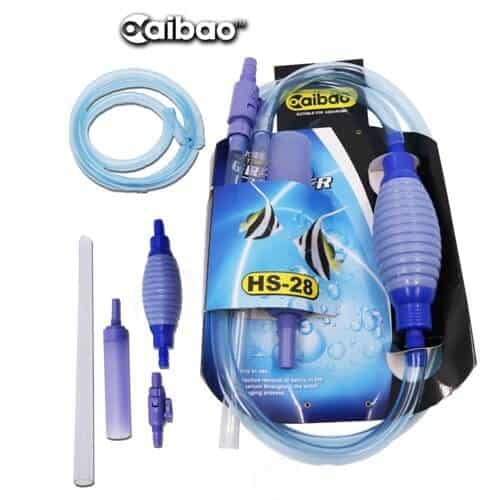
For practical filter care, read How Often to Clean an Aquarium Filter. World of Birds also stocks the Gravel Cleaner Siphon with Valve Control HS 28. It is designed to remove debris during aquarium maintenance.
Is Gravel Safe for an Aquatic Turtle Tank?
Substrate choice depends on the turtle, but small gravel should be avoided when the turtle can swallow it. VCA warns that turtles may ingest small stones, creating risks of intestinal inflammation or blockage.
A bare bottom can make waste easier to see. Large, smooth stones can also be considered when they are too large for the turtle to swallow.
Avoid sharp decorations. Secure heavy décor so the turtle cannot knock it over.
If using rocks, inspect them regularly for sharp edges or loose pieces.
How Should Qatar Owners Manage Turtle Tanks?
Qatar turtle owners should focus on stable indoor temperatures, reliable filtration and careful equipment monitoring rather than relying on outdoor heat. The country’s warm climate does not remove the need for temperature control because indoor AC can significantly change enclosure conditions.
Place the tank away from direct sunlight. Direct sunlight can cause uncontrolled temperature increases. Check the water temperature regularly.
Keep electrical equipment protected from splashing. The Aquatic Products range at World of Birds includes filters, heaters, tanks, cleaning equipment and other aquarium supplies.
Do not select equipment simply because it works for a fish aquarium.
Common Turtle Tank Setup Mistakes
The most common setup mistakes include choosing a tank based on juvenile size, using weak filtration, skipping UVB, creating an unsafe basking area and ignoring water quality. These problems can affect long-term turtle health and make routine maintenance harder.
Avoid these mistakes:
- Buying a tank based only on the turtle’s current size.
- Using a tiny aquarium for a growing turtle.
- Choosing a filter only by the tank’s label.
- Leaving the turtle without a completely dry basking area.
- Treating ordinary aquarium lighting as UVB.
- Ignoring actual water temperature.
- Feeding too much food.
- Leaving uneaten food in the tank.
- Using small swallowable gravel.
- Assuming filtration eliminates the need for water changes.
VCA identifies improper housing and nutrition among common causes of health problems in reptiles.
Frequently Asked Questions
Q1.How big should an aquatic turtle tank be?
A common starting guideline is about 10 gallons of water per inch of shell length, but adult size should determine long-term planning. The turtle also needs enough swimming space, a dry basking area and room for properly sized equipment.
Q2.What temperature should an aquatic turtle tank be?
Temperature depends on species, but common red-eared slider guidance places water around 24–29°C. The basking area should be warmer and completely dry. Use thermometers to measure actual temperatures instead of relying on heater settings.
Q3.Does an aquatic turtle need a filter?
Yes, a strong filtration system is important for aquatic turtles because they create substantial waste in their water. Filtration helps maintain water quality, but it does not replace regular water changes or waste removal.
Q4.Do aquatic turtles need UVB?
Yes, indoor aquatic turtles generally need appropriate UVB exposure for vitamin D3 production and calcium metabolism. UVB should reach the basking area correctly, without glass or plastic blocking the required light.
Q5.How often should I clean a turtle tank?
Aquatic turtle tanks need regular water changes and frequent waste removal because turtles eat and eliminate in the same water. VCA recommends at least weekly water changes, with more frequent maintenance when the tank becomes dirty.
Aquatic Turtle Tank Setup: Final Checklist
A successful aquatic turtle tank setup combines adequate space, clean water, strong filtration, stable temperature, UVB exposure, safe basking and appropriate feeding. The most important decision is choosing the enclosure around the turtle’s expected adult size rather than its current juvenile size.
At World of Birds in Souq Al Ali, Doha, turtle owners can find aquatic equipment and turtle food for building and maintaining an appropriate habitat. Their current range includes filtration, heaters, cleaning tools and turtle food.
For related aquarium guidance, see Aquarium Water Quality Qatar and How to Set Up a Fish Tank for Beginners. The second guide covers general aquarium principles, while this article focuses on the additional habitat needs of aquatic turtles.
For turtle food and aquarium equipment in Doha, visit World of Birds at Souq Al Ali or explore their current aquatic range online.
📍 Visit World of Birds – Souq Al Ali, Doha: Get Directions to World of Birds on Google Maps
