






Why My Aquarium Plants Are Dying: 7 Causes & Fixes

If you are asking why my aquarium plants are dying, start by checking the balance between light, nutrients, carbon dioxide, water conditions and planting method. A plant can decline because of one issue or several at the same time.
Aquarium plants need light, carbon, nutrients and suitable water conditions to grow. When one of these factors does not match the plant’s needs, you may see yellow leaves, holes, melting, algae or slow growth. Aquatic plants use light, nutrients and carbon dioxide for photosynthesis, while rooted species can also take nutrients from the substrate.
At World of Birds pet and Aquatic pet store, we regularly work with planted aquarium owners in Doha and stock live aquatic plants for freshwater setups. Our current live-plant range includes Anubias Barteri, Anubias Lanceolata and Anubias Nana, while availability changes with each live shipment.
This guide focuses on the symptoms you can actually see and the checks you should make before changing several things at once.
1. Your Aquarium Plants May Not Get Enough Light
Insufficient light can slow photosynthesis and cause weak, stretched or pale growth. However, more light does not automatically mean healthier plants. Lighting must match the plant species and the rest of the aquarium.
Look closely at the growth pattern. Long spaces between leaves, plants leaning towards the light and loss of colour can point towards inadequate light. These signs can also have other causes, so check nutrition and water conditions before changing the lighting.
A consistent schedule usually works better than constantly changing the light. A timer can help keep the daily pattern stable.
Signs of Low Light
Watch for:
- Weak or stretched stems: Plants grow towards the light source instead of producing compact growth.
- Pale leaves: New or existing leaves may lose some of their normal colour.
- Lower leaves disappearing: Upper growth can shade older leaves.
- Slow growth: Plants may remain alive but produce very little new growth.
Avoid placing the aquarium where strong window sunlight hits it for long periods. Direct sunlight can also encourage algae growth and make the tank harder to control.
2. Your Plants May Need Better Nutrition
Plants need nutrients to build new leaves, roots and stems. The exact requirement depends on the plant and how it obtains nutrients.
Some plants mainly absorb nutrients through their leaves and other exposed surfaces. Root-feeding plants can also take nutrients from the substrate. Research from the University of Florida notes that submerged plants can obtain nutrients through both roots and shoots, depending on what the environment provides.
Common Signs of Nutrient Problems
Yellow leaves, pinholes, pale new growth and slow development can indicate nutritional problems. But one symptom rarely proves one specific deficiency.
Before adding fertiliser, ask three questions:
- What plant species am I keeping?
- Does it mainly feed through its roots or water column?
- What fertiliser or substrate am I already using?
Adding several supplements at once makes it difficult to see which change helped.
3. Your Aquarium May Have a CO₂ Imbalance
Carbon dioxide is one of the raw materials plants use during photosynthesis. In a low-tech aquarium, plants can obtain carbon from natural gas exchange, fish and microorganisms, but the available amount remains much lower than in a CO₂-injected setup.
That does not mean every aquarium needs a CO₂ system.
Hardy plants such as Anubias can grow in lower-tech aquariums when the lighting, nutrition and water conditions suit them. High light can create greater demand for carbon and nutrients, so simply increasing light may make the imbalance worse.
If your plants struggle, do not jump straight to CO₂ injection. Check the basics first.
4. New Aquarium Plants May Be Melting
Sometimes the answer to why my aquarium plants are dying is that the plants are not actually dying.
Many aquarium plants grow above water at commercial nurseries. When you place them fully underwater, they may shed older leaves and produce new submerged growth. This process is commonly called plant melt.
The old leaves may become:
- Yellow
- Brown
- Transparent
- Soft
- Detached from the plant
Remove leaves that have completely broken down, but do not discard a plant simply because its original leaves look poor.
What Should You Watch?
New growth matters more than the appearance of every old leaf.
If the roots remain healthy and the plant starts producing fresh submerged leaves, the plant may simply be adapting. Persistent deterioration, however, points towards another problem such as unsuitable light, nutrition or unstable aquarium conditions.
5. Your Planting Method May Be Wrong
Planting mistakes can damage roots or bury plant structures that need exposure to water.
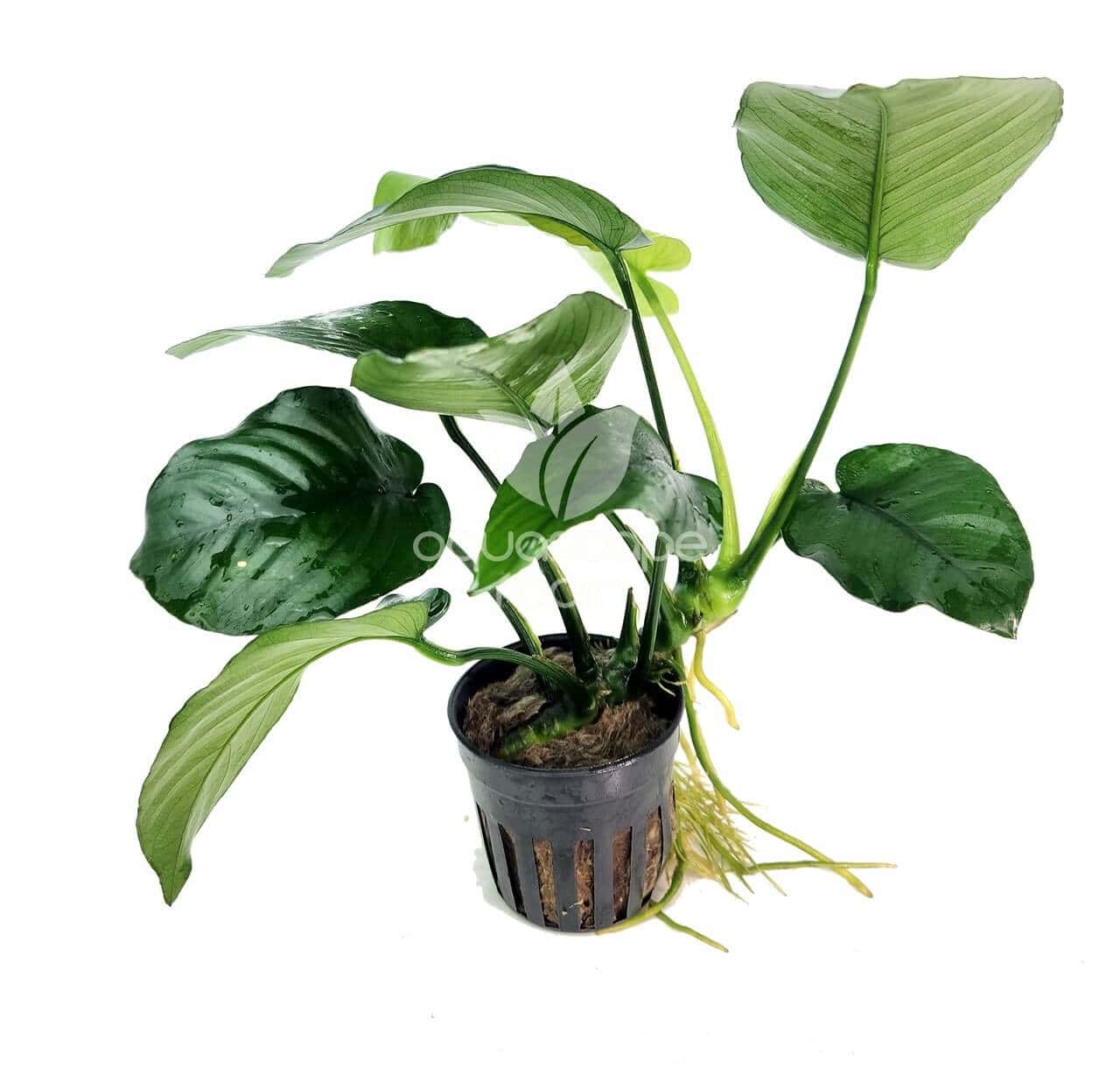
Anubias provides a classic example. It has a horizontal rhizome that produces leaves and roots. Burying that rhizome under gravel or soil can cause it to deteriorate.
Our Anubias Nana potted plant is suited to attachment on hardscape rather than deep burial.
Rooted Plants Need Different Treatment
Plants such as Amazon Sword rely heavily on their roots and need suitable access to the substrate. Other plants, such as Anubias, can attach to rocks or wood.
So before planting, identify the plant’s growth form.
Do not treat every aquarium plant like a houseplant.
6. Poor Water Conditions Can Stress Aquarium Plants
Plants need stable aquatic conditions, and poor water quality can affect the whole aquarium ecosystem. Ammonia, nitrite, nitrate, pH and other water conditions deserve attention when several plants start declining together.
Our Aquarium Water Quality Qatar guide covers the main water-quality factors relevant to aquarium owners in Doha.
Do not make a large series of changes based on leaf colour alone. Test the water where possible and compare the results with the requirements of your fish and plants.
Regular partial water changes also help remove accumulated waste and keep conditions more stable.
7. Algae, Fish and Overcrowding Can Damage Plants
Sometimes the plant itself is not the main problem.
Algae can cover leaves and reduce the light reaching plant tissue. High nutrient levels can encourage algae growth, while herbivorous animals can physically damage aquatic plants. The University of Florida’s aquatic plant guidance identifies excessive nutrients and herbivory as important factors in plant growth problems.
Fish can also uproot newly planted stems. Dense plant growth can shade lower leaves, especially when fast-growing stems spread across the surface.
Check the Tank Before Cutting Everything
Look for:
- Algae covering leaves
- Fish pulling plants from the substrate
- Dead leaves trapped between stems
- Tall plants blocking shorter plants
- Floating plants covering most of the surface
Trim damaged growth and improve spacing before making major changes.
Why Are My Aquarium Plants Turning Yellow?
Aquarium plants can turn yellow because of nutrient limitations, unsuitable light, natural leaf ageing, plant adjustment or other environmental problems. Yellow leaves alone cannot identify one specific cause.
Check whether the yellowing affects old leaves, new leaves or the whole plant. Then review lighting, nutrition, planting method and water conditions.
Avoid adding several fertilisers simply because a leaf turns yellow. Observe the pattern first.
Why Are My Aquarium Plants Turning Brown?
Brown aquarium plant leaves can result from plant melt, algae, dying tissue, debris or natural ageing. New plants may develop brown or transparent leaves while adapting from above-water growth to submerged growth.
Remove leaves that have clearly died, then watch for healthy new growth. If the entire plant continues to deteriorate, investigate light, nutrition, water quality and planting.
Why Are My Aquarium Plants Not Growing?
Aquarium plants may stop growing because of insufficient light, limited nutrition, unsuitable planting, low carbon availability or naturally slow growth. Anubias, for example, grows much more slowly than fast-growing stem plants.
Do not judge a slow-growing plant by the same timeline as Egeria Densa. Our Egeria Densa potted plant has a fast-growing stem habit and needs regular trimming to control its size.
How Do You Save Dying Aquarium Plants?
Start with the simplest checks rather than changing the entire aquarium.
A Simple Recovery Process
- Identify the symptom. Check whether leaves are yellow, brown, transparent, damaged or covered in algae.
- Check the lighting. Keep the schedule consistent and confirm that the plant receives suitable light.
- Check water conditions. Test relevant parameters and look for sudden changes.
- Inspect the planting. Make sure roots have access to the substrate and rhizomes remain exposed.
- Remove dead material. Cut away leaves or stems that have completely deteriorated.
- Review nutrition. Match fertilisation with the plant type instead of adding products at random.
- Give the plant time. Healthy new growth can take time, especially with slow-growing species.
The key is to change one major variable at a time whenever possible.
Aquarium Plant Care in Qatar
Qatar adds a few practical considerations for planted aquariums. Air conditioning can change room temperature, while strong sunlight through windows can affect both aquarium temperature and algae growth.
Our planted aquarium experience in Doha also shows why plant selection matters. World of Birds currently stocks several Anubias varieties, including Barteri, Lanceolata and Nana, which suit lower-demand freshwater setups.
For a broader selection, visit our live aquatic plants in Qatar category. Live stock can change with shipments, so we recommend checking current availability before visiting our Souq Al Ali store.
Frequently Asked Questions
Why are my aquarium plants dying after one week?
New aquarium plants can decline after planting because they need to adapt to submerged conditions. This is especially common when plants previously grew above water. Check for healthy new growth before throwing the plant away, while also reviewing light, planting and water conditions.
Do aquarium plants need CO₂ to survive?
No. Many low-demand aquarium plants can grow without injected CO₂ when light, nutrients and water conditions suit them. CO₂ can support faster growth in suitable setups, but adding it is not the first step for every struggling aquarium plant.
Why are my aquarium plant leaves melting?
Leaves may melt when a plant changes from above-water growth to fully submerged growth. Transport and environmental changes can also contribute. Remove decaying leaves, keep conditions stable and watch for healthy submerged growth.
Can too much light kill aquarium plants?
Excessive light can contribute to algae growth and create an imbalance when carbon and nutrients do not match the lighting level. Stronger lighting is not automatically better. Match light intensity and duration with the plants and aquarium system.
How do I stop aquarium plants from dying?
Start by checking five areas: light, nutrients, carbon, water conditions and planting method. Then inspect the plant for melt, algae or physical damage. Make measured changes instead of changing several parts of the aquarium at the same time.
Keep Your Aquarium Plants Healthy
When you ask why my aquarium plants are dying, look at the whole aquarium rather than one damaged leaf. Healthy plant growth depends on suitable light, available nutrients, carbon, stable water and correct planting.
At World of Birds, we stock live freshwater aquarium plants and aquatic supplies at our Souq Al Ali store in Doha. Browse our live aquatic plants in Qatar and contact us to check current availability before visiting.

One thought on “Why My Aquarium Plants Are Dying: 7 Causes & Fixes”