





Wet vs Dry Cat Food: Which Is Better for Your Cat?

Wet cat food is better for hydration, while dry cat food offers greater convenience, affordability, and easier portion storage. Both can provide complete nutrition when formulated for your cat’s life stage. The best option depends on your cat’s age, health, activity level, drinking habits, and food preferences.
According to Cornell University College of Veterinary Medicine, wet cat food typically contains 70–80% water. Dry food generally contains only 6–10% moisture.
For cats that drink little water, wet food can provide valuable additional hydration. Dry food remains suitable for many healthy cats with appropriate portions and access to fresh water.
At World of Birds – Pet & Aquatic Pet Store in Doha, Qatar, owners can explore both feeding options. This wet vs dry cat food guide compares nutrition, cost, health benefits, and practical feeding routines.
Wet vs Dry Cat Food: Key Differences
Wet and dry cat food differ primarily in moisture, calorie density, texture, and storage requirements. Their nutritional quality depends on individual formulations rather than food format alone.
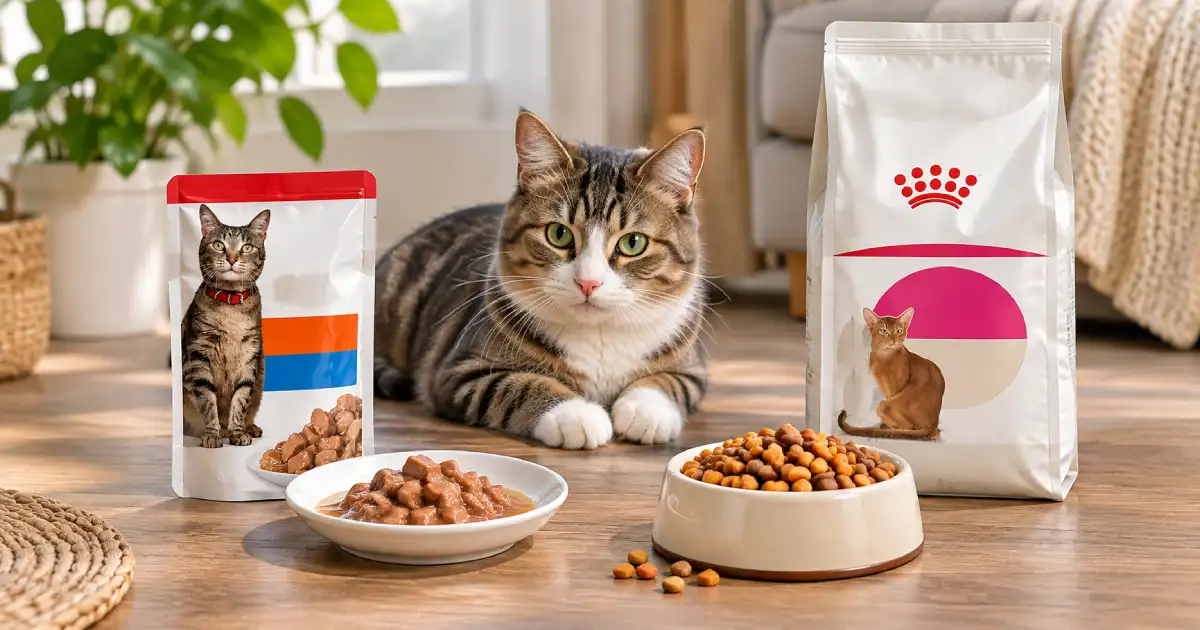
Wet food usually comes in cans, pouches, or trays. Dry food consists of low-moisture kibble that remains convenient for measured feeding.
Wet vs Dry Cat Food Comparison
| Factor | Wet Cat Food | Dry Cat Food |
| Moisture | Around 70–80% | Around 6–10% |
| Hydration | Higher dietary water intake | Requires greater reliance on drinking |
| Calories per gram | Generally lower | Generally higher |
| Texture | Soft, gravy, pâté or chunks | Crunchy kibble |
| Storage | Refrigerate after opening | Store sealed in a cool, dry place |
| Cost | Generally higher per calorie | Generally lower per calorie |
| Feeding convenience | Requires more handling | Easy to measure and serve |
| Weight management | May support larger meal volumes | Requires careful portion control |
| Dental benefits | Limited mechanical cleaning | Special dental formulas may help |
The best cat food must provide complete nutrition suitable for your cat’s age. Moisture content alone does not determine nutritional quality.
Benefits of Wet Cat Food
Wet cat food offers higher moisture, softer textures, and appealing aromas. These characteristics can benefit cats with limited drinking habits or particular feeding preferences.
1. Supports Better Hydration
Wet food supplies water alongside essential nutrients. This can help increase total water intake, especially for cats that rarely visit their water bowls.
The Cornell Feline Health Center’s hydration guide explains that cats obtain water through drinking and food.
Fresh drinking water remains essential even when feeding wet food daily. Read our guide to how much water cats should drink for practical hydration advice.
2. Helps Support Healthy Weight
Wet food often contains fewer calories per gram because of its higher moisture content. Cats may therefore receive larger meal volumes for the same calories.
However, wet food does not automatically prevent obesity. Rich formulas, oversized portions, and excessive treats can still contribute to weight gain.
Always compare calories per pouch or can before calculating daily portions.
3. Offers Appealing Textures
Some cats prefer gravy, jelly, or soft pâté over crunchy kibble. Wet food offers several textures that may suit selective eaters.
Softer food can also help cats experiencing chewing difficulties. However, persistent discomfort requires veterinary dental assessment.
4. Provides Flexible Feeding Options
Wet food can form a complete diet or complement suitable dry food. Individual pouches also make it easier to introduce different textures.
Explore our best wet cat food in Qatar guide to compare available brands and feeding options.
Benefits of Dry Cat Food
Dry cat food offers convenient storage, straightforward portion measurement, and generally lower feeding costs. It can provide complete nutrition for healthy cats across different life stages.
1. Easy to Store and Serve
Dry food requires less preparation than wet food. Owners can measure a daily allowance and divide it between several meals.
It also works with many automatic feeders and food puzzles. These tools can support consistent feeding routines and encourage activity.
2. Generally More Affordable
Dry food usually costs less per calorie than wet food. Larger bags may also provide better value for multi-cat households.
However, always compare nutritional quality alongside price. A cheaper product may not suit every cat’s dietary requirements.
3. Supports Measured Feeding
Kibble is easy to weigh using a digital kitchen scale. Accurate measurement helps owners avoid accidental overfeeding.
This matters because dry food usually contains more calories per gram. Even a small additional portion can increase daily energy intake.
4. Provides Different Formula Choices
Dry food comes in formulas for kittens, adults, senior cats, and sterilised cats. Other products address specific nutritional requirements.
For example, World of Birds lists Homie Special Sterilised & Light Chicken Adult Cat Food.
This formula targets sterilised and weight-conscious adult cats. Check its current packaging for nutritional details and feeding recommendations.
Which Food Is Healthier for Cats?
Neither wet nor dry cat food is universally healthier. Both can support good health when they provide complete nutrition and appropriate calories.
However, specific circumstances may make one format more suitable than another.
Is Wet Food Better for Urinary Health?
Wet food can increase dietary water intake, which may support urine dilution. This can be helpful for cats with certain urinary concerns.
However, ordinary wet food cannot treat urinary stones, infections, or other diagnosed conditions. Some cats require veterinary urinary diets with specific nutritional properties.
Explore our cat food for urinary health guide for further information.
Seek urgent veterinary care if your cat repeatedly strains to urinate or produces little urine.
Is Dry Food Better for Teeth?
Ordinary dry kibble does not reliably prevent dental disease. Many cats swallow pieces with limited chewing, reducing potential mechanical cleaning.
Specially designed dental diets may help manage plaque or tartar. However, regular dental assessment and appropriate toothbrushing remain important.
Does Wet Food Contain More Protein?
Wet food does not always contain more protein than dry food. Compare protein levels on a dry-matter basis because moisture affects the percentages printed on labels.
Consider these hypothetical products:
| Nutritional Measure | Wet Food | Dry Food |
| Protein on label | 10% | 32% |
| Moisture | 80% | 10% |
| Dry matter | 20% | 90% |
| Protein on dry-matter basis | 50% | 35.6% |
Dry-matter protein = Label protein ÷ dry-matter percentage × 100
This example shows why direct label comparisons can be misleading. It does not establish that every wet food contains superior nutrition.
The Cornell guide to feeding cats recommends assessing nutritional adequacy and life-stage suitability when selecting food.
Wet vs Dry Cat Food by Life Stage
The best feeding format can change throughout a cat’s life. Age, activity, health, and eating behaviour influence nutritional requirements.
Wet or Dry Food for Kittens?
Kittens can eat complete wet or dry food formulated for growth after appropriate weaning. Wet food may provide a softer introduction to solid meals.
Dry kitten food can also support development when suitable for the kitten’s age. Growing kittens need adequate energy and essential nutrients.
World of Birds lists Royal Canin Kitten Gravy Wet Food, formulated for kittens aged four to twelve months.
Wet or Dry Food for Adult Cats?
Healthy adult cats can thrive on complete wet food, dry food, or a combination. The correct choice depends on calorie needs and personal preferences.
Monitor weight, appetite, and body condition regularly. Adjust portions rather than changing food formats unnecessarily.
Wet or Dry Food for Senior Cats?
Senior cats may benefit from softer food when chewing becomes difficult. Wet food can also increase dietary moisture.
However, older cats have different individual nutritional requirements. Some require specialised diets following veterinary assessment.
Wet or Dry Food for Sterilised Cats?
Sterilised cats may require fewer calories than before neutering. Both formats can support healthy weight management when appropriately portioned.
Wet food may provide larger portions for fewer calories. Dry sterilised formulas offer another option for controlling energy intake.
Can You Mix Wet and Dry Cat Food?
Yes, cats can eat wet and dry food together when both products meet their nutritional needs. Mixed feeding combines moisture, texture variety, and the convenience of measured kibble.
The most important consideration is total daily calorie intake.
Example Mixed-Feeding Plan
Consider a healthy adult cat with an established daily allowance of 220 calories.
| Food | Portion | Calories |
| Morning wet food | 1 pouch | 80 kcal |
| Afternoon dry food | 15 g | 60 kcal |
| Evening dry food | 20 g | 80 kcal |
| Daily total | 1 pouch + 35 g dry | 220 kcal |
Example dry food contains 4 kcal per gram. The wet pouch contains 80 kcal.
This is an illustrative calculation, not a universal feeding recommendation. Actual portions depend on the individual product and your cat’s requirements.
How to Introduce Mixed Feeding
- Establish your cat’s current daily calorie allowance.
- Check the calorie content of both products.
- Gradually introduce the new food over several days.
- Reduce existing portions to accommodate the additional food.
- Monitor digestion, appetite, and body weight.
Always count calories from both formats and treats.
Cat Food Cost and Storage in Qatar
Dry food generally offers lower feeding costs and easier storage. Wet food requires more careful handling, especially in Qatar’s warmer climate.
How to Compare Daily Feeding Costs
Compare the actual daily cost rather than the purchase price alone.
Daily dry food cost = Bag price ÷ total grams × daily grams
Daily wet food cost = Price per pouch × daily number of pouches
For example, imagine a 2 kg dry-food bag costing QAR 80. A 50-gram daily portion would cost QAR 2.
Three wet-food pouches costing QAR 4 each would cost QAR 12 daily.
These figures are hypothetical examples, not current World of Birds prices. Check actual product prices and calorie requirements before comparing costs.
How to Store Wet Cat Food
Refrigerate unused opened wet food promptly and follow the manufacturer’s instructions. Avoid leaving wet food exposed for extended periods in warm rooms.
Read our guide on how long wet cat food can sit out for detailed storage guidance.
How to Store Dry Cat Food
Keep dry food in its original packaging inside a clean, sealed container. Store it away from moisture, direct sunlight, and excessive heat.
Check expiry dates and avoid using food with unusual odours or signs of spoilage.
Frequently Asked Questions
Q1. Is wet or dry cat food better overall?
Answer: Neither is universally better. Wet food provides additional moisture, while dry food offers convenient storage and generally lower costs.
Choose complete food that meets your cat’s nutritional requirements.
Q2. Can cats live on dry food only?
Answer: Yes, many healthy cats can eat complete dry food exclusively. They must have adequate access to fresh drinking water and appropriate daily portions.
Q3. Should cats eat wet food every day?
Answer: Cats can eat complete wet food daily when it meets their life-stage requirements. Mixed feeding is another suitable option for many cats.
Q4. Is wet food better for overweight cats?
Answer: Wet food may help provide larger meal portions with fewer calories. However, successful weight management depends on total calorie intake and individual requirements.
Q5. Can I mix wet and dry cat food in one bowl?
Answer: Yes, if both products are suitable for your cat. Serve manageable portions and remove leftovers promptly, as mixed food contains moisture.
Q6. Is dry cat food bad for kidneys?
Answer: Dry food does not automatically cause kidney disease. Cats with diagnosed kidney disease may require specific veterinary diets and hydration management.
Which Cat Food Should You Choose?
The wet vs dry cat food comparison comes down to hydration, nutrition, convenience, cost, and individual preferences.
Wet food offers additional moisture and softer textures. Dry food provides convenient feeding and storage, while mixed feeding combines both advantages.
Prioritise complete nutrition, measure daily calories, and monitor your cat’s body condition.
Browse our cat food collection in Qatar to explore wet and dry formulas for kittens, adults, and sterilised cats.
Visit World of Birds – Pet & Aquatic Pet Store in Souq Al Ali, Doha, Qatar, to discover suitable food options.