







Can Cats Eat Tuna? Fresh Tuna vs Complete Tuna Cat Food

Can cats eat tuna? Healthy adult cats can have a small amount of plain, properly cooked tuna as an occasional treat, but human tuna should not replace complete cat food. Tuna can provide protein, but feeding too much may create nutritional problems and increase mercury exposure.
At World of Birds in Souq Al Ali, Doha, we stock tuna-based cat foods alongside complete wet and dry diets for cats in Qatar. The important difference is formulation: plain human tuna is a treat, while a complete tuna cat food is formulated to provide the nutrients cats need for regular feeding.
This guide explains whether cats can eat fresh or canned tuna, how much is reasonable, why kittens need different care, and how tuna-based cat food compares with plain tuna.
Quick answer: A small amount of plain tuna may be acceptable for a healthy adult cat as an occasional treat. However, human tuna is not nutritionally complete for cats. For regular meals, choose a complete and balanced tuna cat food instead.
Key Takeaways
- Healthy adult cats can tolerate small amounts of plain tuna.
- Human tuna should remain an occasional treat.
- Tuna alone does not provide complete feline nutrition.
- Excess tuna can contribute to mercury exposure.
- Large amounts of canned tuna can contribute to vitamin E deficiency and pansteatitis.
- Tuna packed in water is preferable to tuna prepared with oil, salt or seasoning.
- Raw tuna is not a suitable routine food for cats.
- Kittens should receive complete kitten food rather than human tuna.
- Complete tuna cat food is different from plain tuna.
- Always provide fresh drinking water alongside wet food.
Is Tuna Safe for Cats?
Yes, a small amount of properly prepared tuna can be safe for a healthy adult cat, but it should not become the main diet. PetMD recommends plain, cooked tuna without oil or seasoning as an occasional treat, while veterinary guidance also warns against relying on tuna as a regular food.
Tuna is attractive to cats because of its strong smell and flavour. It also provides animal protein and fat.
The problem starts when a cat receives tuna frequently instead of a nutritionally complete diet.
Fresh Tuna vs Human Canned Tuna
Both can be problematic when used as a staple.
| Tuna type | Suitable for cats? | Main consideration |
| Plain cooked fresh tuna | Small occasional amount | Not nutritionally complete |
| Canned tuna in water | Small occasional amount | Check for salt and additives |
| Tuna in oil | Best avoided | Adds unnecessary fat |
| Seasoned tuna | Avoid | Salt, spices and other ingredients |
| Raw tuna | Not recommended | Food-safety concerns |
| Complete tuna cat food | Suitable when labelled complete | Formulated for feline nutrition |
How Much Tuna Can a Cat Eat?
For a healthy adult cat, PetMD recommends no more than about one tablespoon of plain, unseasoned, cooked human-grade tuna once a week. This is a conservative treat guideline, not a nutritional requirement.
The amount should also reflect the cat’s size and overall diet. Do not use tuna to replace a balanced meal.
A small tuna treat is very different from feeding tuna several times a day.
What If a Cat Eats Too Much Tuna?
Eating a large amount once may cause digestive upset. Repeated high-tuna feeding creates more serious nutritional concerns.
Merck Veterinary Manual reports naturally occurring vitamin E deficiency in cats fed large quantities of canned tuna. This can lead to pansteatitis, also known as yellow fat disease.
Possible signs of serious dietary problems include:
- Reduced appetite
- Lethargy
- Pain or sensitivity
- Abnormal fat tissue
- Muscle problems
If a cat has been eating large quantities of tuna regularly, speak with a veterinarian rather than simply changing the diet abruptly.
Can Cats Eat Canned Tuna?
Cats can eat a small amount of plain canned tuna, but it should not become a regular substitute for complete cat food. If human canned tuna is offered, choose a simple product without added spices, sauces or other flavourings. PetMD specifically recommends tuna packed in water rather than oil.
Avoid products containing:
- Added spices
- Garlic
- Onion
- Sauces
- Excess salt
- Seasoning blends
- Flavoured oils
The safest approach is to keep human tuna as an occasional treat. For regular meals, use cat food designed for feline nutritional requirements.
Can Cats Eat Tuna in Oil?
It is better not to use tuna packed in oil as a regular cat treat. Oil adds calories and fat without providing the balanced nutrition a cat needs. If your cat has already eaten a small amount, monitor it.
Do not deliberately offer oil-packed tuna as a substitute for cat food.
Can Cats Eat Fresh Tuna?
Fresh tuna should only be considered an occasional treat when it is thoroughly cooked, plain and free from bones, oil and seasoning. PetMD recommends cooking tuna to human-food safety standards before offering a small portion.
Do not serve fresh tuna raw as a routine meal. Merck Veterinary Manual also recommends complete and balanced commercial diets rather than feeding cats human foods as their primary nutrition.
If preparing tuna for a cat:
- Cook it thoroughly.
- Remove bones.
- Do not add salt.
- Do not add spices.
- Do not add sauces.
- Allow it to cool.
- Give only a small amount.
The tuna should remain a treat, not the foundation of the diet.
Why Is Too Much Tuna Bad for Cats?
Too much tuna can create three main concerns: nutritional imbalance, mercury exposure and excessive calories. Large quantities of canned tuna have also been associated with vitamin E deficiency in cats.
1. Nutritional Imbalance
Human tuna is not formulated to meet all feline nutritional requirements. Cats need specific nutrients, including taurine and other essential nutrients supplied through a complete diet.
Replacing balanced cat food with tuna can therefore create deficiencies over time.
2. Mercury Exposure
Tuna can contain mercury because larger predatory fish accumulate mercury through the food chain.
Merck Veterinary Manual specifically notes that commercial fish products such as tuna have been associated with long-term mercury poisoning in cats.
The mercury level also varies by tuna species.
U.S. Food and Drug Administration guidance classifies canned light tuna differently from albacore, yellowfin and bigeye tuna, with bigeye listed among the fish with the highest mercury levels.
3. Excess Calories
Tuna is relatively calorie-dense compared with some other treats. Frequent extra portions can contribute to excessive calorie intake.
This matters particularly for indoor cats with low daily activity.
Can Kittens Eat Tuna?
Kittens should not rely on human tuna because they need carefully balanced nutrition for growth and development. PetMD advises waiting until at least one year before offering tuna as a treat, while VCA takes a more conservative position and advises against feeding tuna to cats.
The safest choice for kittens is a complete kitten diet. Kittens have higher nutritional demands than adult cats.
Their meals need to support:
- Growth
- Bone development
- Muscle development
- Brain development
- Healthy organ development
A small accidental taste is different from intentionally feeding tuna. If a kitten has been eating tuna regularly, ask a veterinarian about the appropriate diet.
Fresh Tuna vs Complete Tuna Cat Food
Fresh tuna and complete tuna cat food are not nutritionally interchangeable. Fresh tuna is a single food ingredient that can work as an occasional treat, while a complete tuna cat food is formulated with additional nutrients to meet a cat’s dietary requirements.
This distinction is the most important answer to the question “can cats eat tuna?”
| Feature | Fresh or Human Tuna | Complete Tuna Cat Food |
| Animal protein | Yes | Yes |
| Designed for cats | No | Yes |
| Complete nutrition | No | When labelled complete |
| Suitable as daily food | No | Yes, if appropriate for life stage |
| Mercury considerations | Yes | Depends on formulation and ingredients |
| Added feline nutrients | No | Formulated into the recipe |
| Best use | Occasional treat | Regular meal when complete |
Merck Veterinary Manual explains that commercial pet foods are formulated to provide complete and balanced nutrition for particular species and life stages.
Therefore, “tuna-flavoured” does not mean the same thing as feeding plain tuna.
What Tuna Cat Food Is Available in Qatar?
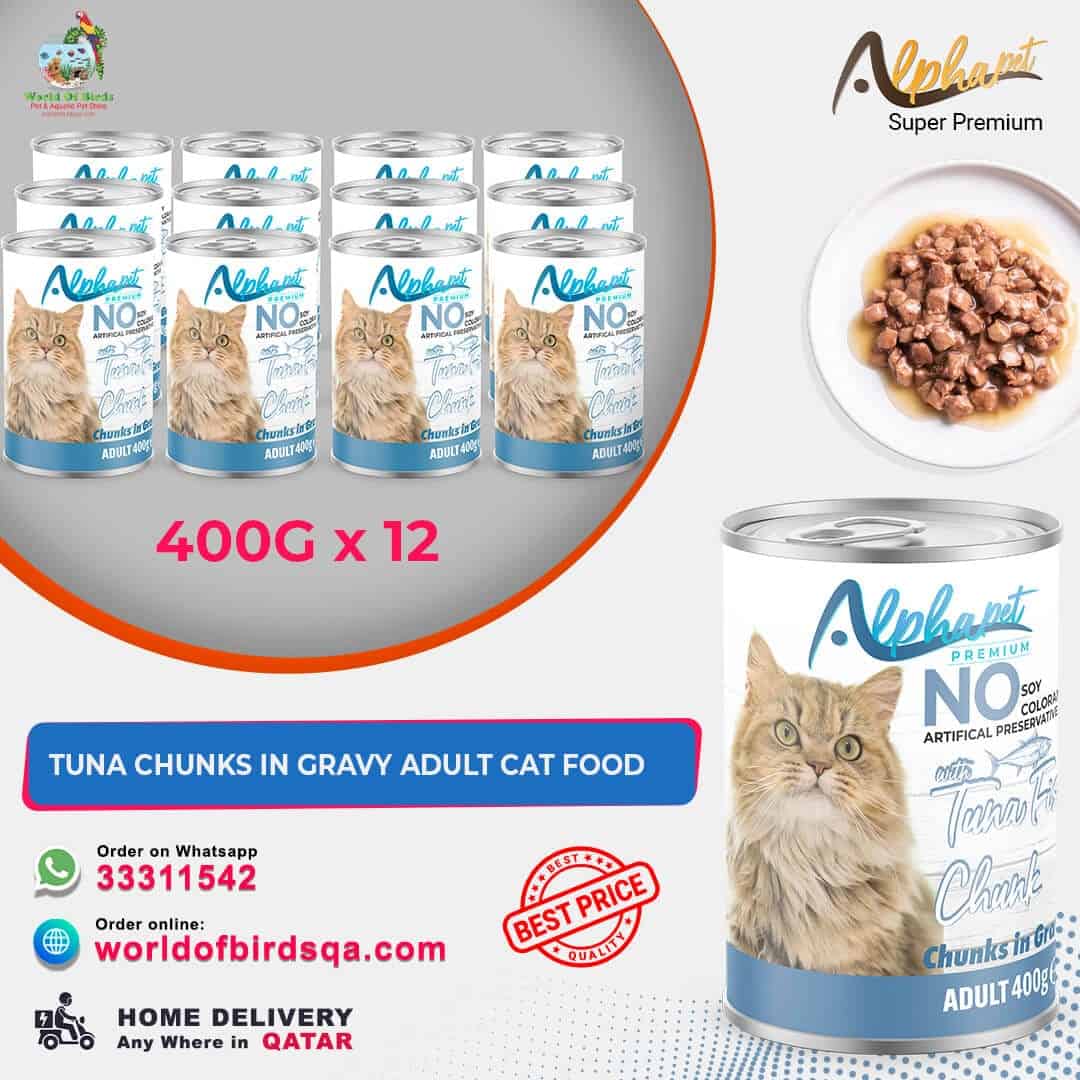
At World of Birds in Souq Al Ali, Doha, the current cat-food range includes tuna-based wet foods from Alpha Pet. The store currently lists Alpha Pet Premium Cat with Tuna Chunk in Gravy as a product.
World of Birds also lists Alpha Pet Premium Cat with Tuna in Gravy, although availability can change. You can check the current AlphaPet tuna cat food listings before ordering.
These products are different from a can of human tuna because they are formulated as cat food. The World of Birds wet cat food guide identifies the Alpha Pet tuna chunk formula as a complete wet food for adult cats.
Is Tuna Cat Food Better Than Fresh Tuna?
For regular feeding, a complete tuna cat food is a better choice than plain fresh tuna because it is formulated to provide balanced feline nutrition. Fresh tuna can be used only as an occasional treat, while a complete cat food can serve as part of the cat’s normal diet when it matches the cat’s life stage.
This does not mean every tuna-flavoured cat food is automatically ideal.
Check the label for:
- Intended life stage
- Complete nutritional status
- Feeding instructions
- Ingredient list
- Calorie information
- Manufacturer storage instructions
For more comparisons between wet-food choices, see World of Birds’ Top 7 Wet Cat Foods in Qatar guide.
Does Tuna Help With Cat Hydration?
Tuna itself is not a substitute for fresh drinking water, but tuna-based wet cat food can contribute dietary moisture. Wet cat food generally contains much more water than dry food, which can help increase total daily water intake.
This is especially relevant for cats that drink little. World of Birds’ How Much Water Should a Cat Drink? guide explains how food moisture contributes to a cat’s total daily water intake.
Always provide fresh water even when feeding wet food. Do not use tuna alone as a hydration strategy.
Is Tuna Good for Picky Cats?
Tuna’s strong smell can make it attractive to cats, but strong palatability should not replace balanced nutrition. Some cats may prefer fish-based flavours, while others may prefer chicken, lamb or different textures.
If your cat refuses its normal food after getting tuna frequently, reduce the treats. Otherwise, the cat may learn to wait for the more appealing option.
For broader feeding strategies, see our Best Cat Food for Picky Cats in Qatar guide. The goal is to find a complete food your cat accepts rather than relying on human tuna.
How Should Tuna Cat Food Be Stored?
Once opened, tuna-based wet cat food should be refrigerated promptly and handled according to the product’s storage instructions. Do not leave opened wet food sitting at room temperature for several hours.
This matters in Qatar’s warm climate.
After opening:
- Cover or transfer unused food to a suitable sealed container.
- Refrigerate it promptly.
- Follow the manufacturer’s recommended storage period.
- Serve an appropriate portion.
- Discard food that has remained out too long.
For detailed storage guidance, read How Long Can Wet Cat Food Sit Out?. That article covers room-temperature exposure, refrigeration and leftover wet-food handling in more detail.
Frequently Asked Questions
Q1: Can cats eat tuna every day?
Human tuna should not be fed to cats every day. Plain tuna lacks the complete nutritional balance cats need, and frequent consumption can increase concerns about mercury, calories and nutrient deficiencies. Use complete cat food for regular meals instead.
Q2: Can cats eat canned tuna in water?
A small amount of plain canned tuna packed in water may be acceptable as an occasional treat for a healthy adult cat. Avoid products containing seasoning, sauces or excessive salt. Human canned tuna should not replace complete cat food.
Q3: Can cats eat tuna in oil?
It is better to avoid feeding tuna packed in oil as a routine treat. The added oil increases calories and fat without providing the balanced nutrients found in complete cat food.
Q4: Can kittens eat tuna?
Kittens should not rely on human tuna because they need complete nutrition for growth. Veterinary sources recommend a complete kitten diet, and PetMD advises avoiding tuna treats until at least one year of age.
Q5: Is tuna cat food safe for cats?
A tuna cat food labelled complete and balanced can be suitable for regular feeding when it matches the cat’s life stage and nutritional needs. It is different from plain human tuna because the formula is designed around feline nutrition.
Q7: Can cats eat raw tuna?
Raw tuna is not recommended as a routine food for cats. Plain cooked tuna is a safer occasional treat option, while complete commercial cat food provides a more reliable nutritional balance.
Can Cats Eat Tuna? Final Answer
Can cats eat tuna? Yes, a healthy adult cat can usually have a small amount of plain, properly cooked tuna as an occasional treat. However, human tuna should never replace a complete and balanced cat diet.
The better everyday choice is a complete tuna cat food rather than fresh or canned human tuna. Complete cat food is formulated to provide the nutrients cats need, while plain tuna mainly provides a single source of protein and does not meet all feline nutritional requirements.
At World of Birds in Souq Al Ali, Doha, current listings include Alpha Pet Premium Cat with Tuna Chunk in Gravy and other tuna-based cat-food options. Availability can change, so check the current AlphaPet cat-food listings before ordering.
The simple rule is: use plain tuna as an occasional treat, and use complete tuna cat food when tuna is part of your cat’s regular diet. Want to check tuna cat food and other cat-food options in person? Visit World of Birds, Souq Al Ali, Doha.
