







Tiger Barb and Zebra Danio: Best Schooling Fish for Qatar Community Tanks

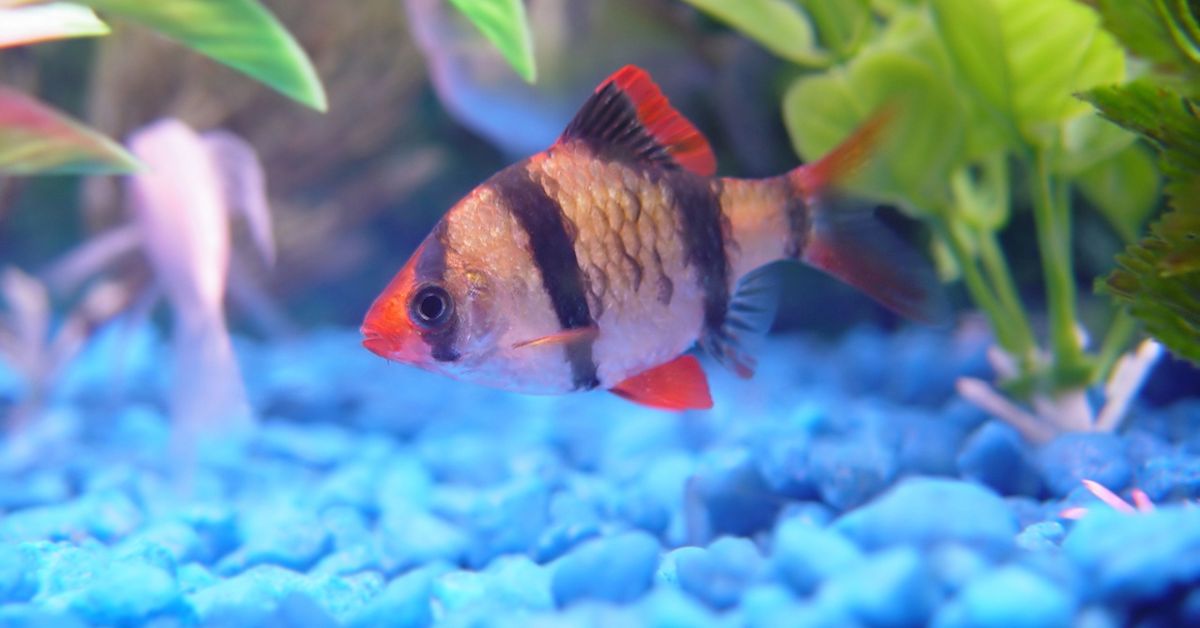
A single Angelfish is beautiful or A single Betta is striking. But a school of Tiger Barbs moving together through a planted aquarium-chasing, displaying and exploring their surroundings-creates something completely different. For aquarium hobbyists in Qatar, schooling fish can transform a quiet tank into a lively, constantly moving display filled with colour and natural behaviour.
Tiger Barbs (Puntigrus tetrazona) and Zebra Danios (Danio rerio) are two popular schooling fish for freshwater aquariums in Qatar. Tiger Barbs are bold, colourful and semi-aggressive, while Zebra Danios are fast, active and generally easier for beginners to manage.
Quick answer: Tiger Barbs and Zebra Danios can live together in a properly sized, fully cycled aquarium with sufficient swimming space, stable water conditions and carefully selected tank mates. Tiger Barbs should be kept in an appropriate group, and slow-moving or long-finned fish should be avoided.
Both species can adapt well to temperature-controlled homes in Qatar, but the actual aquarium water temperature should always be monitored with a thermometer. Heating requirements depend on the tank temperature, seasonal changes and the needs of the other fish in the aquarium.
Zebra Danios are known for being hardy, but they still require a fully cycled aquarium, good water quality and proper feeding. No aquarium fish should be described as impossible to kill or suitable for poor conditions.
World of Birds has served Qatar’s pet and aquarium community since 1985. Live-fish availability changes according to shipment arrivals, so browse our live freshwater fish collection or contact our Souq Al Ali store to confirm current Tiger Barb and Zebra Danio stock.
In this guide, we explain how to care for both species, manage Tiger Barb aggression, choose suitable tank mates and plan an active community aquarium for your home in Qatar.
Why Schooling Fish Create Qatar’s Most Dynamic Community Tanks
Many Qatar aquariums have a calm appearance. Anubias grows slowly on driftwood, Angelfish glide through the middle of the tank and Bettas patrol their own territories.
A schooling-fish aquarium creates a different atmosphere. Tiger Barbs form loose social groups, investigate decorations and establish a changing hierarchy. Zebra Danios move rapidly through the upper and middle water levels, adding almost constant activity.
Two species produce this effect particularly well:
Tiger Barbs: Bold, semi-aggressive and visually striking. Their black stripes, golden bodies and orange-red fins make them one of the most recognisable freshwater aquarium fish.
Zebra Danios: Fast, active and generally beginner-friendly once the aquarium is properly cycled. Their horizontal stripes and energetic swimming make them ideal for owners who enjoy movement.
Both species should be kept in groups. Keeping too few can result in stress, poor schooling behaviour and increased aggression or chasing.
Browse our live freshwater fish collection and contact World of Birds to confirm current stock before visiting.
Tiger Barb Care Guide for Qatar Aquariums
Tiger Barbs are not especially difficult to care for, but they require careful planning. Their basic feeding and water-quality requirements are manageable for most aquarium owners. The main challenge is controlling their social behaviour and selecting appropriate tank mates.
Tiger Barb Tank Requirements
Tank size: A long aquarium of around 75 litres or more is recommended for a basic group. Larger aquariums are preferable when keeping eight or more Tiger Barbs or adding other species.
Length: Horizontal swimming space is more important than height. A tank around 75 cm long or larger gives the fish more room to school and establish their hierarchy.
Group size: Keep at least six Tiger Barbs. A group of eight to ten is often more stable, provided the aquarium is large enough.
Filter: Use a reliable hang-on-back, internal or canister filter that provides good biological filtration and moderate water movement.
Substrate: Dark gravel or aquarium sand can help highlight the orange, gold and black colouration of Tiger Barbs.
Plants and décor: Use plants, rocks and driftwood around the sides and back while leaving an open central swimming area.
Temperature: Aim for a stable water temperature of approximately 22 to 26°C. Always measure the aquarium water with a thermometer rather than relying only on the room temperature.
Browse Aquariums and Stands at World of Birds and aquarium filters for setup options suitable for a Qatar Tiger Barb tank.
What to Feed Tiger Barbs in Qatar
Tiger Barbs are omnivorous and normally accept a wide range of aquarium foods.
A balanced diet may include:
- High-quality tropical fish flakes
- Small tropical pellets
- Frozen or live brine shrimp
- Daphnia
- Bloodworms as an occasional supplement
- Vegetable-based foods or spirulina flakes
Feed once or twice daily and offer only as much food as the fish can consume within a short period. Overfeeding can increase waste, reduce water quality and contribute to digestive problems.
Browse fish food at World of Birds for flake, pellet, and frozen food options available in Doha.
Are Tiger Barbs Aggressive?
Tiger Barbs are considered semi-aggressive. They establish a social hierarchy and may chase one another or nip the fins of other fish.
Their behaviour is influenced by several factors:
- Group size
- Aquarium size
- Tank layout
- Availability of swimming space
- The appearance and speed of tank mates
- Individual temperament
Keeping Tiger Barbs in a group of at least six usually helps distribute their attention among members of the school. A group of eight to ten may provide a more natural social structure in a suitably sized aquarium.
However, a larger group does not guarantee peaceful behaviour. Owners should continue monitoring the fish for persistent chasing, damaged fins or signs of stress.
How Many Tiger Barbs Should I Keep in Qatar?
The minimum recommended group is six Tiger Barbs. Eight to ten is preferable when the aquarium provides enough space and filtration.
As a general guide:
- Six Tiger Barbs: approximately 75 litres or more
- Eight to ten Tiger Barbs: approximately 100 litres or more
- Mixed-species community: approximately 100 to 120 litres or more
Tank length, adult fish size, filtration and maintenance are as important as total water volume.
Whenever possible, establish the full Tiger Barb group at the same time after completing an appropriate quarantine period. Adding individual fish later may disturb the existing hierarchy and cause renewed chasing.
Why Tiger Barbs Nip Long-Finned Fish
Tiger Barbs are strongly attracted to slow-moving, flowing fins. For this reason, they commonly nip species such as:
- Male Guppies
- Bettas
- Angelfish
- Fancy long-finned varieties
- Slow-moving Gouramis with extended feelers or fins
Keeping a larger Tiger Barb school may reduce some external aggression, but it does not completely remove the risk of fin-nipping.
The safest approach is to avoid keeping Tiger Barbs with slow or long-finned fish.
Browse the World of Birds freshwater fish collection or contact us to check current Zebra Danio availability at our Souq Al Ali store.
Zebra Danio Care Guide for Qatar Aquariums
Zebra Danios are hardy, active freshwater fish, but “hardy” does not mean they should be exposed to poor water quality.
They should only be introduced after the aquarium has completed the nitrogen cycle and water tests show:
- 0 ppm ammonia
- 0 ppm nitrite
- A manageable nitrate level
Using Zebra Danios or any other live fish to cycle an aquarium can expose them to harmful ammonia and nitrite. Fishless cycling or established biological filter media is a safer method.
Zebra Danio Tank Requirements
Tank size: Approximately 60 litres or more for a group of at least six Zebra Danios.
Tank shape: Choose a long and wide aquarium rather than a tall, narrow tank. Zebra Danios are fast horizontal swimmers.
Group size: Keep at least six. Eight or more may display more natural schooling behaviour in a suitably sized tank.
Filter: Use a properly sized filter with good biological filtration and moderate water flow.
Lid: A secure aquarium lid is essential. Zebra Danios can jump, particularly when frightened, chasing or feeding.
Plants: Add plants along the sides and back, but leave an open swimming area. Floating plants can provide cover, although the entire surface should not be blocked.
Water quality: Perform regular partial water changes and test the water periodically.
Do Zebra Danios Need a Heater in Qatar?
Zebra Danios tolerate cooler water than many tropical aquarium fish. In some air-conditioned Qatar homes, they may not require continuous heating.
However, the actual aquarium temperature must be checked with a thermometer. Room temperature and water temperature are not always the same, and sudden changes caused by air conditioning can stress fish.
A water temperature of approximately 20 to 24°C is generally suitable for Zebra Danios. When they are kept with Tiger Barbs, maintaining a stable temperature of around 22 to 24°C creates a practical overlap for both species.
A thermostat-controlled heater may be useful when:
- The aquarium temperature drops significantly overnight
- The room temperature changes frequently
- The fish are kept with warmer-water species
- Greater temperature stability is required
Temperature stability is more important than simply deciding whether a heater is always necessary.
What to Feed Zebra Danios in Qatar
Zebra Danios are omnivores and accept most small aquarium foods.
Suitable foods include:
- Tropical fish flakes
- Micro-pellets
- Brine shrimp
- Daphnia
- Small bloodworms
- Vegetable-based flakes
Feed once or twice daily in small amounts. In a community aquarium, scatter the food across the water surface so slower fish have an opportunity to feed before the Zebra Danios consume everything.
Tiger Barb vs Zebra Danio – Which Is Right for Your Qatar Tank?
Both species can create an active freshwater aquarium, but they suit different owners and setups.
Tiger Barbs If:
- You want bold black, gold and orange colouration
- You enjoy active social behaviour
- You can keep a group of at least six
- You have a long aquarium of approximately 75 litres or more
- You are prepared to select tank mates carefully
- You do not plan to keep long-finned fish
Zebra Danios If:
- You are setting up an active community aquarium
- You want a generally peaceful schooling species
- You can keep at least six fish
- You have a long aquarium of approximately 60 litres or more
- You can provide a secure lid
- The aquarium is already fully cycled
Both If:
- Your tank is approximately 100 to 120 litres or larger
- The aquarium has strong filtration
- You can maintain stable water conditions
- You can provide open swimming areas and planted cover
- You are prepared to monitor behaviour after introduction
Tiger Barbs, Zebra Danios and a suitable group of bottom-dwelling fish can create activity across different levels of the aquarium. However, the final stocking level must be planned according to the exact dimensions of the tank and the adult size of every species.
Tiger Barb Tank Mates – Which Fish May Be Suitable?
Selecting Tiger Barb tank mates is one of the most important parts of planning the aquarium.
Potential tank mates should generally be:
- Fast-moving
- Short-finned
- Similar in size
- Confident during feeding
- Comfortable in similar water conditions
Potential Tiger Barb Tank Mates
Zebra Danios: Their speed, short fins and active behaviour can make them suitable companions in a spacious aquarium.
Corydoras Catfish: Many Corydoras species occupy the bottom of the tank and are usually ignored by Tiger Barbs. They should be kept in an appropriate same-species group and fed dedicated sinking food.
Short-Finned Black Skirt Tetras: Robust, short-finned individuals may be suitable in a properly sized community, although behaviour should always be monitored.
Other Robust Barbs: Some similarly sized, short-finned barb species may work when water requirements and group sizes are compatible.
Compatibility is never guaranteed. Individual Tiger Barbs can be more aggressive than others, and every new introduction should be monitored carefully.
Avoid overcrowding and have a backup plan if persistent chasing, hiding, torn fins or feeding problems occur.
Browse freshwater fish compatible with Tiger Barbs at World of Birds to see which compatible species are currently in stock.
Can Tiger Barbs Live With Guppies?
Tiger Barbs should not be kept with male Guppies.
Male Guppies have colourful, flowing fins that frequently attract fin-nipping. Female Guppies have shorter fins, but the combination is still not recommended because the species also have different behavioural and water-preference considerations.
Read our Guppy care guide for Qatar for more suitable Guppy tank-mate options.
Can Tiger Barbs Live With Angelfish?
Tiger Barbs and Angelfish are not recommended as tank mates.
Angelfish are slower swimmers with long trailing fins. Tiger Barbs may chase them and repeatedly damage their fins, even when the Tiger Barbs are kept in a proper group.
Read our Angelfish care guide for Qatar to explore more appropriate Angelfish community options.
The Tiger Barb and Zebra Danio Community Tank
A planted aquarium containing Tiger Barbs and Zebra Danios can become an attractive, active community setup when it is planned carefully.
For a mixed setup, consider a long aquarium of approximately 100 to 120 litres or more. A larger tank is advisable when adding Corydoras or any other species.
One possible stocking plan for an appropriately sized and well-filtered aquarium is:
- 8 Tiger Barbs
- 8 Zebra Danios
- A suitable same-species group of Corydoras, depending on the Corydoras species and available floor space
This is only a general example. The correct stocking level depends on:
- Aquarium dimensions
- Filtration capacity
- Adult fish size
- Corydoras species
- Water-change schedule
- Plant density
- Existing livestock
Why This Combination Can Work
Zebra Danios mainly use the upper and middle areas of the tank, while Tiger Barbs are often most active in the middle.
Tiger Barbs may focus much of their social behaviour on their own school, while Zebra Danios are fast enough to avoid brief chasing. Nevertheless, all fish should be observed for signs of persistent aggression or stress.
Suggested Tank Layout
- A long aquarium of approximately 100 to 120 litres or more
- Plants along the back and sides
- An open swimming area through the centre
- Smooth sand or fine rounded substrate for Corydoras
- Darker décor to enhance Tiger Barb colouration
- A reliable filter with moderate flow
- A secure lid
- A thermometer
- Stable water temperature around 22 to 24°C
- Regular water testing and partial water changes
Water Wisteria can be used as a background plant to add structure and absorb nutrients. It should be trimmed regularly so it does not block the main swimming area.
For a complete planted tank setup guide, read our planted aquarium guide for Qatar.
Browse plants and aquascaping accessories at World of Birds for Water Wisteria and driftwood for your Tiger Barb and Danio tank.
Common Health Problems for Schooling Fish in Qatar
Prevention is simpler than treatment for schooling fish – disease spreads rapidly through a school because all fish are in close physical proximity.
Find fish health products at World of Birds for treatment and preventative care options.
Ich (White Spot) – Temperature Shock Risk in Qatar
White salt-grain spots on body and fins. Both species susceptible when temperatures drop suddenly. Tiger Barbs are more sensitive to temperature drops than Danios. Overnight AC temperature crashes below 18°C trigger ich outbreaks in Tiger Barb tanks.
Prevention: Heater set to 22 to 24°C eliminates temperature crash risk. Treatment: Raise temperature to 27°C gradually over 48 hours, treat with ich medication.
Fin Rot – Overcrowding and Water Quality
Ragged, discoloured fin edges. Caused by poor water quality from overcrowding or insufficient water changes.
Weekly 25% water changes, correct stocking levels. Treatment: Improve water quality immediately before medication.
Velvet – The Most Dangerous Disease for Schooling Fish in Qatar
Fine gold or rust-coloured dust across the body. Spreads extremely rapidly through a school because fish are in constant close physical contact.
Quarantine all new fish for 2 weeks before adding to an established tank.
Treatment: Dim tank lighting, treat with velvet-specific medication, remove carbon from filter during treatment.
Swim Bladder Problems in Tiger Barbs
Tiger Barbs floating sideways or unable to maintain normal swimming depth. Almost always caused by overfeeding – particularly excessive bloodworms.
Varied diet, include daphnia regularly, fast one day per week.
Treatment: 3-day fast, then blanched deshelled frozen pea.
Where to Buy Tiger Barbs and Zebra Danios in Qatar
World of Birds has served Qatar’s pet and aquarium community since 1985 from Souq Al Ali.
Tiger Barb and Zebra Danio availability may change according to live-fish shipments. Contact us before visiting to confirm whether the species and group quantities you need are currently available.
Our team can help customers with:
- Identifying active and healthy-looking fish
- Selecting an appropriate group size
- Choosing a suitable aquarium
- Comparing filtration options
- Selecting potential tank mates
- Choosing fish food and aquarium-care products
Before purchasing, read our guide to buying healthy fish in Qatar.
Message World of Birds on WhatsApp at 33311542 to check current Tiger Barb and Zebra Danio availability.
Browse our live freshwater fish collection online.
Frequently Asked Questions About Schooling Fish in Qatar
Are Tiger Barbs Aggressive in Community Tanks?
Tiger Barbs are semi-aggressive fish that may chase one another and nip other fish. Keep at least six, with eight to ten preferred in a suitably sized aquarium. Avoid slow-moving and long-finned tank mates, and monitor the aquarium for persistent aggression or damaged fins.
Can Tiger Barbs and Zebra Danios Live Together?
Yes, they can live together in a spacious, fully cycled aquarium with stable water conditions. Zebra Danios are fast and short-finned, which makes them more suitable than slow or long-finned species. A long tank of approximately 100 to 120 litres or more is a sensible starting point for a mixed group.
Do Zebra Danios Need a Heater in Qatar?
Not always. Zebra Danios can tolerate cooler water, but the aquarium temperature should be checked with a thermometer. When kept with Tiger Barbs, maintaining a stable water temperature of approximately 22 to 24°C is suitable. Use a thermostat-controlled heater if air conditioning causes significant temperature changes.
Can Zebra Danios Be Used to Cycle a New Aquarium?
No live fish should be deliberately exposed to ammonia or nitrite to cycle an aquarium. Zebra Danios are hardy, but they can still be harmed by an uncycled tank. Use fishless cycling or established biological filter media, and add fish only when ammonia and nitrite test at 0 ppm.
What Fish Can Live With Tiger Barbs?
Potential tank mates include Zebra Danios, suitable Corydoras species, short-finned black skirt tetras and some robust barb species. Compatibility depends on tank size, group size, individual temperament and water requirements. Avoid Bettas, Angelfish, male Guppies and other long-finned fish.
How Many Tiger Barbs Should I Keep?
Keep at least six Tiger Barbs. A group of eight to ten may develop a more stable social structure in an appropriately sized aquarium. Allow approximately 75 litres or more for a basic group and choose a larger tank for additional species.
How Many Zebra Danios Should I Keep?
Keep at least six Zebra Danios. A larger group may show more natural schooling behaviour when the aquarium has sufficient horizontal swimming space. A long aquarium of approximately 60 litres or more is recommended for a basic group.
What Size Tank Is Suitable for Tiger Barbs and Zebra Danios Together?
A long aquarium of approximately 100 to 120 litres or more is recommended as a practical starting point. Choose a larger aquarium if Corydoras or other fish will also be included. Tank dimensions, filtration and adult fish size must all be considered.
Where Can I Buy Tiger Barbs and Zebra Danios in Qatar?
Contact World of Birds at Souq Al Ali, Doha, to check the latest availability. Live-fish stock changes according to shipment arrivals, so message us on WhatsApp at 33311542 before visiting.
Ready to Build Your Qatar Schooling-Fish Aquarium?
Tiger Barbs and Zebra Danios can create one of the most active and visually engaging freshwater aquarium displays when they are kept in suitable groups and provided with enough swimming space.
Tiger Barbs add bold colour and strong social behaviour, while Zebra Danios bring speed and constant upper-level movement. With proper filtration, stable temperature, appropriate tank mates and regular maintenance, the combination can become an attractive centrepiece for a Qatar home or office.
Browse our live freshwater fish collection or message World of Birds on WhatsApp at 33311542 to confirm current Tiger Barb and Zebra Danio availability before visiting.
Visit us at Souq Al Ali, Doha – Qatar’s oldest pet and aquatic store, open since 1985. Find us on Google Maps.
