







Flowerhorn Fish Care Guide : Tank Setup, Feeding and Keeping Tips in Qatar


No aquarium fish in Qatar generates more conversation than the Flowerhorn.
Walk into our Souq Al Ali store when a new Flowerhorn shipment arrives and you will see it immediately – customers picking up the tank, holding it at eye level, studying the kok from every angle, watching how the fish tracks their movement through the glass. These are not people buying a fish. They are selecting a companion.
Flowerhorn fish Qatar hobbyists keep are man-made hybrid cichlids, developed in Malaysia and Thailand in the late 1990s through selective crossbreeding of various cichlid species. They grow to 25 to 35cm, live 8 to 12 years, and develop individual personalities that make them unlike any other commonly available aquarium fish.
A Flowerhorn is not a community tank fish. It is not a beginner fish. It is a single-fish display species that recognises its owner, responds to feeding with visible excitement, and develops a genuine bond with the person who keeps it – over an 8 to 12-year shared lifespan.
At World of Birds Qatar, we stock Flowerhorn at our Souq Al Ali store from regular shipment arrivals. Browse our live freshwater fish collection to check current availability.
In this blog, we’ll cover everything Qatar keepers need to set up, feed, and maintain a thriving Flowerhorn – including how to maximise kok growth in Qatar’s specific conditions.
Why Flowerhorn Is Qatar’s Most Popular Showpiece Fish
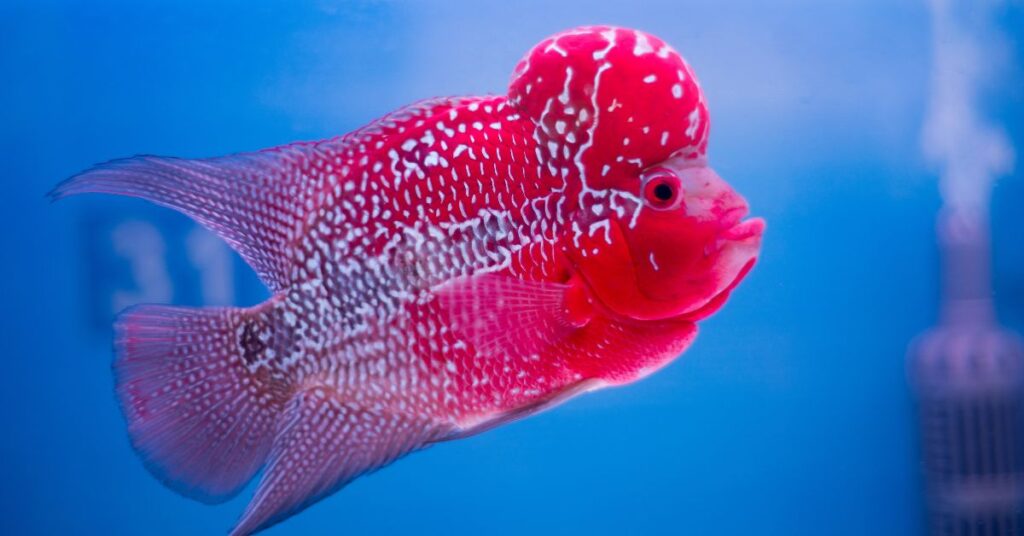
There are two types of aquarium fish. Fish you watch. And fish that watch you back.
Flowerhorn falls entirely into the second category. It is the only commonly available aquarium fish in Qatar that actively tracks its keeper’s movement, responds to hand signals near the glass, and displays visible behavioural changes based on who enters the room. Qatar customers who keep Flowerhorn consistently describe the experience the same way: it behaves more like a pet dog than a fish.
Flowerhorn fish Qatar enthusiasts belong to a passionate community with deep cultural roots in the hobby. Qatar’s large Filipino, Malaysian, Chinese, and Thai expat populations have kept Flowerhorn for generations – the fish arrived in Asia in the early 2000s and became immediately significant.
At World of Birds, we have been supplying Flowerhorn to Qatar customers since 1985. Over four decades, we have watched the Flowerhorn become the most culturally significant aquarium fish we sell – not just a display piece, but a considered purchase that reflects the owner’s appreciation for personality, quality, and the long-term commitment of keeping a fish that will be in their home for a decade or more.
For a broader overview of premium freshwater fish available in Qatar, read our freshwater aquarium fish guide for Qatar.
Flowerhorn at a Glance – Quick Care Profile
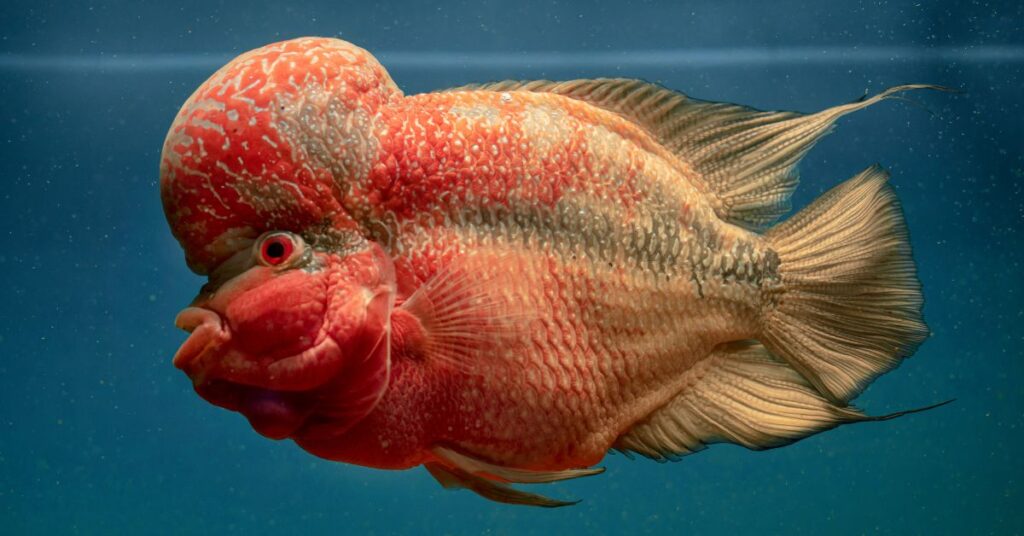
The Flowerhorn cichlid is a man-made hybrid fish that does not exist in the wild. Every specimen is the result of selective breeding programs – primarily in Malaysia, Thailand, and Taiwan – designed to maximise colour intensity, body shape, and nuchal hump development.
| Classification | Hybrid Cichlid (man-made crossbreed) |
| Origin | Developed in Malaysia and Thailand, late 1990s |
| Adult Size | 25 to 35cm |
| Care Level | Intermediate to Advanced |
| Minimum Tank Size | 280 litres (75 gallons) |
| Temperature | 26 to 30°C (heater required in Qatar) |
| pH | 6.0 to 8.0 |
| Lifespan | 8 to 12 years |
| Temperament | Aggressive – solo fish only |
| Diet | Omnivore, protein-heavy |
Browse our live freshwater fish collection to check current Flowerhorn availability at World of Birds, Souq Al Ali.
What Size Tank Does a Flowerhorn Need in Qatar?
The tank size question is the one most Qatar Flowerhorn buyers underestimate – and the one that most directly determines the fish’s long-term quality, kok development, and flowerhorn lifespan.
A juvenile Flowerhorn (8 to 12cm at purchase) can start in a 150 to 200-litre grow-out tank. This is not the permanent setup – it is the starting point while the adult tank is being planned and set up. An adult Flowerhorn requires a minimum 280 litres (75 gallons) with a tank length of at least 120cm.
For Qatar keepers who want maximum kok development and the most impressive display: 300 to 400 litres is the recommended adult setup. Tank size directly affects kok growth – Flowerhorns in undersized tanks experience elevated cortisol levels that suppress kok development. A Flowerhorn in a 150-litre tank and a Flowerhorn in a 350-litre tank with identical genetics, diet, and temperature will develop noticeably different koks – the larger tank fish grows a more prominent, more symmetrical kook.
Get a secure, tight-fitting lid. Flowerhorns are powerful jumpers when startled. In Qatar’s AC-cooled homes, a lid also reduces evaporation from the large heated water volume.
Browse large Aquariums and Stands at World of Birds for tank options suitable for a flowerhorn fish Qatar setup.
How Fast Do Flowerhorns Grow in Qatar?
Under good conditions (correct temperature at 27 to 28°C, quality food, clean water), juvenile Flowerhorns grow approximately 2.5 to 5cm per month in the first year.
A 10cm juvenile purchased today can reach 20 to 25cm within 6 months and approach full adult size within 12 to 18 months under optimal Qatar conditions.
Qatar-specific note: at the lower temperature range (26°C), growth is slightly slower but colour development is often more intense. At 28 to 30°C, growth accelerates and flowerhorn kok development is stimulated more rapidly. Plan tank upgrades 2 to 3 months before the fish outgrows the current setup – not after.
Flowerhorn Water Parameters and Heater Requirements in Qatar
Water quality management for flowerhorn fish Qatar setups is demanding – these are large, high-waste fish that require consistent parameters to display their best colour, develop their kok, and avoid the chronic stress that shortens lifespan.
Ideal water parameters for Flowerhorn in Qatar:
- Temperature: 26 to 30°C (heater essential)
- pH: 6.0 to 8.0 (wide tolerance)
- Ammonia: 0 ppm (always)
- Nitrite: 0 ppm (always)
- Nitrate: below 20 ppm
Doha’s desalination tap water is moderately hard with a slightly alkaline pH – well within Flowerhorn’s tolerance range after conditioning. Find water conditioners and fish care products at World of Birds for the right conditioner for your Flowerhorn tank.
Does a Flowerhorn Need a Heater in Qatar?
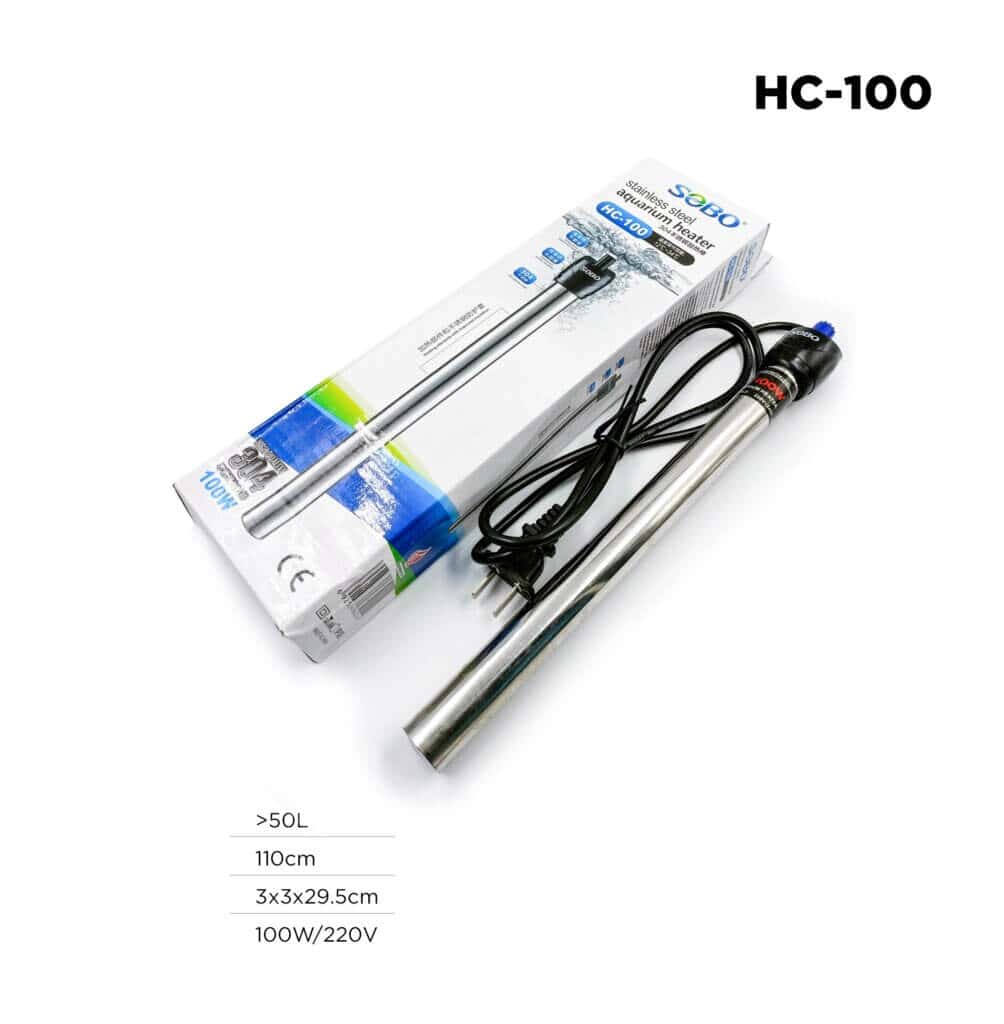
Yes. Always. Without question.
Flowerhorns need 26 to 30°C. Qatar’s AC-cooled rooms maintain 20 to 23°C in summer and lower in winter – well below the minimum Flowerhorn comfort temperature.
An unheated Qatar Flowerhorn tank causes: immune suppression, reduced appetite, colour fading, and most significantly – dramatically slowed or stopped flowerhorn kok growth. The kok develops significantly faster at 27 to 29°C than at 24 to 25°C. Qatar Flowerhorn keepers who skip the heater are not just stressing the fish – they are actively preventing the kok development that makes the fish valuable.
Set the heater to 28°C. Verify with a separate stick-on thermometer. For a 300-litre Flowerhorn tank, a 300-watt heater is the minimum. Consider running two 200-watt heaters simultaneously – if one fails overnight, the backup prevents a temperature crash.
Water Changes for Flowerhorn in Qatar
Flowerhorns are among the highest waste-producing fish in freshwater fish keeping. Weekly 25 to 30% water changes are non-negotiable. Always treat replacement water with conditioner before adding. Never use raw Doha tap water directly.
In Qatar’s warm rooms where bacterial decomposition is faster than in cooler climates, monitor ammonia weekly for the first 3 months. Increase water change frequency to twice weekly if ammonia registers above 0 ppm.
Filtration for Flowerhorn in Qatar
A single adult Flowerhorn produces more waste than a community tank of 30 smaller fish.
Standard aquarium filters are completely inadequate for Flowerhorn keeping. Filter turnover of 8 to 10 times the tank volume per hour is the minimum. A 300-litre Flowerhorn tank needs filtration rated at 2,400 to 3,000 litres per hour.
Canister filters are the preferred choice for Flowerhorn tanks in Qatar – they provide superior biological and mechanical filtration capacity, can be positioned outside the tank (preserving swimming space inside), and are easy to clean without disturbing the fish. Two canister filters running simultaneously provides both adequate filtration capacity and redundancy.
Surface agitation is important for oxygen exchange. Flowerhorns are large fish with high oxygen demand – a well-oxygenated tank reduces stress and supports immune function.
Browse aquarium filters at World of Birds for canister filter options suitable for a Qatar Flowerhorn setup.
Substrate and Tank Décor for Flowerhorn in Qatar
Flowerhorns are substrate diggers. They rearrange gravel constantly, move decorations, and treat the tank as territory to be actively managed.
Two substrate options work for Qatar Flowerhorn tanks: coarse gravel or a bare bottom tank (the easiest to clean, most common setup among serious Flowerhorn keepers). Avoid fine sand – Flowerhorns ingest it accidentally while digging and it causes digestive problems.
Live plants are not compatible with Flowerhorn. They will be uprooted, shredded, and destroyed within days. Artificial plants, terracotta pots, smooth rounded rocks, and artificial caves provide territorial markers without the destruction risk.
Keep décor minimal and positioned around the tank edges. The centre of the tank should be open swimming space – Flowerhorns spend most of their time patrolling open water.
What Is a Flowerhorn Kok and How Do You Grow It?
The kok is the defining feature of the Flowerhorn – and in Qatar’s Asian expat communities, it is the primary quality indicator that determines a fish’s cultural and monetary value.
The kok (nuchal hump) is a fatty deposit on the Flowerhorn’s forehead that develops with age. It is a soft, water-filled fatty tissue that grows progressively from approximately 4 to 8 months of age and can continue developing throughout the fish’s life. A large, symmetrical, well-developed kok represents the pinnacle of flowerhorn cichlid care achievement in Qatar’s fish-keeping community.
In Filipino, Malaysian, and Chinese aquarium culture – communities well-represented among Qatar’s expat population – the kok symbolises prosperity, success, and good fortune for the household.
The four factors that determine kok development:
1. Genetics (most important). No amount of optimal care will produce a large kok from a fish with poor genetic potential. When buying a flowerhorn fish Qatar specimen, look for juveniles from parents with documented kok development.
2. Temperature. The kok grows significantly faster at 27 to 29°C than at lower temperatures. An unheated Qatar tank at 21°C actively suppresses kok growth that the fish’s genetics would otherwise support.
3. Diet. High-protein pellets containing astaxanthin and beta-carotene support both colour intensity and kok development. Browse Flowerhorn-specific fish food at World of Birds for the right feeding options.
4. Stress level. Chronic stress suppresses kok development. A single Flowerhorn in a correctly sized, well-maintained tank with no tank mates grows the best kok.
How Long Does It Take for a Flowerhorn Kok to Grow?
Kok development begins at approximately 4 to 8 months of age. Visible kok is typically present by 10 to 12 months. Significant kok development takes 2 to 3 years of correct care. The kok can continue growing throughout the fish’s life – some specimens develop their most impressive koks at 5 to 7 years.
Qatar-specific note: Consistent temperature at 28°C year-round through a heater produces far more consistent kok development than the temperature fluctuations of an unheated Qatar tank. A Flowerhorn experiencing regular temperature drops to 21 to 22°C will show noticeably slower kok development compared to one maintained at stable 28°C – even with identical genetics and diet.
What to Feed a Flowerhorn in Qatar – Flowerhorn Feeding Guide
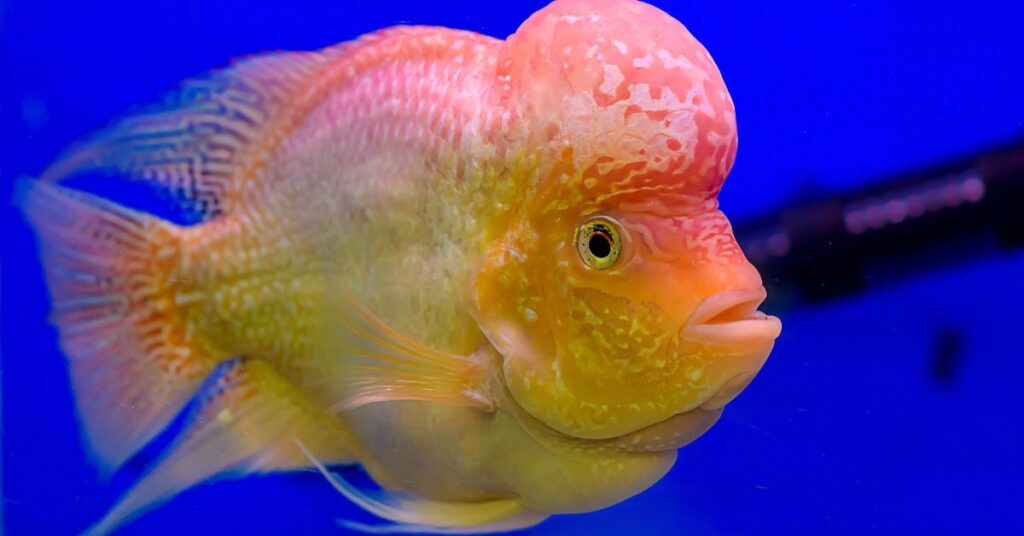
Flowerhorns are omnivores with a strong preference for protein, and flowerhorn feeding quality directly determines the fish’s colour intensity, body development, and kok growth rate.
Staple food: Flowerhorn-specific cichlid pellets containing astaxanthin (enhances red and orange colouration) and beta-carotene. These pellets are formulated specifically for cichlid metabolism and kok development.
Supplement with (2 to 3 times per week): Frozen bloodworms, frozen prawns (thawed in tank water before feeding), earthworms, freeze-dried krill.
Feeding schedule: Juveniles under 15cm – twice daily, only what is consumed in 5 minutes. Adults – once or twice daily, only what is consumed in 5 minutes. Remove all uneaten food within 10 minutes.
Browse Flowerhorn food and cichlid feeding options at World of Birds for staple food and supplement options available in Doha.
Foods to Avoid Feeding Flowerhorn in Qatar
Feeder goldfish – carry disease, contain thiaminase (destroys vitamin B1 over time), and cause long-term nutritional problems.
Beef heart as a staple – causes fatty liver disease when fed as a primary food source. Acceptable occasionally as a treat.
Excessive fatty foods, bread, and human food – cause digestive problems, swim bladder issues, and rapid water quality deterioration.
Low-quality generic cichlid pellets without astaxanthin – the fish survives but colour fades and flowerhorn kok development slows.
How Often to Feed a Flowerhorn in Qatar
Juveniles: twice daily, small portions. Adults: once or twice daily.
Fast one day per week. This prevents chronic constipation, swim bladder problems, and fatty liver disease. Remove uneaten food within 5 to 10 minutes maximum. In Qatar’s warm rooms, uneaten Flowerhorn food in a 28°C tank begins impacting water quality within 30 minutes.
Are Flowerhorns Aggressive? What Qatar Keepers Need to Know
Flowerhorn fish are highly territorial cichlids. This is not a temperament problem – it is an intrinsic characteristic that is simultaneously the source of everything that makes them difficult to keep alongside other fish and everything that makes them so engaging as solo display fish.
The same territorial instinct that makes a Flowerhorn attack its own reflection is what makes it follow the keeper’s hand along the glass with obvious anticipation. Flowerhorns in Qatar aquariums should be kept as the sole occupant of their tank in virtually all home setups.
For another premium single-fish display option in Qatar, read our Arowana care guide for Qatar.
Can Flowerhorns Live With Other Fish in Qatar?
In standard Qatar home aquarium setups (under 400 litres), the practical answer is no.
In very large tanks (400 litres+), some Flowerhorn keepers successfully house the fish with large species that can hold their own – large Plecos (30cm+), large Oscars, large South American catfish. These combinations require a tank large enough for clear territorial separation, multiple visual barriers, and acceptance that the combination may still fail.
Never keep Flowerhorn with: Any fish under 20cm, Angelfish, Goldfish, Betta Fish, or any schooling community fish species.
Why Is My Flowerhorn Attacking the Tank Glass?
This is completely normal flowerhorn aggressive behaviour. Flowerhorns perceive their own reflection as a rival fish and attack it.
Management: apply a dark background to the rear and two side panels of the tank. This eliminates most reflection-triggered aggression and often reduces stress-related colour fading simultaneously. The fish can still see out the front panel facing the keeper.
Common Flowerhorn Health Problems in Qatar
Prevention is the most effective approach for flowerhorn cichlid care health management. These are large, expensive fish with 8 to 12-year lifespans – treatment is difficult and stressful for the fish once disease is established.
Find fish health and water care products at World of Birds for treatment and preventative care options.
Hole in the Head Disease (HLLE) – The Most Common Flowerhorn Problem in Qatar
Pitting and erosion around the head and lateral line – visible crater-like marks that progress if left untreated. More common in large cichlids than in most other aquarium fish.
Causes: Poor water quality, dietary deficiency, and long-term activated carbon use.
Prevention: Weekly 25 to 30% water changes, varied diet including frozen protein sources, remove activated carbon from the filter after the initial 4 weeks.
Ich (White Spot) – The Qatar AC Risk
White salt-grain spots on body and fins. Caused by temperature drops – directly relevant to Qatar where AC rooms cool below Flowerhorn comfort range without a heater.
Prevention: Heater maintaining 28°C year-round. Treatment: Gradually raise temperature to 30°C over 48 hours, treat with ich medication, remove carbon from filter during treatment.
Swim Bladder Disease
Fish tilting, floating sideways, or unable to maintain depth. Almost always caused by overfeeding, feeding dry food that expands in the stomach, or rapid temperature changes.
Prevention: Feed correctly, pre-soak dry pellets before feeding, fast one day per week. Treatment: 3-day fast, then feed blanched frozen peas.
Bloat and Digestive Problems
Distended abdomen, reduced appetite, lethargy. Caused by overfeeding, excessive fatty food, or bacterial infection.
Prevention: Correct feeding schedule, varied diet, weekly water changes. Treatment: 3-day fast for mild cases; bacterial bloat requires antibiotic treatment.
Fin Rot
Ragged, discoloured fin edges. Caused by poor water quality – ammonia and nitrite damage fin tissue.
Prevention: Correct filtration, weekly water changes, conditioned tap water. Treatment: Improve water quality immediately. A 30% water change alone often reverses early-stage fin rot within a week.
How Long Do Flowerhorns Live With Proper Care?
A Flowerhorn fish kept correctly lives 8 to 12 years. Some specimens kept under exceptional conditions reach 12 to 15 years.
Most flowerhorn fish Qatar keepers own do not reach 6 years – not because Flowerhorns are fragile, but because of preventable setup failures: inadequate tank size, no heater in Qatar’s AC-cooled rooms, overfeeding, or poor filtration.
What extends flowerhorn lifespan: 280 to 400-litre tank, heater maintaining 28°C year-round, weekly 25 to 30% water changes, high-quality astaxanthin-containing pellets supplemented with frozen protein, single fish setup eliminating territorial stress, and excellent canister filtration.
At our Souq Al Ali store, we occasionally hear from customers who purchased juvenile Flowerhorns from us years ago, returning to discuss tank upgrades or kok enhancement. That is the best possible outcome for a flowerhorn fish Qatar purchase – a fish thriving years later because the setup was done correctly from the beginning.
Where to Buy Flowerhorn Fish in Qatar – World of Birds, Souq Al Ali
World of Birds has been supplying Flowerhorn fish to Qatar customers since 1985. Our Souq Al Ali store stocks Flowerhorn from regular shipment arrivals, with our staff able to advise on juvenile selection – body shape, kok potential, colour distribution, and activity level at point of purchase.
We stock everything needed for a complete flowerhorn fish Qatar setup in one visit: Flowerhorn fish, large tanks and stands, canister filters, heaters, water conditioners, Flowerhorn-specific pellets, and frozen food options.
Before purchasing, read our guide to buying healthy fish in Qatar – the points about quarantine timing and health assessment apply with equal importance to Flowerhorn. The fastest way to check current Flowerhorn availability and flowerhorn fish price Qatar is WhatsApp.
Browse our live freshwater fish collection online to see current stock. Find us on Google Maps – Souq Al Ali, Doha, Qatar.
Store details: Location: Souq Al Ali, Doha, Qatar WhatsApp: 33311542 Phone: +974 33311542
Frequently Asked Questions About Flowerhorn Fish in Qatar
What size tank does a Flowerhorn need in Qatar?
A juvenile flowerhorn fish Qatar buyers purchase can start in a 150 to 200-litre grow-out tank. An adult requires a minimum 280 litres (75 gallons) with a tank length of at least 120cm. For maximum flowerhorn kok development and long-term wellbeing, 300 to 400 litres is the recommended adult setup. Flowerhorn tank size directly affects kok development.
Does a Flowerhorn need a heater in Qatar?
Yes, always. Flowerhorns need 26 to 30°C. Qatar’s AC-cooled rooms maintain 20 to 23°C – well below the minimum. A heater is essential and specifically critical for flowerhorn kok development – the kok grows significantly faster at 27 to 29°C. Set to 28°C with a separate thermometer. Run two heaters in large tanks for redundancy.
What is a Flowerhorn kok and how do you grow it?
The flowerhorn kok is the fatty nuchal hump on the Flowerhorn’s forehead – the primary quality indicator in Qatar’s Asian communities. Kok size is determined by genetics (most important), temperature (27 to 29°C accelerates growth), diet (astaxanthin-rich pellets), and stress level. Full kok development takes 2 to 3 years of correct flowerhorn cichlid care.
Are Flowerhorns aggressive in Qatar aquariums?
Yes – flowerhorn aggressive behaviour is characteristic and intrinsic to the species. Flowerhorns are best kept as the sole fish in their tank. They attack their own reflection and can kill fish that cannot escape them. Apply a dark background to three sides of the tank to reduce reflection aggression. This territorial confidence also creates the engaging personality Qatar keepers value.
Where can I buy Flowerhorn fish in Qatar?
World of Birds at Souq Al Ali, Doha stocks flowerhorn fish Qatar buyers can purchase with regular shipment arrivals. We have been supplying Flowerhorn in Qatar since 1985. Contact us on WhatsApp at 33311542 to check current availability and pricing. Buy flowerhorn Doha from a trusted source with 41 years of Qatar aquarium experience.
Ready to Keep a Flowerhorn? Visit World of Birds Qatar
Flowerhorn fish Qatar hobbyists keep are the most personality-driven aquarium fish available in Doha – and one of the most culturally significant. A fish that recognises its keeper, responds with visible excitement to feeding, and develops an individual character over an 8 to 12-year lifespan.
The setup is straightforward: correct tank size, heater at 28°C, excellent canister filtration, weekly water changes, and quality astaxanthin-rich food. Get those five things right and the fish rewards the investment fully.
Browse our live freshwater fish collection at World of Birds, or message us on WhatsApp at 33311542 to check current Flowerhorn stock and pricing before visiting.
